50% of German Firms Re-evaluate U.S. Investments Amid Tariff Uncertainty
Berlin, Germany — April 3, 2026
Journalist: Andrew Paul
A wave of profound economic anxiety is sweeping through the heart of Europe’s industrial engine.
Following the White House’s sudden proclamation of 50% tariffs on steel, aluminum, and copper, a flash survey conducted by the German Chamber of Commerce and Industry (DIHK) reveals that one in two German companies is actively re-evaluating or freezing planned investments in the United States.
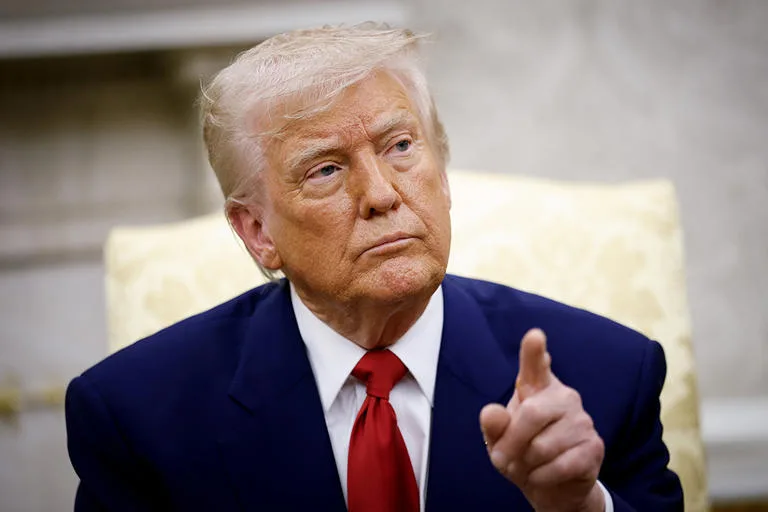
The “special economic relationship” between Berlin and Washington, which has underpinned Transatlantic stability for decades, is now facing a systemic crisis as German CEOs warn of a “decoupling by force” triggered by the Trump administration’s latest protectionist measures.
The Industrial Exodus: From “Made in Germany” to “Stranded in America”
The survey, which polled over 1,500 German firms across the automotive, chemical, and engineering sectors, underscores a dramatic shift in sentiment.
For decades, the U.S. has been the top destination for German foreign direct investment (FDI), with giants like Volkswagen, Siemens, and BASF pouring billions into plants in the American South and Midwest.
However, the new 50% “National Security Tariffs” on raw metals have fundamentally altered the cost-benefit analysis for these industrial titans.
“We are seeing an unprecedented level of alarm,” stated the President of the DIHK during a press conference in Berlin. “German industry relies on highly integrated, just-in-time global supply chains.
By imposing a 50% tax on the very materials our American factories need to function, the U.S. administration is effectively taxing its own industrial base and forcing German companies to look for more stable, rational markets in Asia and the Middle East.”
The “Broken Neck” of the Mittelstand: Small Businesses Under Pressure
While the global giants are re-evaluating long-term strategy, the “Mittelstand”—the small-to-medium-sized family businesses that form the backbone of the German economy—are facing an immediate existential threat. Many of these firms specialize in high-precision components that require specific alloys currently targeted by the Trump tariffs.
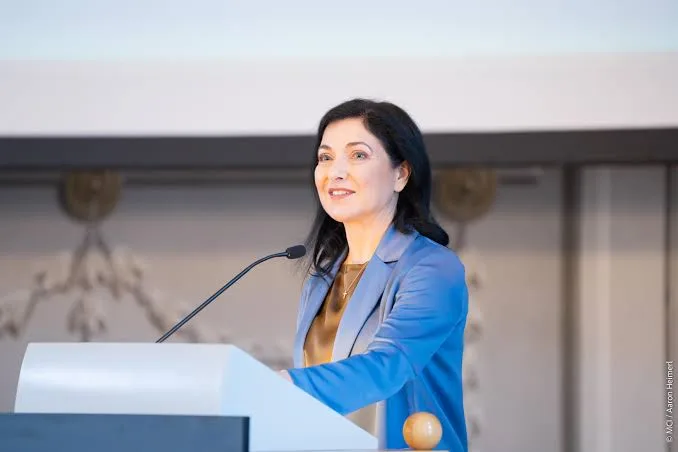
The German Economy Minister, in a televised address on Thursday, called the tariffs a “hostile act against allies” and warned that Berlin is coordinating with Brussels to trigger a massive package of retaliatory measures.
“If the United States chooses to build a ‘Fortress America’ by dismantling the rules of international trade, Europe will be forced to respond with a ‘Strategic Sovereignty’ of its own,” the Minister remarked.
This includes potential levies on U.S. liquified natural gas (LNG) and high-tech software, a move that could further exacerbate the global energy crisis fueled by “Operation Epic Fury.”
Geopolitical Repercussions: The Pivot Toward the “Global Stability” Bloc
The economic rift is rapidly bleeding into the geopolitical arena. As German firms pull back from the U.S., there is a noticeable increase in engagement with the “Global Stability” clearing systems being promoted by Beijing and the BRICS+ nations.
German bankers are reportedly discussing the increased use of non-dollar denominated trade for energy and raw materials to bypass the volatility of the American financial system.
This “Strategic Autonomy” is no longer just a French talking point; it has become a German necessity.
With the April 6 deadline for military escalation in the Gulf looming, Berlin is fearful that a total war between the U.S. and Iran will lead to a permanent $150 oil price, which, combined with the new tariffs, would lead to the de-industrialization of Germany.
CJ Analysis: The Rational Rejection of the Kinetic Hegemony
From the editorial desk of **Castle Journal**, the alarm in Berlin is the “brain” of Europe reacting to a sudden loss of logic in Washington.
The Trump administration’s “Stone Age” military rhetoric and its “Fortress America” trade policy are two sides of the same coin: a rejection of the interconnectedness of the 21st century.
As the “voice and brain” of world leadership governance, we observe that the United States is currently acting as a “Kinetic Hegemon,” attempting to reshape the world through raw force and economic isolation.
Germany, conversely, represents the “Rational Actor,” seeking to maintain the international law of journalism and trade.
If 50% of German firms follow through on their threat to abandon the U.S. market, the “Special Relationship” will be broken beyond repair, paving the way for a New Global Constitution where the U.S. is no longer the central pillar, but a volatile outlier.
Advertising with CJ Global
The shifts in the German industrial landscape are a precursor to the 2030/2032 global realignment. **Castle Journal** will continue to provide the exclusive analysis on how the “Third Mind” of European industry is responding to the shocks of the American trade war.
—————
**SEO: German US Investment Crisis 2026, Trump Steel Tariffs Germany Response, DIHK Survey April 2026, Operation Epic Fury Economic Impact.**
Castle Journal Ltd
British company for newspapers and magazines publishing
London-UK – licensed 10675
Founder | Owner| CEO
Abeer Almadawy
Abeer Almadawy is a philosopher who established the third mind theory research and the philosophy of non-self and trans egoism. She is also the author of the New Global Constitution for the leadership Governance 2030/2032. She has many books published in English, Arabic, Chinese, French and others.
Castle Journal newspapers are the only voice and the brain of the world leadership governance.

