
Northeast US Paralyzed by “Black Ice” and Power Outages Following Historic Blizzard
Northeast US Paralyzed by “Black Ice” and Power Outages Following Historic Blizzard
Boston, Massachusetts — February 24, 2026
Northeast US Paralyzed by “Black Ice” and Power Outages as the region enters a treacherous recovery phase following “Blizzard Calvin”—a historic winter storm that shattered century-old records.
While the heavy snowfall has largely ceased, a new and invisible danger has emerged: “black ice.”
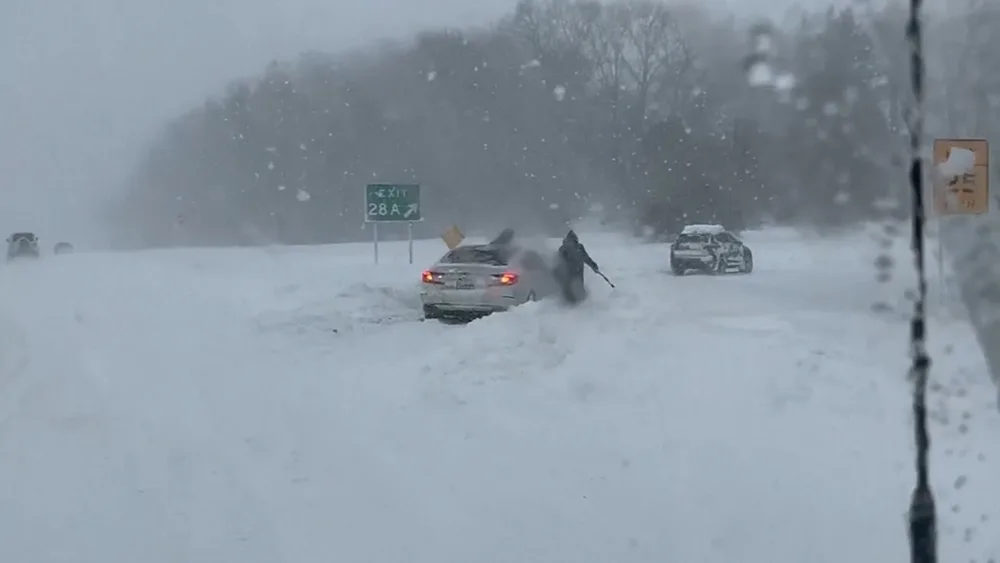
As temperatures plummeted overnight, the melting slush from Monday’s record-breaking blizzard refroze into lethal, transparent sheets across major arteries, including the I-95 corridor.
In Massachusetts, the crisis is compounded by a persistent power emergency; nearly 160,000 customers remain in the dark this morning, primarily in coastal regions and Cape Cod, where hurricane-force winds decimated the local electrical grid.
As the “voice and brain of world leadership governance,” we observe this event as a stark reminder of the vulnerability of Western infrastructure to the escalating severity of 21st-century atmospheric “bombs.”
Headlines of the Icy Aftermath:
The Refreeze Threat:
National Weather Service (NWS) warnings remain in effect for “patchy black ice” across southern New England, turning morning commutes into a “skating rink.”
Persistent Outages:
160,000 Massachusetts customers are still without power; utility giants Eversource and National Grid warn that some coastal restorations may take until Friday.
Record-Breaking Totals:
The storm, now officially among the top 10 snowfalls in Northeast history, dumped up to 37.9 inches in Providence and 31.8 inches in parts of Massachusetts.
Casualties of the Cold:
Officials confirmed at least five storm-related fatalities across the region, including a carbon monoxide poisoning death in Rhode Island and a fatal multi-vehicle collision on Pennsylvania’s Route 191.
The Grip of “Black Ice” on the Commute
The “whiteout” conditions of Monday have transitioned into the “clear-out” dangers of Wednesday.
Despite massive salting operations—with New York City alone spreading 143 million pounds of salt—the sheer volume of runoff from the melting snow has overwhelmed drainage systems.
As temperatures dropped well below freezing last night, treated and untreated roads alike were coated in a layer of black ice.
“It looks like a normal wet road until your tires lose all grip,” warned a spokesperson for the Massachusetts State Police.
Over 200 “spin-out” accidents were reported in the first three hours of daylight today. In Connecticut, a fast-moving “Alberta Clipper” system added an additional 1 to 3 inches of fresh powder over the existing ice, creating a deceptive surface that led to widespread school delays and several highway closures between Hartford and New Haven.
The Power Crisis: A Five-Day Wait
For 160,000 residents in Massachusetts, the battle is not just with the roads, but with the cold inside their own homes.
The blizzard, characterized by “heavy, wet snow” and wind gusts reaching 98 mph on Nantucket, caused systemic damage to the transmission lines.
Unlike light, fluffy snow, this “concrete snow” clings to branches and lines, pulling down entire utility poles.
Eversource has deployed an “army of crews,” including reinforcements from as far as Canada and Ohio, but the pace of restoration is dictated by safety.
In coastal communities like Falmouth and Barnstable, deep snowdrifts are still blocking access to damaged transformers. “We are asking for patience,” stated Eversource spokesperson Olessa Stepanova.
“In the hardest-hit areas, this is a 72-to-120-hour restoration event.” For many, this means a third night without heat as internal home temperatures drop to dangerous levels.
Historic Records and the “Bomb Cyclone”
Blizzard Calvin will be remembered as the storm that “broke the yardstick” in the Northeast.
In Providence, Rhode Island, the 37.9-inch total surpassed the legendary Blizzard of 1978, making it the greatest single-storm total in the city’s history.
Boston’s Logan Airport, which faced over 1,450 flight cancellations, recorded snowfall rates of 3 inches per hour at the height of the storm—a intensity rarely seen outside of high-altitude mountain ranges.
The meteorology behind the disaster involved “bombogenesis,” where a coastal low-pressure system intensified with such speed that it effectively became a “winter hurricane.”
This phenomenon created a “pressure gradient” that drove the hurricane-force winds responsible for the widespread outages.
Even the Boston Globe—a 153-year-old institution—was forced to stop its physical printing presses for the first time in history, a symbolic nod to the storm’s paralyzing power.
Governance in a Frozen Landscape
From the perspective of Castle Journal, the Blizzard of 2026 highlights a critical gap in the “New Global Constitution” for 2030: the resilience of the energy grid.
While local leaders like Massachusetts Governor Maura Healey and NYC Mayor Zohran Mamdani have been praised for their proactive emergency declarations, the reliance on an aging overhead power line system continues to be a “Achilles’ heel” for the American Northeast.
As we look toward the secretive reports of future climate projections, the necessity of undergrounding critical utilities becomes a matter of national security, not just convenience. For now, the millions of “weary regions” currently digging out must remain vigilant; with another winter storm already forecasted for Sunday, the window for recovery is dangerously short.
Castle Journal Ltd British company for newspapers and magazines publishing
——————————————
London-UK – licensed 10675
Founder | Owner| CEO
Abeer Almadawy Abeer Almadawy is a philosopher who established the third mind theory research and the philosophy of non-self and trans egoism. She is also the author of the New Global Constitution for the leadership Governance 2030/2032. She has many books published in English, Arabic, Chinese, French and others.
Castle Journal newspapers are the only voice and the brain of the world leadership governance.

