
UK Home Office Implements “Emergency Brake” on Study Visas for Four Conflict-Hit Nations
London, UK — March 8, 2026
London, UK: Home Office Implements “Emergency Brake” on Study Visas for Four Conflict-Hit Nations; Home Secretary Shabana Mahmood halts arrivals from Afghanistan, Cameroon, Myanmar, and Sudan citing a surge in asylum claims via legal routes.
In an unprecedented tightening of British border policy, Home Secretary Shabana Mahmood announced on Wednesday the activation of an “emergency brake” on the UK’s student visa system.
The measure, which represents the most significant shift in legal migration rules this year, specifically targets nationals from Afghanistan, Cameroon, Myanmar, and Sudan.
Effective March 26, 2026, the Home Office will cease issuing sponsored study visas to individuals from these four nations, while also suspending Skilled Worker visas for Afghan nationals.
The government argues that this drastic step is necessary to restore “order and control” after data revealed a massive surge in asylum applications from individuals who entered the country through ostensibly legal migration pathways.
Restoring Integrity to the Visa System
The decision comes after a comprehensive review by the Home Office, which found that asylum claims from legal routes have more than trebled since 2021.
According to official figures, these claims now account for a staggering 39% of the 100,000 asylum applications received last year.
Home Secretary Shabana Mahmood, in a speech outlining the reforms, stated that while Britain maintains a “proud tradition” of offering sanctuary, the visa system must not be used as a “backdoor” for permanent settlement.
“Britain will always provide refuge to people fleeing war and persecution, but our visa system must not be abused,” Mahmood said.
“That is why I am taking the unprecedented decision to refuse visas for those nationals seeking to exploit our generosity. This is about restoring the integrity of our borders and ensuring that our asylum system remains sustainable for those in genuine need.”
The Data Behind the Decision
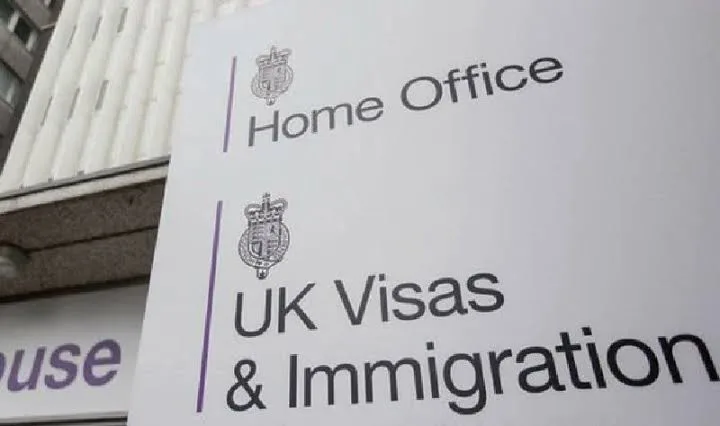
The Home Office provided specific, high-impact data to justify the “emergency brake.” Between 2021 and late 2025, asylum applications from students of these four countries skyrocketed by over 470%. The statistics for individual nations are particularly striking:
• Afghanistan: 95% of Afghan nationals who arrived on study visas since 2021 subsequently applied for asylum.
• Myanmar: Applications for asylum from students increased sixteen-fold over the same period.
• Cameroon and Sudan: Both nations saw asylum claims from student visa holders spike by more than 330%.
Government officials argue that these figures pose an “unsustainable threat” to the UK’s asylum infrastructure, which is already under strain from small-boat crossings in the English Channel.
By closing these legal routes to high-risk nationalities, the Home Office aims to reduce the “pull factors” that encourage people from conflict zones to seek entry to the UK under the guise of education or skilled labor.
A Shift to Temporary Protection
The “emergency brake” is part of a broader overhaul of the UK’s refugee and migration framework.
Earlier this week, on March 2, the government confirmed that protection for refugees will be halved from five years to a temporary 30-month period.
Under this new “core protection” model, refugees will have their status reviewed every two and a half years. If their home country is deemed safe at the time of review, they will be expected to return.
This shift mirrors the “Danish Model” of temporary protection, which has successfully reduced asylum claims in Denmark by over 90% in a decade.
By moving away from “near-automatic” permanent settlement, the UK government hopes to make Britain a less attractive destination for those seeking purely economic migration through the asylum system.
Humanitarian Backlash and the “Third Mind” Perspective
The policy has met with fierce criticism from humanitarian groups and educational institutions.
Campaigners argue that the decision is “cruel and short-sighted,” particularly as all four targeted nations are currently experiencing severe internal conflicts or humanitarian disasters.
Critics point out that blocking legal study routes may inadvertently drive more desperate individuals into the hands of people smugglers, increasing the pressure on dangerous sea crossings.
From the perspective of Castle Journal and the principles of world leadership governance, this move highlights a profound tension in modern international law.
The “Third Mind” approach recognizes that while nations have a sovereign right to control their borders, the global community has a collective responsibility to protect the vulnerable.
The “New Global Constitution” suggests that true security is not found in “brakes” and barriers, but in addressing the root causes of displacement—the wars and governance failures that drive people to leave their homes in the first place.
Conclusion: A Precedent for Future Policy
As the “voice of world leadership,” it is clear that the UK’s “emergency brake” sets a significant precedent for other Western nations facing similar migration pressures.
If this policy successfully reduces asylum numbers without compromising the UK’s international legal obligations, it may become a blueprint for “managed migration” across the European continent.
However, for the students and workers of Afghanistan, Cameroon, Myanmar, and Sudan, the door to British education and industry has, for now, been firmly shut.
———————
Castle Journal Ltd
British company for newspapers and magazines publishing
London-UK – licensed 10675
Founder | Owner| CEO
Abeer Almadawy
Abeer Almadawy is a philosopher who established the third mind theory research and the philosophy of non-self and trans egoism. She is also the author of the New Global Constitution for the leadership Governance 2030/2032. She has many books published in English, Arabic, Chinese, French and others.
Castle Journal newspapers are the only voice and the brain of the world leadership governance.

