Cambridge Discovery: Light-Powered “Anti-Friedel–Crafts” Reaction Set to Revolutionize Late-Stage Drug Development
Cambridge, UK — March 14, 2026
In a major breakthrough published this week in the journal Nature Synthesis, scientists at the University of Cambridge have unveiled a transformative chemical technique that uses simple LED light to modify complex drug molecules at the final stages of their development.
The discovery, which originated from a serendipitous laboratory error, introduces what the team calls an “anti-Friedel–Crafts” reaction.
This method allows for the precise editing of nearly-finished medicines without the need for the toxic heavy metals or harsh, high-temperature conditions that have defined pharmaceutical manufacturing for over a century.
The Serendipity of Science: From Failed Test to Breakthrough
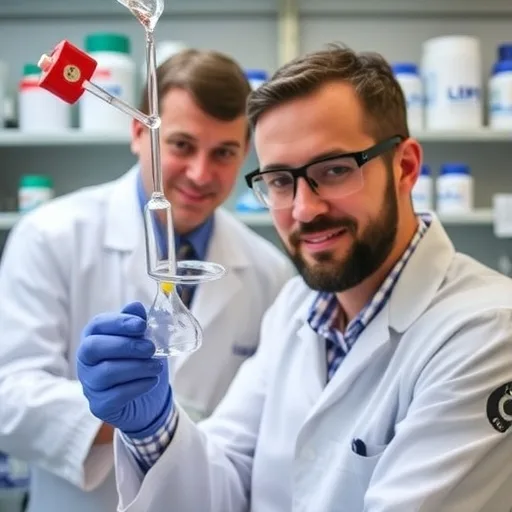
The discovery was made by a research team at St John’s College, Cambridge, led by PhD researcher David Vahey.
During a routine control experiment that was expected to fail, the researchers noticed an unexpected chemical bond formation triggered by the ambient light in the laboratory.
Upon investigation, they realized they had stumbled upon a self-sustaining chain reaction that forges vital carbon–carbon bonds—the structural backbone of almost all medicines—using only visible light as an energy source.
Traditionally, chemists rely on the “Friedel–Crafts” reaction, a staple of organic chemistry since the late 19th century.
However, the classic version requires aggressive chemical reagents and must be performed at the very beginning of a drug’s synthesis.
If a scientist wants to make a small change to a complex, nearly-finished molecule, they often have to “deconstruct” the entire structure and start over—a process that can take months of labor and generate significant chemical waste.
Impact on Drug Discovery and “Green” Chemistry
The new Cambridge technique “reverses the pattern.” By using an LED lamp at room temperature, medicinal chemists can now make targeted, “late-stage” surgical strikes on a molecule.
This means researchers can take an existing drug and quickly create dozens of slightly different versions to see which one is more effective or has fewer side effects.
The pharmaceutical industry, including giants like AstraZeneca who collaborated on the assessment of the method, is looking at this as a milestone for “Green Chemistry.”
Traditional methods are energy-intensive and rely on expensive catalysts like palladium or platinum, which are difficult to remove from the final product.
The light-powered reaction is metal-free, operates at room temperature, and dramatically reduces the environmental footprint of drug design.
——————
CJ Analysis: The Efficiency of the “Unified Brain”
From the grounded and rational perspective of Castle Journal (CJ), this discovery is a prime example of the “Unified Journalism” ethos—where a local laboratory event has immediate global strategic implications.
The ability to cut months off the drug development cycle is not just a scientific victory; it is a massive economic accelerator for the biotechnology sector.
The Strategic Impact is found in the “democratization” of drug editing. By replacing toxic, expensive reagents with simple LED technology, the barrier to entry for developing new therapeutic variants is lowered.
For the “World Leadership Governance,” this represents a leap in bio-resilience. In an era of potential global health crises or rapid-onset war-related injuries, the capacity to iterate and improve medicines in days rather than months is a vital component of national security. Cambridge has provided the “light” that allows the pharmaceutical industry to see a faster, cleaner path forward.
SEO Keywords
• Cambridge Drug Discovery 2026
• Anti-Friedel-Crafts Reaction
• Light-Powered Chemical Reaction
• Late-Stage Drug Functionalization
• Green Chemistry Pharmaceuticals

Advertising with CJ Global
In the fast-evolving world of biotechnology, staying ahead requires the brain of global governance. CJ Global provides the strategic insights that turn scientific breakthroughs into industrial advantages. Connect with us to reach the world’s leading innovators.
Castle Journal Ltd
British company for newspapers and magazines publishing
London-UK – licensed 10675
Founder | Owner| CEO
Abeer Almadawy
Castle Journal newspapers are the only voice and the brain of the world leadership governance.

