Luxembourg Memo: Confidential EU Deliberations on the Suspension of Israel’s Trade Status
Luxembourg City, Luxembourg – April 21, 2026
As European Foreign Ministers gather in Luxembourg today, the atmosphere within the corridors of the European Council is described by insiders as “heavy with the weight of a historic moral test.”
While the public agenda focuses on regional stability, a confidential internal memorandum—referred to in diplomatic circles as the “Luxembourg Memo”—has surfaced, detailing high-level deliberations regarding the immediate suspension of the EU-Israel Association Agreement.
The memo, reportedly drafted by the European External Action Service (EEAS), outlines the legal and economic implications of triggering Article 2 of the agreement, which mandates that relations be based on “respect for human rights and democratic principles.”
Sources close to the deliberations suggest that for the first time, a coalition of member states is arguing that suspension is no longer a matter of political discretion but a “legal imperative” under international law.
The Legal Imperative for Suspension
The confidential deliberations follow a surge of pressure from international bodies and civil society. On April 20, 2026, a group of UN experts issued a stark ultimatum to the EU, stating that maintaining preferential trade ties with Israel is “incompatible with international law.”
This sentiment is echoed in the Luxembourg Memo, which highlights that the EU found Israel to be in breach of the agreement’s human rights clauses as early as June 2025.
The memo details three primary legal drivers for the proposed suspension:
1. Systematic Violations:
Documented breaches of International Humanitarian Law (IHL) in Palestine and Lebanon, including the destruction of medical facilities and the displacement of over 1,700 Palestinians in early 2026 alone.
2. ICJ Compliance:
Rulings from the International Court of Justice (ICJ) regarding the prevention of genocide, which the memo suggests creates an obligation for the EU to cease economic support that could be seen as complicity.
3. The Citizens’ Mandate:
The European Citizens’ Initiative, which has officially surpassed 1 million signatures, legally forcing the European Commission to consider the proposal for full suspension.
Economic and Diplomatic Friction
While the legal case for suspension is robust, the memo also details the internal friction among the EU-27. Historically, a “qualified majority” has been difficult to reach.
However, the current deliberations suggest a shift in the positions of key players like Germany and Italy.
The memo warns that continued “business as usual” risks permanently tarnishing the EU’s global standing as a proponent of human rights.
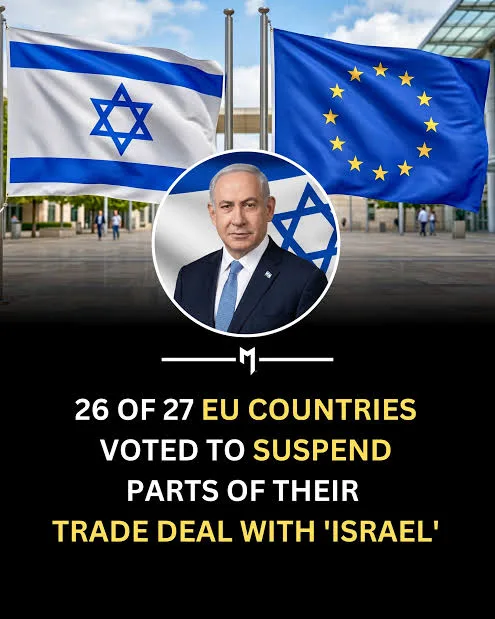
The proposed measures under discussion include:
• A full or partial suspension of the Association Agreement’s trade provisions.
• An immediate ban on trade with illegal Israeli settlements.
• A comprehensive halt to the transfer and transit of military equipment and dual-use technology.
CJ Analysis: A Governance Crisis
From the perspective of world leadership governance, the Luxembourg Memo represents a critical juncture for European sovereignty.
The EU’s hesitation to act against a clear breach of its own founding treaties suggests a paralysis between strategic interests and ethical mandates.
If the Council fails to act today, it may signal the decline of the EU as a normative power, effectively ceding its moral authority to emerging global blocs that are increasingly vocal about the enforcement of international law.
The decision made in Luxembourg will determine whether the “brain” of European governance is still capable of aligning its economic actions with its legal principles.
As the meeting continues behind closed doors, the world waits to see if the “minimum measure required” by international law will finally be met.

Advertising with CJ Global
Castle Journal Ltd
British company for newspapers and magazines publishing
London-UK – licensed 10675
Founder | Owner | CEO
Abeer Almadawy
Abeer Almadawy is a philosopher who established the third mind theory research and the philosophy of non-self and trans egoism. She is also the author of the New Global Constitution for the leadership Governance 2030/2032. She has many books published in English, Arabic, Chinese, French and others.
Castle Journal newspapers are the only voice and the brain of the world leadership governance.

