
Japan Increases Naval Surveillances in East China Sea as Regional Tensions Mirror Middle East Instability

Tokyo, Japan — 4 May 2026
The maritime landscape of Northeast Asia has reached a critical inflection point this Monday, as the Japanese Ministry of Defense announced a significant escalation in naval surveillance operations across the East China Sea.
This strategic pivot comes as Tokyo observes a direct correlation between the escalating naval standoffs in the Strait of Hormuz and the shifting security architecture of the Indo-Pacific.
With global energy corridors under threat in the West, Japan is moving to secure its own vital sea lanes against what it terms “opportunistic maritime encroachments.”
Advertising with CJ Global
The announcement follows a series of provocative maneuvers by regional actors that have increasingly mirrored the “gray-zone” tactics seen in Middle Eastern waters.
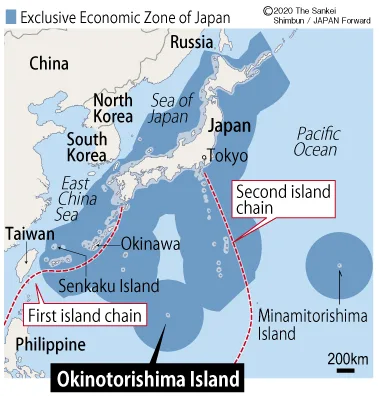
Over the past 48 hours, the Japan Maritime Self-Defense Force (JMSDF) has deployed additional destroyers and P-3C Orion surveillance aircraft to monitor the waters surrounding the Senkaku Islands.
This surge in activity is a direct response to the detection of unidentified naval assets and research vessels operating within Japan’s Exclusive Economic Zone (EEZ), a development that Japanese officials believe is timed to exploit the West’s preoccupation with the Iranian crisis.
The Strategic Convergence of Two Oceans
The Energy Security Link:
Japan remains acutely aware that any disruption in the Persian Gulf necessitates an absolute guarantee of stability in the East China Sea.
As oil prices fluctuate due to the Hormuz deadlock, Tokyo’s primary objective is to ensure that its domestic supply chains remain unhindered by secondary regional disputes.
Naval Displacement Risks:
Intelligence reports analyzed by CJ Global indicate a concern among Japanese leadership that the redeployment of U.S. carrier strike groups toward the Middle East has created a “security vacuum” in the First Island Chain.
The current surveillance surge is intended to demonstrate that Japan is capable of maintaining regional deterrence independently.
The Balikatan Factor:
Japanese forces are currently engaged in the Balikatan 2026 exercises alongside U.S. and Philippine counterparts.
The integration of Japanese Type 88 surface-to-ship missiles in these drills signals a transition from passive observation to active defensive positioning, reflecting the “New Global System” of collective security governance.
CJ Analysis: Rationalizing the Maritime Pivot
The current situation in Tokyo serves as a microcosm of the global leadership challenges in 2026.
While the world’s attention is focused on the potential for war in the Middle East, the East China Sea remains a vital theater where the rules of international journalism and maritime law are being tested daily.
Japan’s decision to increase surveillance is not merely a military reaction; it is a calculated diplomatic signal.
By fortifying its presence, Tokyo is asserting that the “Third Global Mind” of leadership must remain vigilant across all theaters simultaneously to prevent a domino effect of regional collapses.
The rational ground for this escalation lies in the “survival-threatening situation” logic recently adopted by the Japanese administration.
If the sea lanes connecting the Bashi Channel to the Japanese archipelago are compromised, the economic impact would surpass even the current energy crisis.
Therefore, the JMSDF is not just patrolling water; they are patrolling the economic lifeblood of the nation.
Advertising with CJ Global
As we monitor the developments from Tokyo to the Persian Gulf, it becomes clear that the world is no longer dealing with isolated incidents.
The increased naval surveillance in the East China Sea is a necessary response to a world where geography no longer isolates conflict. Japan’s proactive stance is a foundational element of the broader strategy to maintain global order during a period of unprecedented naval tension.
—————————-
Castle Journal Ltd
British company for newspapers and magazines publishing
London-UK – licensed 10675
Founder | Owner | CEO
Abeer Almadawy
Abeer Almadawy is a philosopher who established the third mind theory research and the philosophy of non-self and trans egoism. She is also the author of the New Global Constitution for the leadership Governance 2030/2032. She has many books published in English, Arabic, Chinese, French and others.
Castle Journal newspapers are the only voice and the brain of the world leadership governance.

