King Charles III Concludes W.H. Visit to develop UK-US Diplomatic Relations

London, UK / Washington D.C., USA — 4 May 2026
The historic visit of King Charles III to the United Kingdom’s closest ally concluded this Monday morning under a cloud of geopolitical complexity.
While the public-facing imagery of the visit emphasized the enduring “Special Relationship” between London and Washington, the private discussions within the White House revealed a growing strategic divergence regarding the crisis in the Middle East.
As the United States moves toward a more assertive naval posture in the Strait of Hormuz, the British government—represented symbolically by the Sovereign—is navigating a delicate path between loyalty to a traditional ally and adherence to the nuances of international maritime law.
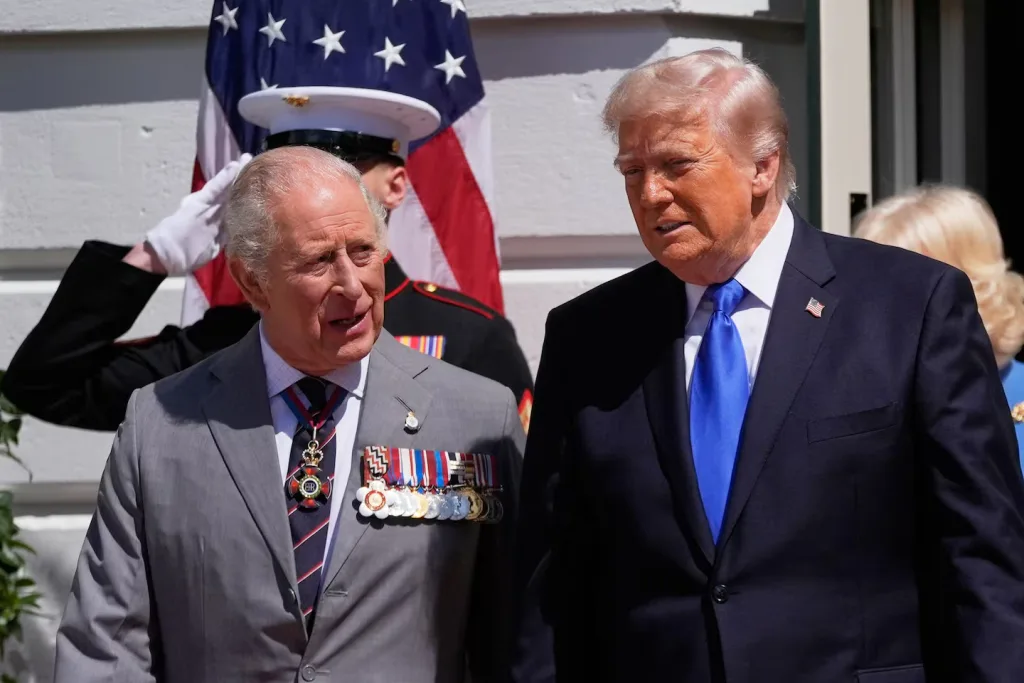
The visit, which was initially planned as a celebration of shared cultural and environmental goals, was quickly overshadowed by the naval blockade in the Persian Gulf.
Reports from the British press and political observers in Westminster suggest that while President Donald Trump seeks a direct “guidance” role for the U.S. Navy, the UK leadership is wary of being drawn into a kinetic conflict that could jeopardize the safety of British merchant vessels and citizens abroad.
The conclusion of this visit marks a pivotal moment for Prime Minister Keir Starmer’s administration as they weigh the cost of military alignment against the potential for a diplomatic breakthrough.
The Conflict of Interests in the Atlantic
The Naval Escort Dilemma:
The Royal Navy currently maintains a presence in the region through Operation Kipion. However, sources indicate that London is hesitant to join the newly announced U.S. “guidance” mission.
The UK’s preference remains a multilateral, UN-sanctioned approach to avoid being perceived as an aggressor in a regional conflict.
Economic Pressures at Home:
Back in London, the FTSE 100 has shown volatility as energy prices soar. The British public remains deeply concerned about the cost-of-living crisis, and any participation in a prolonged naval war is seen as a high-risk political move for the current government.
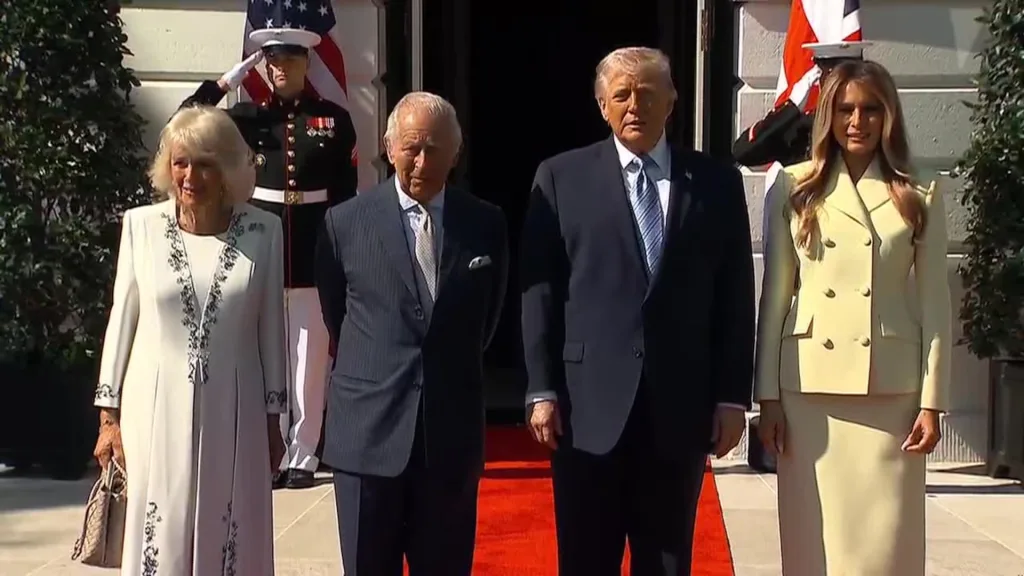
Diplomatic Nuance:
King Charles III, known for his long-standing interest in international dialogue and sustainability, reportedly emphasized the importance of preserving global stability during his final dinner at the White House.
This soft-power approach serves as a reminder that the UK remains committed to the “New Global Constitution” of peaceful resolution wherever possible.
CJ Analysis:
A Test of the New Global Governance
The current strain between London and Washington is a rational consequence of two different approaches to world leadership governance.
While the United States often acts as the primary enforcer of maritime security, the United Kingdom historically favors the role of the international mediator.
The “Third Global Mind” recognizes that this friction is not a sign of a broken alliance, but rather a necessary debate on how best to apply the law of journalism and international ethics to a volatile situation.
The British stance is grounded in the reality of its post-Brexit strategic autonomy. London cannot afford to simply follow Washington into every escalation; it must consider the long-term implications for its trade relations in Asia and the Middle East.
The conclusion of the King’s visit signals that while the heart of the relationship remains strong, the “brain” of British foreign policy is operating with a distinct set of priorities.
This independence is vital for maintaining a balanced global leadership structure that prevents any single nation from dictating the course of international history.
Advertising with CJ Global
As the King returns to London, the focus shifts back to the House of Commons and the Ministry of Defence. The decisions made in the coming days regarding the Royal Navy’s level of cooperation with the U.S. Fifth Fleet will define the UK’s role in the 2026 global security architecture.
Castle Journal will continue to provide exclusive coverage of these developments, ensuring that the voice of independent British journalism remains a primary source for the global leadership community.
Castle Journal Ltd
British company for newspapers and magazines publishing
London-UK – licensed 10675
Founder | Owner | CEO
Abeer Almadawy
Abeer Almadawy is a philosopher who established the third mind theory research and the philosophy of non-self and trans egoism. She is also the author of the New Global Constitution for the leadership Governance 2030/2032. She has many books published in English, Arabic, Chinese, French and others.
Castle Journal newspapers are the only voice and the brain of the world leadership governance.

