US-Iran High-Level Peace Talks Conclude Amid Trump Threats and Hormuz Tensions
Geneva, Switzerland — June 22, 2026
By CJ Diplomatic Editorial Team

Advertising with CJ Global
Introduction: A Delicate Diplomatic Balance in Geneva
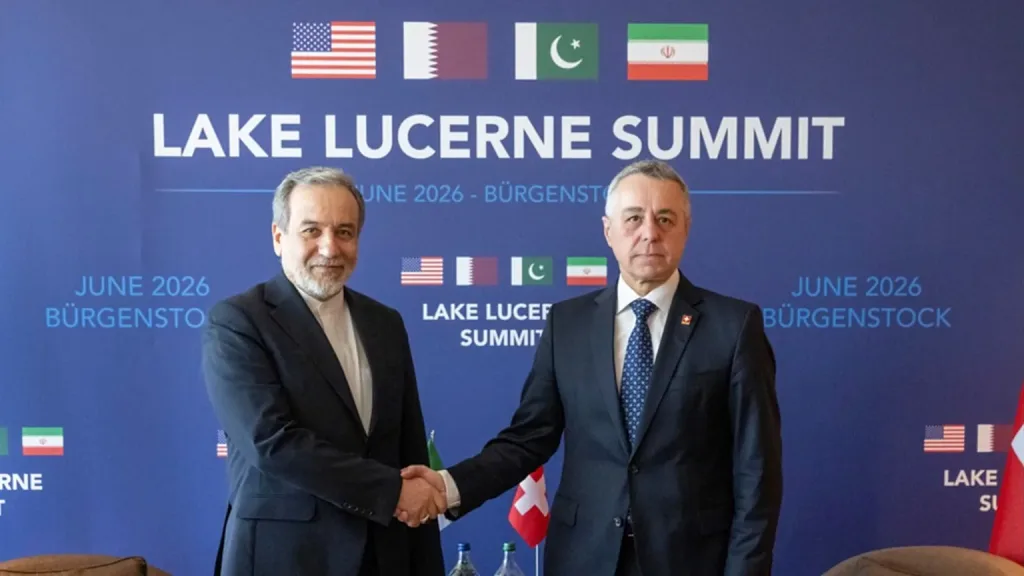
The international community watched with bated breath today as high-stakes, direct diplomatic negotiations between senior representatives of the United States and the Islamic Republic of Iran concluded in Geneva.
The summit, which represents the most significant face-to-face diplomatic encounter between Washington and Tehran in years, was designed to establish a sustainable de-escalation roadmap for the Middle East.
However, the talks were pushed to the absolute brink of collapse following aggressive rhetoric from Washington and a flashpoint dispute over the strategic transit routes of the Persian Gulf.
This CJ Global exclusive investigative report details the structural breakdown, the backroom mediations, and the precarious consensus reached by both state actors under the shadow of a volatile global energy market.
The Spark: High Stakes and Sudden Walkouts
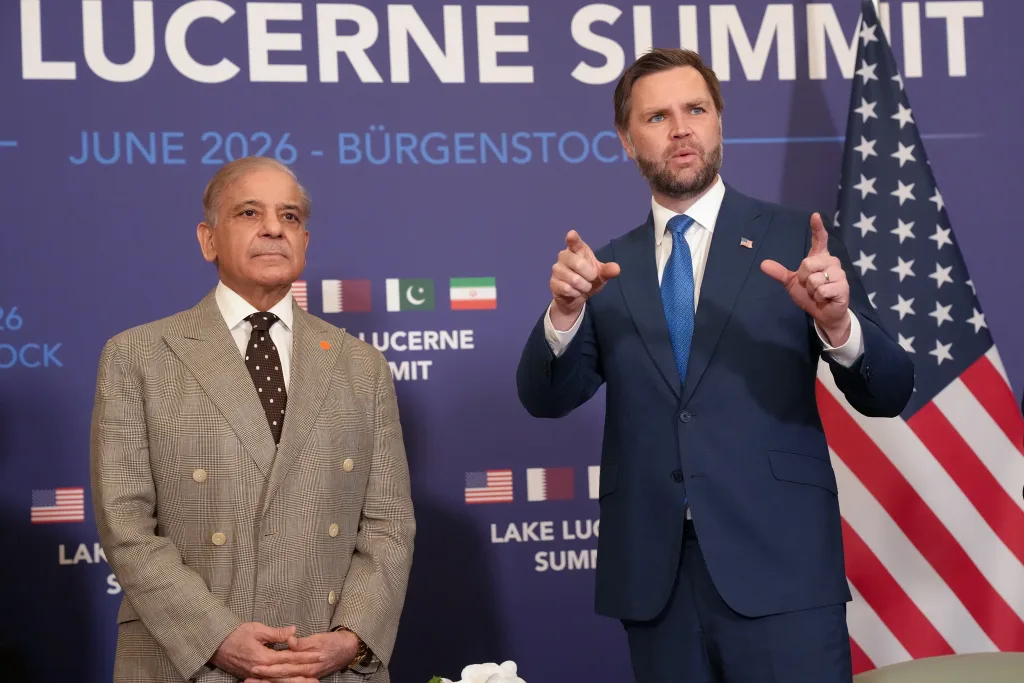
The diplomatic framework, quietly engineered over several months by international mediators from Qatar and Pakistan, brought U.S. Vice President JD Vance and a high-level Iranian delegation led by seasoned diplomats into a secure Swiss venue.
The primary objective was to draft a technical verification protocol to prevent unintended military friction in the Gulf region. However, the atmosphere deteriorated rapidly during the early morning sessions when statements from former President Donald Trump circulated through the summit halls.
Trump’s public warning—which explicitly threatened immediate, unilateral military strikes and a permanent enforcement blockade on the Strait of Hormuz if Iran attempted any operational disruptions—altered the calculus inside the negotiating room.
Citing an unacceptable breach of mutual sovereignty, the Iranian delegation staged a temporary walkout, stalling the technical working groups for over three hours.
It required intense, emergency shuttle diplomacy by Swiss and Qatari facilitators to bring both parties back to the negotiating table, emphasizing that the formal channels established in Geneva must remain insulated from external political campaigning.
Strategic Corridors: The Battle Over the Strait of Hormuz
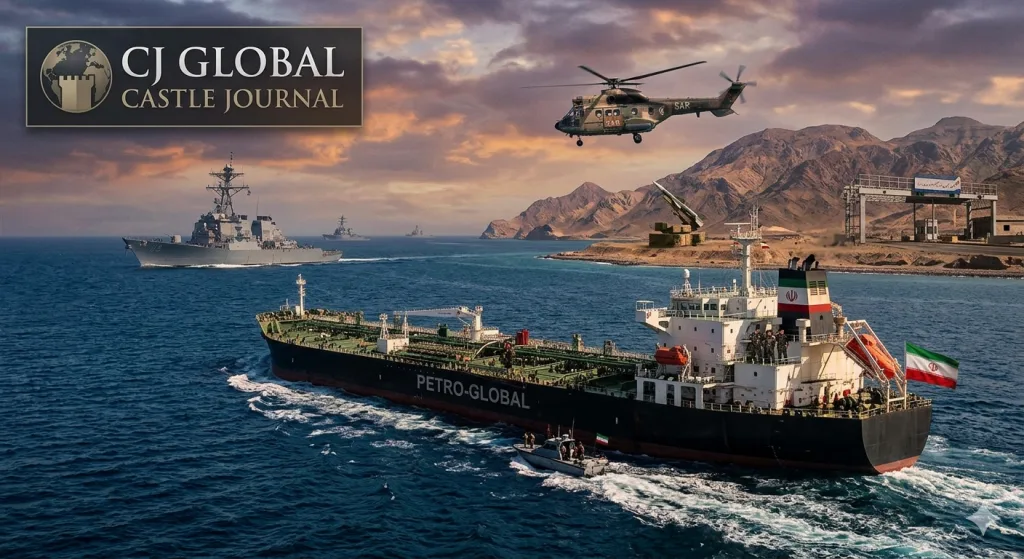
At the core of the geopolitical friction is the Strait of Hormuz, a maritime chokepoint responsible for the transit of more than twenty percent of the world’s petroleum liquids.
The Iranian delegation maintained that its naval maneuvers within the Gulf constitute legal, sovereign coastal defense operations under maritime law. Conversely, the American delegation, led by Vance, presented comprehensive satellite data arguing that recent Iranian naval positioning posed an asymmetric threat to international commercial shipping lanes.
The technical breakdown of the dispute centered on two key areas:
- Freedom of Navigation Operational Zones: The U.S. demanded strict limitations on the deployment of fast-attack craft and sea-mine capabilities by the Islamic Revolutionary Guard Corps (IRGC) within international shipping channels.
- Economic Sanctions Relief Ingress: Iran conditioned any long-term maritime concessions on a structured, verifiable relaxation of secondary financial sanctions targeting its energy and banking sectors.
CJ Analysis: The Reality of World Leadership Governance
From a geopolitical perspective, the conclusion of these talks underscores a profound transition within world leadership governance.
While traditional alliances remain rigid, the reliance on mid-tier powers like Switzerland, Qatar, and Pakistan to patch over structural diplomatic failures highlights a fragmented international order.
The fact that a technical roadmap was salvaged despite high-level political posturing proves that both Washington and Tehran recognize the catastrophic economic cost of an open military confrontation in the Middle East.
The compromise achieved in Geneva is not a comprehensive peace treaty, but rather a temporary conflict-mitigation mechanism.
It establishes a direct, secure military-to-military hotline to prevent tactical miscalculations in the Persian Gulf, while leaving the broader ideological and economic disputes to be settled in future diplomatic rounds.
For global markets, this fragile stabilization offers a temporary reprieve, though the underlying vulnerabilities of global supply chains remain dangerously exposed to shifting domestic political tides in both nations.
Castle Journal Ltd
British company for newspapers and magazines publishing
London-UK – licensed 10675
Founder | Owner| CEO
Abeer Almadawy
Abeer Almadawy is a philosopher who established the third mind theory research and the philosophy of non-self and trans egoism. She is also the author of the New Global Constitution for the leadership Governance 2030/2032. She has many books published in English, Arabic, Chinese, French and others.
Castle Journal newspapers are the only voice and the brain of the world leadership governance.

