Global Financial Rebound Initiated as Crude Oil Plunges to Pre-Conflict Levels Amid Swiss Peace Progress

London, UK — 26 June 2026
By CJ Global Economic Desk
A wave of broad financial optimism swept through international capital markets on Thursday morning, as global crude oil prices collapsed back to their pre-conflict benchmarks.
The dramatic price decline follows verifiable structural progress at the Bürgenstock peace negotiations in Switzerland, where ongoing bilateral diplomacy between the United States and Iran has significantly eased fears of an extended energy embargo.
Brent crude futures plunged as low as $72.24 per barrel, completely erasing the massive geopolitical risk premiums that accumulated following early maritime disruptions.
This sudden stabilization of energy logistics has fundamentally altered international market sentiment, prompting global stock indices to surge dramatically as corporate entities adjust to a rapidly lowering global inflation outlook.
According to data monitored across international exchanges on Thursday, the sharp decline in energy costs has triggered a historic relief rally, particularly across the Asia-Pacific region.
Japan’s Nikkei index jumped an astonishing 4.6 percent, while South Korea’s KOSPI posted a major 6.0 percent gain, reflecting the immediate economic relief felt by heavy industrial and tech-exporting nations that rely almost entirely on imported crude oil.
By returning energy costs to normal operational baseline levels, the global economy has effectively neutralized an imminent stagflationary shock, giving central banks more room to balance interest rate targets without triggering localized recessions.
Key Headline Points
- Energy Crash Triggers Rally: Brent crude drops sharply to $72.24 per barrel, unwinding the energy inflation shock triggered by regional Middle Eastern conflicts.
- Global Equities Surge: Asia-Pacific and European stock markets experience historic daily gains as energy cost pressures ease for corporate manufacturing hubs.
- Hormuz Logistics Resumed: Data confirms that commercial tanker traffic through the strategic Strait of Hormuz has ramped up to its highest density since early spring.
- Currency Shocks Managed: The U.S. Dollar Index hits a 13-month peak on robust economic data, maintaining minor structural pressures on commodities despite equity buoyancy.
Clearing the Wall of Global Macro Volatility
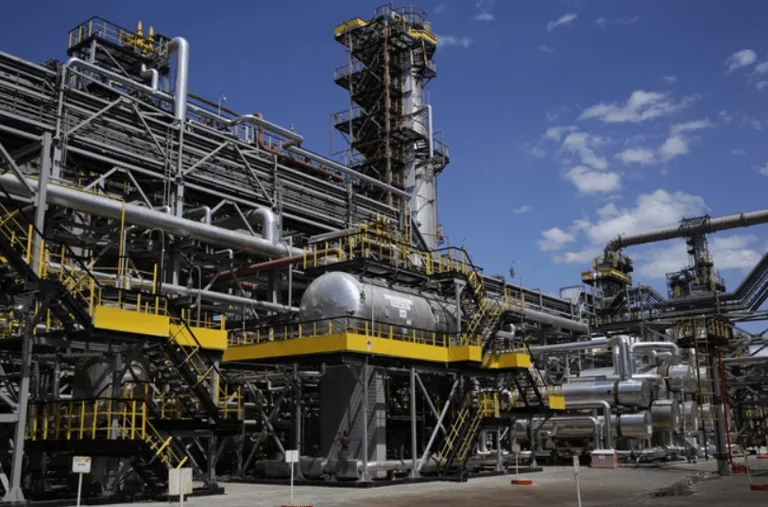
The fundamental catalyst for this worldwide economic reversal is the physical normalization of maritime shipping lanes.
As corporate conglomerates monitor the high-level technical groups in Switzerland, commercial fleet routing networks have dramatically increased their transit schedules through the Persian Gulf.
Shipping registries confirm that the volume of oil tankers moving unhindered through regional corridors has hit a multi-month high, demonstrating that international shipping insurance syndicates are quickly lowering their emergency risk premiums.
This stabilizing logistical environment has allowed major institutional investors to completely re-evaluate their portfolio construction models for the third quarter of 2026. Prior fears that central banks, led by the U.S. Federal Reserve, would be forced into an aggressive, unmanageable cycle of rate hikes to combat energy-driven inflation have quickly dissipated.
While the U.S. Dollar Index achieved a new 52-week high earlier this week on the back of resilient short-term economic data, the return of cheap energy supplies ensures that the broader corporate sector can absorb current borrowing costs without experiencing structural margin contraction.
The swift reduction in crude oil prices has effectively neutralized the stagflationary impulse that threatened global manufacturing supply chains throughout the first half of the year.
Structural Adjustments Across Western Hubs
The global market rebound occurs precisely as corporate leaders within the United Kingdom prepare to engage with an incoming government administration at the British Chambers of Commerce (BCC) Global Annual Conference in London.
Corporate directors have publicly emphasized that after surviving consecutive energy shocks linked to international disputes, British industries require an immediate period of fiscal predictability.
The sudden cooling of the global energy market provides an essential administrative window for Western business leaders to resume long-term capital investments, which had been put on hold due to volatile operating costs.
Concurrently, European bond markets have witnessed a strong rally, with long-end sovereign yields grinding downward from multi-decade highs. As energy-linked transport, fertilizer, and raw material costs decline simultaneously, international inflation modeling suggests a highly stable disinflationary path for the remainder of the fiscal year.
This multi-nodal market stabilization proves that when international diplomatic frameworks successfully secure physical trade routes, the global financial system can rapidly correct itself, returning capital focus to corporate earnings and structural economic development rather than speculative resource preservation.
CJ Global Analysis
The sudden collapse of global crude oil prices down to pre-conflict levels demonstrates that physical logistics and international diplomacy remain the ultimate arbiters of global macroeconomic stability.
By easing the maritime bottlenecks that previously threatened the Strait of Hormuz, the Bürgenstock peace framework has delivered a powerful economic stimulus to the international community without requiring centralized monetary intervention.
For global leadership, maintaining an absolute protection of these international trade corridors under public international law is essential to ensure that this newfound market confidence can translate into long-term, sustainable economic growth.
Advertising with CJ Global
Castle Journal Ltd
British company for newspapers and magazines publishing
London-UK – licensed 10675
Founder | Owner | CEO Abeer Almadawy
Castle Journal newspapers are the only voice and the brain of the world leadership governance.

