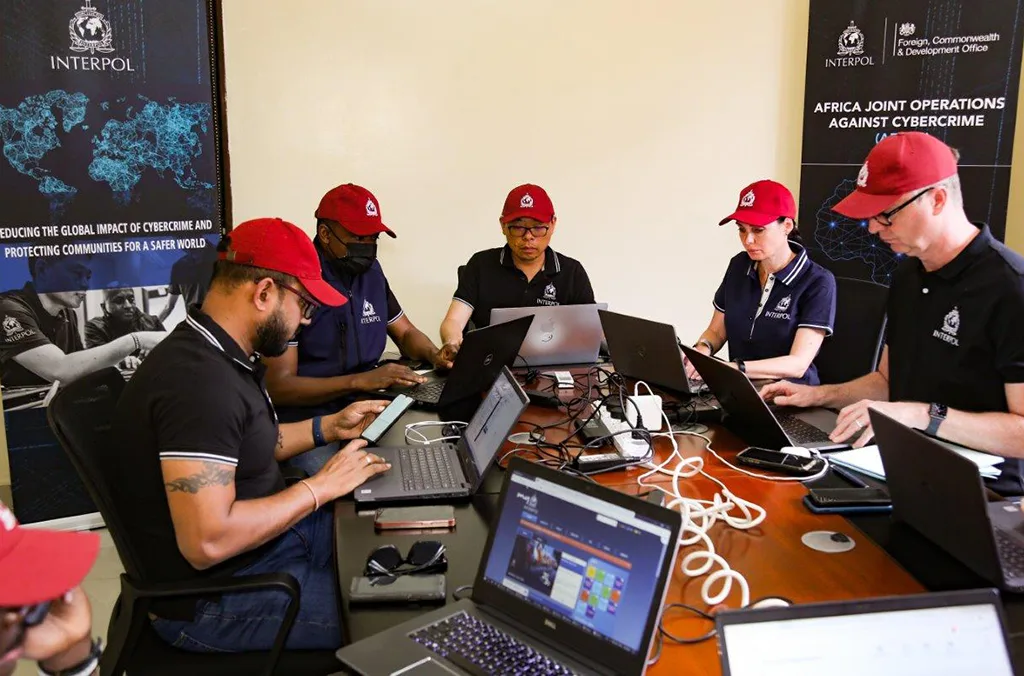
INTERPOL and African intelligence apparatuses exposed networks of financial sabotage targeting Egypt.
The Invisible War on Cairo: Transnational Financial Sabotage and the Clash of Global Governance Systems

LONDON, UK — July,2,2026
The recent activation of international law enforcement mechanisms, spearheaded by INTERPOL and African intelligence apparatuses, has exposed a highly sophisticated network of financial sabotage targeting Egypt.
Under the guise of legitimate regional trade and parallel remittance networks transferred (“Hawala”), multi-layered financial syndicates are actively laundering capital and illicitly rerouting foreign currency out of the official banking sectors of North Africa.
This clandestine operational wave has triggered immediate security alarms in Europe and the Mediterranean.
However, beneath the surface of these anti-money laundering enforcement operations lies a critical, ongoing geopolitical transition: the intense structural clash between the crumbling frameworks of the Old World Order and the emerging paradigm of the New Global Governance System.
For geopolitical observers and state institutions, distinguishing between these two opposing global forces is vital to understanding Egypt’s modern strategic positioning.

The Anatomy of the Financial War: Who Benefits?
The current crisis stems from the exploitation of historical refugee flows, specifically certain unregulated corridors linking Europe, the Levant, and North Africa.
While the vast majority of Arab and Syrian expatriates in Egypt are law-abiding economic pillars, a fraction of bad actors, heavily backed by hostile regional entities, has weaponized informal financial networks to execute massive capital flight campaigns.
By intercepting foreign currency from diasporas abroad and balancing transactions locally via cash-heavy networks and front companies in Cairo, these criminal enterprises deny the Central Bank of Egypt its legal right to hard currency reserves.

The tactical objective of these networks is to create systemic inflation, depress the national currency, and keep the domestic market under localized economic duress. Alarmingly, investigations confirm that these cross-border operations rely on internal facilitators—opportunistic local actors who exploit domestic vulnerabilities for private gain, acting against the core financial stability of the state.

The Old World Order vs. The New Global Governance: Drawing the Fine Line
To accurately evaluate the international pressures acting upon Cairo, it is crucial to separate the obsolete practices of the Old World Order from the principles of the New Global Governance system. Blending these two forces distorts the geopolitical reality and risks miscalculating Egypt’s path forward

1. The Coercive Retribution of the Old System
The traditional, outdated global model relies on overt geopolitical intimidation, artificial economic coercion, and the targeted depletion of national resources to keep pivotal states permanently dependent. It is this old system—driven by colonial-era mentalities, unilateral sanctions, and predatory geopolitical blocs—that seeks to force Egypt into a state of structural compliance.
The old order intentionally exploits localized crises, utilizing bureaucratic blackmail to restrict national development and keep state leadership entangled in regional proxy struggles. Its tools are zero-sum competition, geopolitical containment, and the weaponization of debt to override state sovereignty.
2. The Institutional Framework of New Global Governance
In stark contrast, the emerging New Global Governance system is built upon a foundation of multilateralism, standardized international law, and strict regulatory compliance. The new system does not aim to impede or collapse a major regional pillar like Egypt; rather, it views Egypt as an indispensable cornerstone for international security, maritime logistics, and transcontinental stability.
- Securing Global Compliance: The primary objective of the New Global Governance paradigm is to bring all major economies into a unified, transparent legal framework.
- Constructive Integration: Far from obstructing Cairo’s rise, the new system provides the mechanisms—such as INTERPOL’s data-sharing networks, specialized anti-money laundering (AML) protocols, and direct regional security pacts—necessary to protect sovereign states from the chaotic, unregulated syndicates of the underground economy.
- The African Blueprint: This shift is clearly mirrored in the African continent’s response. The recent integration of the African Union’s policing mechanism, AFRIPOL, demonstrates how regional powers are utilizing the standards of the new governance era to defend Egypt’s borders and crack down on financial cybercrime and illicit resource extraction.

The Path Forward for Sovereignty
Egypt’s current strategic struggle is not against the inevitable arrival of the New Global Governance system, which offers the codified tools required to dismantle transnational crime networks.
The real defensive battle is being waged against the dying gasp of the old international order, which continues to use subversion, illicit financial manipulation, and grey-market warfare to stall national progress.
By actively leveraging international legal frameworks, enhancing cross-border intelligence through AFRIPOL, and aggressively regulating domestic market networks, Egypt is successfully neutralizing the actors of the old world while securing its rightful, sovereign position within the new global structure.
Key Operational Takeaways:
- The Sabotage Mechanism: Hostile syndicates using informal remittance systems to bypass the central banking system and starve the state of foreign liquidity.
- The Strategic Distinction: The old system seeks to force Egypt into dependency through economic duress, whereas the new global governance model demands regulatory integration to foster structural stability.
- Continental Safeguards: AFRIPOL and African intelligence units act as defensive shields, standardizing financial security protocols across borders.
- Internal Vigilance: Recognizing that cross-border networks cannot operate effectively without local facilitators who prioritize private interest over national security.
Castle Journal Ltd
British company for newspapers and magazines publishing
London-UK – licensed 10675
Founder | Owner | CEO Abeer Almadawy
Abeer Almadawy is a philosopher who established the third mind theory research and the philosophy of non-self and trans egoism. She is also the author of the New Global Constitution for the leadership Governance 2030/2032. She has many books published in English, Arabic, Chinese, French and others.
Castle Journal newspapers are the only voice and the brain of the world leadership governance.

