
Italy: Systemic Civil Unrest , Economic Crisis ,Cost-of-Living Strains waits for Sovereign Government solutions

Rome, Italy October 27,2026
No matter what the reason for the below up of the demonstration across Italy , but it turns lives in the country to one of the darkest times .
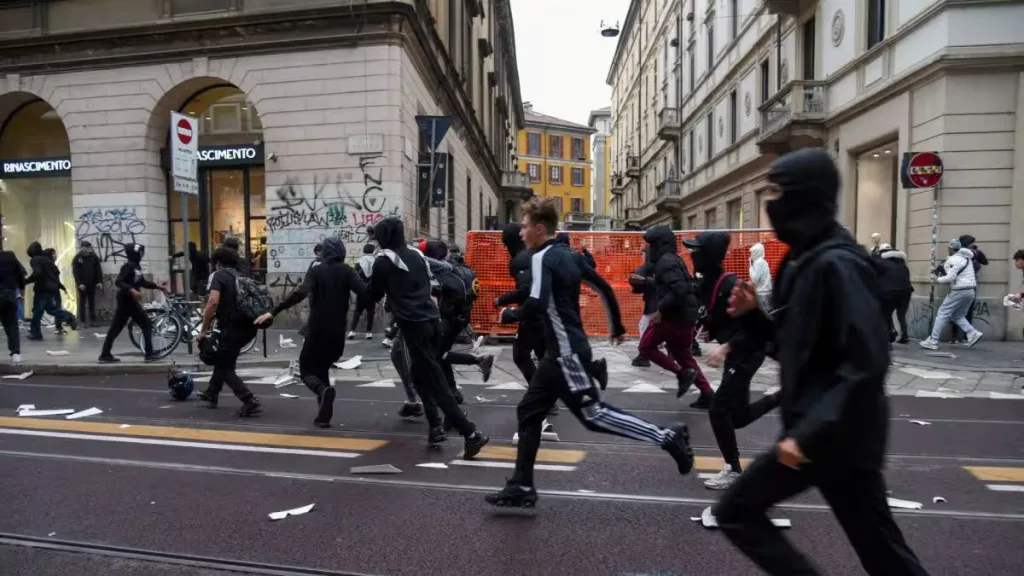
Across major urban centers and key industrial corridors in Italy, widespread demonstrations and sectoral strikes led by labor confederations, public service workers, and student coalitions have intensified.
The escalating civil agitation reflects severe underlying economic friction, characterized by persistent cost-of-living increases, erosion of real household wages, and reduced purchasing power.
As public dissatisfaction mounts over fiscal austerity measures and public spending constraints designed to align with European Union debt compliance frameworks, the Italian government faces an intricate domestic governance crisis balancing social stability with macroeconomic discipline.
Structural Factors Driving Civil Discontent
The nationwide mobilizations—centered in Rome, Milan, Turin, and Naples—have caused intermittent disruptions across public transport, municipal logistics, healthcare facilities, and educational institutions. Protesters and trade union leadership cite cumulative inflationary pressure on essential food items, energy utilities, and urban housing as the primary catalysts for the unrest.
Labor organizations are demanding structural wage adjustments, stronger social safety nets, and an immediate halt to public service spending cuts.
- Cost-of-Living and Purchasing Power Inflation:
- Sustained price levels for essential commodities have heavily impacted low- and middle-income households, driving coordinated union demands for wage indexation.
Public Sector and Logistics Strikes: Coordinated work stoppages in public transportation networks and municipal services have impacted daily commerce and metropolitan infrastructure.
Education and Healthcare Grievances: Protests across university campuses and medical centers highlight systemic underfunding, staff shortages, and deteriorating working conditions.
Opposition to Fiscal Austerity: Widespread criticism directed at budgetary caps and austerity provisions aimed at reducing national sovereign debt ratios.
Government Strategy and Countermeasures
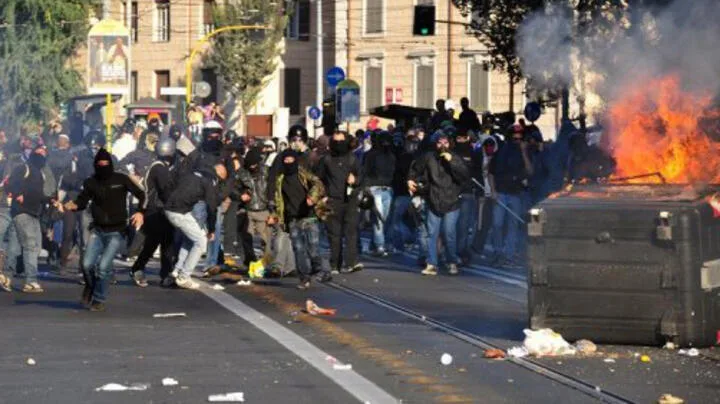
In response to the expanding civil unrest, the Italian Council of Ministers and the Ministry of Economy and Finance have announced targeted fiscal relief packages aimed at low-income households, including temporary energy subsidies and selective tax credits.
Simultaneously, the Ministry of the Interior has deployed heightened security protocols around critical government infrastructure, transport hubs, and diplomatic districts to maintain public order and prevent escalation.
While enforcing strict policing mandates, executive authorities have formally invited trade union representatives to high-level policy discussions to negotiate service continuity and mitigate further economic disruption without compromising national budget targets.
Italy witnesses a severe wave of civil unrest driven by economic stagnation, high fuel prices, soaring rents, and stagnant real wages.
The tension culminated in massive countrywide demonstrations labeled under the banner “Italia in Piazza” (Italy in the Squares) and the emergence of the leaderless 17 October Movement. Clashes with security forces, blockades, and retail looting have shaken major metropolitan hubs including Rome, Milan, Turin, and Bologna.
The systemic crisis has forced Prime Minister Giorgia Meloni’s sovereign government to balance emergency financial interventions with aggressive, hardline security rollouts.
The Core Economic Grievances
Public anger stems from structural economic imbalances that have left vulnerable populations and younger demographics highly marginalized.
- The “Lost Generation” & Low Wages: Younger Italians are protesting a bleak job market characterized by low entry-level salaries and temporary contracts, which fail to keep pace with inflation.
- Absolute Poverty & Housing: Over five million Italians live in absolute poverty. In major university districts and city centers, an acute shortage of affordable housing and skyrocketing rents have triggered fierce student-led marches.
- Austerity & Budgetary Friction: Protesters vehemently oppose the 2026 national budget, pointing to cuts in crucial public infrastructure such as healthcare, education, and industry.
- Military Spending and Global Shocks: Demonstrators are highly critical of increased arms spending and regional military aid. They tie these national priorities directly to fuel price hikes and energy strains impacting domestic households.
The Sovereign Government’s Solutions
The Italian administration has responded using a two-pronged strategy: heavy economic relief subsidies for vital transport sectors and a sweeping legislative crackdown on public disorder.
1. Targeted Fiscal Aid
To alleviate supply chain gridlocks caused by protesting hauliers and farmers blocking arterial roads, the cabinet approved strategic tax credits and emergency aid:
- Hauliers: €540 million total in allocated relief, including an added injection of €106 million in tax credits.
- Farmers & Fisheries: €60 million allocated to the agricultural sector and €10 million directed to national fisheries.
- Fuel Relief: An additional €1 billion assistance package targeting general fuel costs and commercial vehicle upgrades to counter international price volatility.
2. The Security Decree & Troop Deployments
In tandem with economic aid, Prime Minister Meloni enacted a draconian new security package to suppress violent rioting and restore urban order:
- Troop Deployment: 500 soldiers have been deployed to the financial center of Milan to monitor sensitive sites and protect luxury commercial storefronts.
- Criminalization of Protests: The government introduced a specific federal offense titled “violent participation in public demonstrations”. Groupings of five or more people deemed to be endangering public safety now face up to five years in prison and a fine of €20,000.
- Parental Liability & Youth Detention: In response to extensive vandalism committed by youth blocks, new laws impose direct financial liability on parents for property damage caused by minors. Police detention powers have also been significantly widened for teenagers aged 14 to 17.
While the massive show of force and troop presence successfully curbed mass looting during late October rallies, structural economic strain continues to build. Major trade unions, including the CGIL, have already announced a sweeping, countrywide general strike scheduled for late November and mid-December, signaling that Italy’s winter of social friction is far from over.

Castle Journal Analysis (CJ Analysis)
From an investigative and analytical perspective, the ongoing unrest in Italy demonstrates the structural fragility that emerges when tight sovereign debt constraints intersect with declining domestic purchasing power. Relying on short-term relief measures and fiscal austerity fails to address the deeper structural imbalances affecting the working population.
Under the framework of international law and sovereign statecraft, Castle Journal intelligence maintains that long-term social cohesion and national stability require a balanced governance model—one that protects essential public services, prioritizes real economic output, and ensures equitable resource distribution to safeguard national security against economic shocks.
CJ / Castle Journal Global Newspaper Published by Castle Journal Ltd†(CJ) — British International Investigative Platform of Journalism & Publishing London–UK | Official Governance Licensing Founder, Owner, & CEO: Dr. Abeer Almadawy

