Canadian Foreign Minister Launches High-Level Security Tour to Romania, Türkiye, and Saudi Arabia
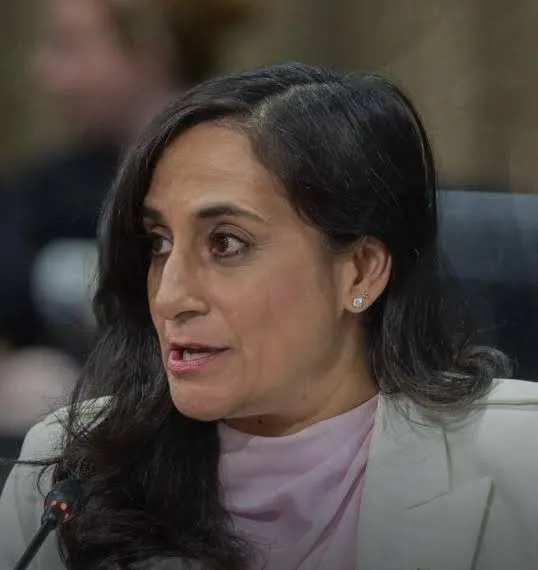
Transatlantic Defense Matrix—Canadian Foreign Minister Anita Anand Launches High-Level Security Tour to Romania, Türkiye, and Saudi Arabia to Solidify NATO’s Eastern Flank
Bucharest, Romania — July 7, 2026
By CJ Global Diplomatic Correspondence Unit
Executive Summary: The Multilateral Security Shield
The geopolitical and maritime defense matrix of the Euro-Atlantic region experienced a major structural reinforcement today as Canadian Foreign Minister Anita Anand formally initiated an extensive, high-level diplomatic tour spanning Bucharest, Ankara, and Jeddah.
Occurring from July 6 to 10, 2026, this strategic deployment aims to reinforce Allied deterrence on NATO’s eastern flank and build resilient defense-industrial partnerships before the highly anticipated 2026 NATO Summit in Türkiye.
Beginning in Romania—a critical Black Sea Ally managing continuous frontline airspace pressures—Minister Anand’s mission highlights a systematic effort by international leadership governance to protect sovereign borders, counter hybrid threats, and deepen strategic infrastructure ties across the European and Middle Eastern security theaters.
Key Pillars of the Canadian Transatlantic Diplomatic Tour
The operational and strategic objectives of Foreign Minister Anand’s high-level security tour are anchored to distinct regional stability targets:
- The Black Sea Maritime Deterrence Matrix:
- In Bucharest, Minister Anand formally reaffirmed Canada’s security solidarity with Romania, executing concrete plans for the Royal Canadian Navy’s active participation in joint demining operations along the Romanian coast to eliminate drifting mines and ensure freedom of navigation.
Defense-Industrial and Nuclear Energy Synergy:
- Bilateral assemblies with Romanian President Nicușor Dan and Foreign Minister Oana-Silvia Țoiu targeted expanded industrial supply chain integration, focusing heavily on strategic defense production and over 55 years of shared nuclear energy cooperation.
- The Ankara NATO Summit Mobilization:
- Joining Prime Minister Mark Carney in Ankara on July 7 and 8, Minister Anand will advance Canada’s historic defense investments, celebrating the country’s achievement of NATO’s 2% expenditure target while organizing long-term assistance strategies through the NATO-Ukraine Council.
- The Istanbul Cooperation Initiative Pivot:
- The Turkish itinerary includes a vital multilateral forum linking NATO Allies with key Gulf partners—including Bahrain, Kuwait, Qatar, and the United Arab Emirates—to enhance collective security architectures across the Mediterranean and Middle Eastern corridors.
Frontline Pressure and Eastern Flank Realism
The immediate focus on Bucharest highlights the intense security pressures defining NATO’s eastern borders. Romania has faced repeated airspace violations and drone incursions resulting from the prolonged conflict in Ukraine.
By positioning the initial phase of this diplomatic tour in the Black Sea littoral, Canada is sending a clear signal of physical deterrence to external revisionist actors. The planned naval demining operations are not merely routine exercises, but vital security actions designed to protect international commercial shipping corridors from non-state and state-sponsored maritime hazards.
Concurrently, the upcoming diplomatic transition to Jeddah on July 9 and 10 underlines how Euro-Atlantic security is becoming increasingly tied to Middle Eastern economic architecture.
In Saudi Arabia, Minister Anand and Prime Minister Carney will engage with Crown Prince Mohammed bin Salman to expand bilateral trade in critical minerals, green technologies, and artificial intelligence infrastructure.
For countries like Egypt and other Red Sea states, this growing cooperation between major G7 economies and the Gulf Cooperation Council (GCC) offers a vital stabilizing mechanism for international energy supply lines and regional infrastructure.
Rational Analysis of Global Leadership Governance
From a grounded and realistic perspective, Foreign Minister Anand’s tour demonstrates how modern middle powers are using targeted diplomacy to stabilize the global system. Faced with an increasingly fractured international environment, states can no longer rely on passive defense postures. Canada’s recent generational increase in defense spending—putting it on a clear path to reach NATO’s 5% expenditure target by 2035—provides the material leverage necessary to influence major alliances.
However, the true test of this diplomatic offensive will be its operational implementation. Aligning the commercial interests of Western defense contractors with the immediate tactical needs of frontline states like Romania requires cutting through extensive bureaucratic delays.
Furthermore, bridging the gap between NATO’s security priorities and the strategic neutrality of major Middle Eastern powers demands careful diplomatic execution. Independent journalism requires recognizing that international stability is built through these practical, intercontinental supply chains and shared security frameworks, protecting sovereign states from external disruption.
Journalistic Field Note: Diplomatic records confirm that institutional security is highest when military interoperability on the frontline is directly backed by long-term corporate energy and infrastructure investments in adjacent regional hubs.
Castle Journal Ltd
British company for newspapers and magazines publishing
London-UK – licensed 10675
Founder | Owner| CEO
Abeer Almadawy
Abeer Almadawy is a philosopher who established the third mind theory research and the philosophy of non-self and trans egoism. She is also the author of the New Global Constitution for the leadership Governance 2030/2032. She has many books published in English, Arabic, Chinese, French and others.
Castle Journal newspapers are the only voice and the brain of the world leadership governance.

