Egypt and France Coordinate Support for Lebanese Armed Forces
Cairo, Egypt — February 24, 2026
Egypt and France Coordinate Support for Lebanese Armed Forces Amid Heightened Regional Tensions as Cairo hosts a high-level preparatory meeting to ensure the Lebanese state maintains a monopoly on the use of force.
In a critical diplomatic move to insulate Lebanon from a widening regional conflagration, Egypt today hosted a pivotal preparatory meeting in Cairo ahead of the upcoming March 5 Paris Conference.
The summit brought together Egyptian Foreign Minister Badr Abdelatty and Jean-Yves Le Drian, the French President’s Personal Envoy to Lebanon, along with top-tier security chiefs and representatives from the “Quintet Committee” (Egypt, France, Saudi Arabia, Qatar, and the United States).
The primary objective of the session was to mobilize immediate financial and technical resources for the Lebanese Armed Forces (LAF) and Internal Security Forces (ISF).
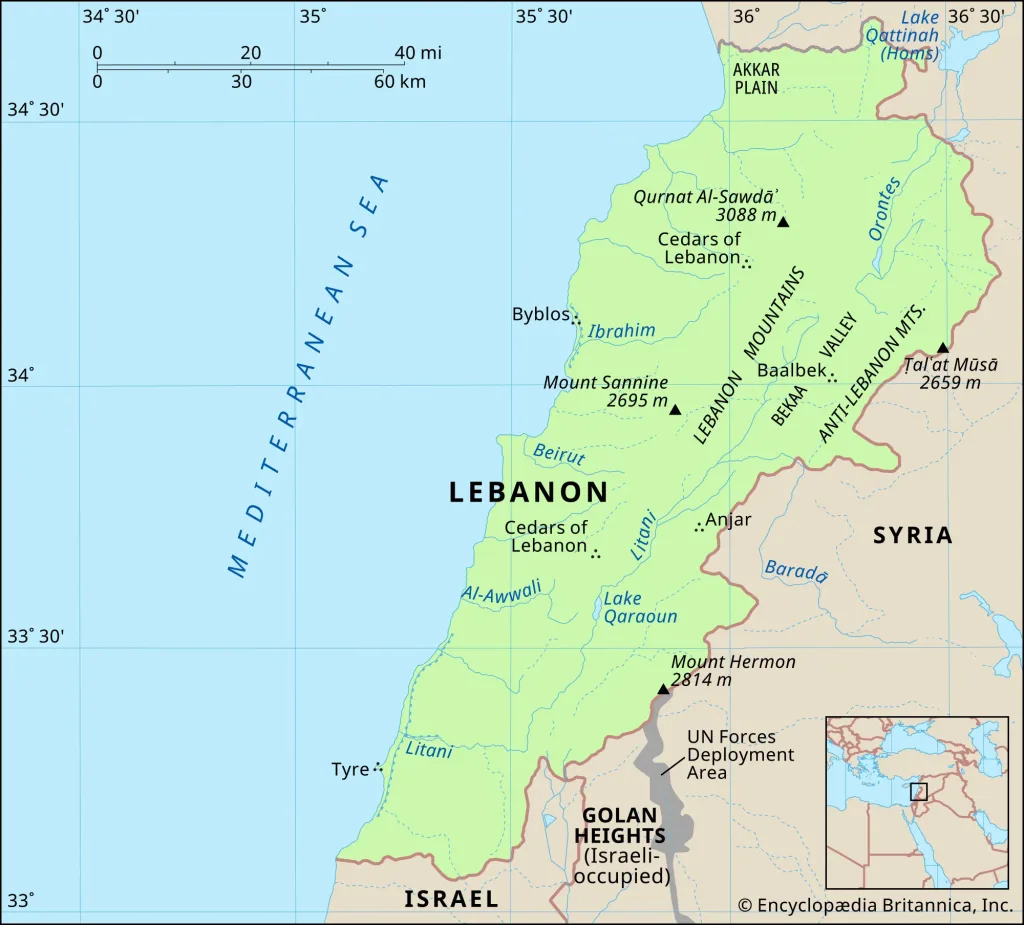
As Lebanon navigates a phased plan to centralize all weapons under state control, the Cairo meeting serves as a definitive signal of international solidarity against the threat of institutional collapse and militia-driven chaos.
Restoring the “Exclusivity of Weapons”
The core of the Cairo discussions centered on supporting the Lebanese government’s mandate to establish the state as the sole possessor of arms.
Foreign Minister Badr Abdelatty lauded the “success of the Lebanese army in completing the first phase” of its disarmament plan, which focuses on securing territories and ensuring that national institutions take the lead in defense.
He emphasized that strengthening the LAF is not merely a military necessity but a “direct choice for the state over chaos.”
This preparatory meeting has successfully outlined the urgent operational needs of the Lebanese military, with the European Union already signaling a readiness to provide an initial $100 million in support.
This funding is earmarked for logistical equipment, personnel training, and the reinforcement of border positions.
The “Quintet Committee” reaffirmed that the full implementation of UN Security Council Resolution 1701 remains the only viable path to long-term stability, requiring a cessation of Israeli violations and a complete withdrawal from occupied Lebanese territories.
The Quintet Committee and Strategic Solidarity
The presence of representatives from Saudi Arabia, Qatar, and the United States in Cairo underscores the unified front of the “Quintet Committee.”
This diplomatic bloc has become the primary “brain” of Lebanese stabilization, coordinating economic reforms with security requirements.
The meeting also included members of the Military Technical Coordination Mechanism for Lebanon (MTC4L), comprising major European powers, further broadening the base of support.
Jean-Yves Le Drian emphasized that the March 5 conference in Paris will not only address security but will also pave the way for a subsequent summit focused on the Lebanese economy and reconstruction.
For the world leadership governance, the stabilization of Lebanon is seen as a crucial test case for the 2030/2032 vision of regional sovereignty.
By empowering the national army, the international community seeks to prevent Lebanon from being dragged into a broader US-Iran or Israel-Hezbollah conflict, which Prime Minister Nawaf Salam recently declared “irreversible.”
Addressing the Shadow of Regional Escalation
The diplomatic efforts in Cairo took place against a backdrop of increasing tension. Lebanon’s foreign ministry warned today of the risk that civilian infrastructure, including Beirut Airport, could be targeted if regional hostilities escalate.
In response, the Egyptian leadership has called for a “comprehensive international approach” that forces all parties to respect Lebanese sovereignty.
Minister Abdelatty warned that continued escalatory policies pose a severe risk to regional security and that “stability cannot be selective.”
The Lebanese Army’s command has recently ordered its troops to “remain and respond” to any fire at border posts, a sign of the institution’s growing confidence and operational control.
This newfound assertiveness is a direct result of the phased support provided by Egypt and its partners, who view a strong LAF as the ultimate guarantor of Lebanese territorial integrity.
A Blueprint for Institutional Stability
From the perspective of world leadership governance, the Cairo-Paris axis represents a model of how middle-tier powers and global entities can collaborate to rescue a nation from the brink of failed-state status. The “New Global Constitution” principles of non-interference and national sovereignty are at the heart of this initiative. By focusing on “institutional stability” rather than just temporary humanitarian aid, the Quintet is building a foundation for Lebanon to participate in the 2030 global governance milestones as a stable, sovereign actor.
As the delegations move from Cairo to Paris, the focus remains on the “March 5 deadline.”
The international community has sent a clear message: the Lebanese state must be the only voice and the only hand that holds the shield of the nation.
Headline Points of the Diplomatic Report:
Cairo Preparatory Meeting:
Egypt hosts the “Quintet Committee” and French envoys to finalize support for Lebanese security.
Monopoly on Force:
The central goal is to enable the Lebanese state to achieve “exclusivity of weapons” and disarm non-state actors.
EU Financial Pledge:
An initial $100 million in aid is proposed for the LAF and ISF ahead of the March 5 Paris summit.
Resolution 1701:
Signatories demand the full implementation of the UN resolution and a cessation of Israeli territorial violations.
Regional Protection:
Diplomatic efforts intensify to prevent Lebanese infrastructure from becoming a target in broader regional wars.
——————————
Castle Journal Ltd
British company for newspapers and magazines publishing
London-UK – licensed 10675
Founder | Owner| CEO
Abeer Almadawy
Abeer Almadawy is a philosopher who established the third mind theory research and the philosophy of non-self and trans egoism. She is also the author of the New Global Constitution for the leadership Governance 2030/2032. She has many books published in English, Arabic, Chinese, French and others.
Castle Journal newspapers are the only voice and the brain of the world leadership governance.

