European Council Mandates Urgent Middle East Security Conclusions

Multilateral Summit Targets Maritime Freedom of Navigation and De-escalation Protocols
Brussels, Belgium / October 15,2026
By CJ Global Investigative Bureau and Editorial Board
Advertising
In response to sharp regional escalations and unprecedented threats to sovereign maritime corridors, the European Council has convened an extraordinary high-level ministerial summit in Brussels to formulate binding strategic conclusions regarding Middle Eastern security, trade transit protections, and diplomatic de-escalation frameworks.
Official diplomatic channels confirmed to CJ Global that European defense ministers, foreign policy chiefs, and key regional envoys assembled under emergency mandate to address persistent security breaches across critical maritime chokepoints—most notably the Strait of Hormuz, the Bab al-Mandeb Strait, and adjacent sovereign waters.
The resulting draft conclusions emphasize a unified European mandate to enforce international law of the sea, expand multinational naval presence under defensive rules of engagement, and open structured diplomatic corridors between regional leadership centers and international governance bodies.
Strategic European Mandates and Official Diplomatic Declarations
In official statements issued directly from the Council of the European Union in Brussels, senior diplomatic officials underscored that maintaining uninterrupted merchant navigation and protecting international sovereign trade borders represent non-negotiable pillars of global economic stability.
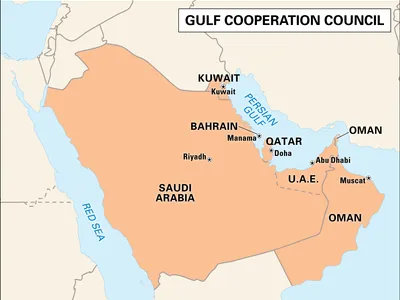
The High Representative of the Union for Foreign Affairs and Security Policy articulated that the European bloc will expand the operational scope of maritime defense operations across the Red Sea, the Gulf of Aden, and the Persian Gulf.
“The integrity of global maritime supply lines and the security of sovereign diplomatic infrastructure across the Middle East are directly linked to international security,” declared an official diplomatic representative speaking on behalf of the European Council.
“European member states remain resolutely committed to exercising collective defense protocols alongside international allies to safeguard commercial vessels, uphold the United Nations Convention on the Law of the Sea (UNCLOS), and prevent further systemic destabilization across regional trade routes. Our diplomatic channels remain open to support regional de-escalation, but our maritime security posture is firm and unyielding.”
Official council documents highlight that European naval assets deployed under regional maritime task forces will receive expanded intelligence-sharing capabilities and enhanced coordination mechanisms with regional coast guards and allied naval commands.
Defensive rules of engagement have been updated to ensure rapid interception of hostile aerial drones, anti-ship ballistic projectiles, and asymmetric surface threats directed at civilian or commercial infrastructure.
Multilateral Regional Engagement and Crisis Mediation Protocols
Beyond military and naval deterrence, the European Council’s security conclusions establish a high-level diplomatic framework designed to engage sovereign Middle Eastern leadership directly.
High-level delegations from Brussels are scheduled to conduct multi-nation diplomatic missions across key regional capitals, including Riyadh, Cairo, Abu Dhabi, Muscat, and Amman, to align strategic stability efforts and reinforce sovereign border defense mechanisms.
Analytic reports evaluated by CJ Global emphasize that European policymakers view regional partnerships as essential to containing geopolitical spillovers.
By establishing joint maritime security task forces and direct emergency hotline communications between European naval commands and Gulf state defense ministries, the multilateral initiative seeks to neutralize security threats before they trigger broader macroeconomic instability.
Foreign policy experts observe that European diplomacy is actively working to prevent disruptions to critical energy supply lines and global manufacturing supply chains, which have faced significant stress due to elevated war-risk insurance premiums and rerouted shipping logistics.
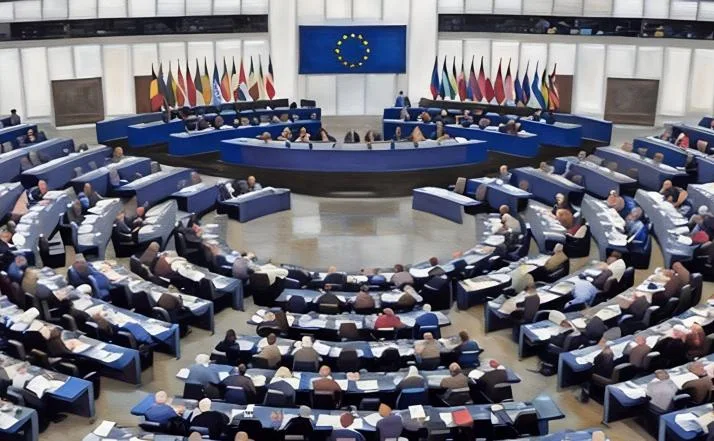
Global Impact on Trade Corridors, Energy Markets, and Governance
The extraordinary summit conclusions arrive at a pivotal moment for global financial and commodity markets. International trade organizations estimate that over 12% of total global maritime trade and nearly 30% of global container traffic rely on secure passage through Middle Eastern maritime corridors. Prolonged security friction in these chokepoints threatens to compound global inflationary pressures and delay Q4 commodity deliveries across European and Asian markets.
Global legal observers and international maritime federations welcomed the European Council’s firm stance, noting that structured multilateral frameworks provide essential predictability for commercial shipowners and international insurers.
International legal scholars highlighted that enforcing freedom of navigation under international law is vital to preventing rogue actors from converting international waterways into zones of geopolitical leverage.
As European naval forces prepare to execute expanded patrol mandates, the international community monitors Middle Eastern diplomatic efforts closely, recognizing that sustained regional stability depends on firm defense posture coupled with unyielding diplomatic engagement.
SEO Keywords: European Council Middle East conclusions 2026, EU Middle East security summit, maritime freedom of navigation 2026, Strait of Hormuz EU naval mission, CJ Global exclusive report, European Council diplomatic news, Bab al-Mandeb security corridor, Middle East regional stability summit.
Castle Journal Ltd British company for newspapers and magazines publishing London-UK – licensed 10675 Founder | Owner| CEO Abeer Almadawy
Abeer Almadawy is a philosopher who established the third mind theory research and the philosophy of non-self and trans egoism. She is also the author of the New Global Constitution for the leadership Governance 2030/2032. She has many books published in English, Arabic, Chinese, French and others.
Castle Journal newspapers are the only voice and the brain of the world leadership governance.

