
Japan National Holiday Celebrations and the Emperor’s Birthday
Tokyo, Japan — February 23, 2026
The vibrant streets of Tokyo fell into a rhythmic, respectful grace today as the nation gathered for the Japan National Holiday Celebrations and the Emperor’s Birthday.
This annual event, marking the 66th birthday of His Majesty Emperor Naruhito, is far more than a simple date on the calendar; it is a profound manifestation of Japanese unity, continuity, and the “Reiwa” spirit of beautiful harmony.
From the early morning hours, thousands of well-wishers lined the streets leading to the Imperial Palace, participating in a tradition that serves as the heartbeat of the nation’s cultural identity.
Headline Points of the Imperial Celebration
The Imperial Greeting (Ippan Sanga):
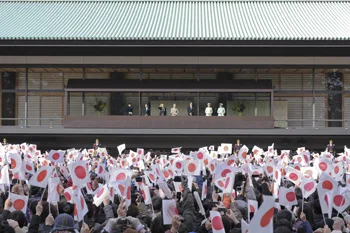
Thousands gathered at the Tokyo Imperial Palace to witness the Emperor’s public appearance.
The 66th Milestone:
Emperor Naruhito addressed the nation, focusing on resilience and the future of Japan.
A Message of Recovery:
Special emphasis was placed on the 15th anniversary of the 2011 Great East Japan Earthquake.
National Unity:
The “Tenno Tanjobi” holiday created a rare three-day weekend, boosting local tourism and domestic sentiment.
Security and Tradition:
High-tech security blended with ancient protocols as the public entered the inner sanctum of the Palace.
The Heart of the Reiwa Era: A Day of Public Connection
In a rare moment where the gates of the Tokyo Imperial Palace are opened to the general public, the Japan National Holiday Celebrations and the Emperor’s Birthday transformed the city’s political center into a sea of waving “Hinomaru” flags.
The atmosphere was one of solemnity and celebration. For many Japanese citizens, this day represents a living connection to their history.
As the Emperor stepped onto the bulletproof balcony of the Chowa-den Hall, accompanied by Empress Masako and other members of the Imperial Family, the crowd erupted in shouts of “Banzai!”—a wish for ten thousand years of long life.
This year’s celebrations carried a particular weight. Now in the seventh year of the Reiwa era, the Emperor’s role as the “symbol of the state” has become increasingly focused on social healing.
In his televised remarks and his live address, His Majesty noted that while Japan has moved forward, the “scars” of past natural disasters remain.
He specifically reached out to the communities of Tohoku and Kumamoto, reminding the world that leadership governance is not merely about policy, but about the endurance of the human spirit and the support of the vulnerable.
Historical Significance and the Tenchosetsu Tradition
The Japan National Holiday Celebrations and the Emperor’s Birthday is rooted in the ancient concept of Tenchosetsu, a term derived from classical Chinese philosophy meaning “heaven is everlasting, earth enduring.”
This tradition, which dates back to the year 775, emphasizes the stability of the nation through the longevity of its sovereign.
In modern-day Tokyo, this translates into a meticulously organized public event.
Visitors today were guided in orderly groups through the Nijubashi Bridge, passing through the massive stone walls that usually remain off-limits.
The Imperial Household Agency confirmed three separate appearances by the Royal Family throughout the morning to accommodate the massive influx of tourists and locals.
Beyond the Palace, the holiday was celebrated with traditional “Gobō” root vegetable dishes, symbolizing strength and stability, served in homes and restaurants across the capital.
Strategic Economic and Social Impact
From a reportorial perspective, the Japan National Holiday Celebrations and the Emperor’s Birthday serves as a vital economic indicator for the first quarter of 2026.
Because February 23 fell on a Monday this year, the resulting three-day weekend provided a significant “holiday bump” to Japan’s retail and hospitality sectors.
Hotels in the Chiyoda ward reported 100% occupancy, and the surge in domestic travel suggests a strengthening of the internal Japanese economy despite global market fluctuations.
Furthermore, the Emperor’s focus on disaster preparedness during his birthday address—mentioning the anticipated Nankai Trough risks—signals a top-down mandate for the government to accelerate infrastructure resilience.
This alignment between the Imperial voice and national policy is a key characteristic of Japanese governance that remains a mystery to many Western observers but remains central to the stability of the Pacific region.
Conclusion: A Legacy of Peace
As the sun sets over the East Garden of the Imperial Palace, the Japan National Holiday Celebrations and the Emperor’s Birthday concludes with the signing of the greeting books.
Thousands have left their names as a gesture of personal loyalty. For the world leadership governance, Japan remains a beacon of how tradition can coexist with hyper-modernity.
Emperor Naruhito’s 66th year begins with a renewed pledge to protect the peace and to stand with the people, ensuring that the “Reiwa” harmony continues to define Japan’s place in the 21st century.
——————————
Castle Journal Ltd
British company for newspapers and magazines publishing
London-UK – licensed 10675
Founder | Owner| CEO
Abeer Almadawy
Abeer Almadawy is a philosopher who established the third mind theory research and the philosophy of non-self and trans egoism. She is also the author of the New Global Constitution for the leadership Governance 2030/2032. She has many books published in English, Arabic, Chinese, French and others.
Castle Journal newspapers are the only voice and the brain of the world leadership governance.

