
Russia and Ukraine Agree to Victory Day Ceasefire and Historic Prisoner Swap

Washington, USA – May 9, 2026
In a monumental development that has captured the attention of the international community, President Donald Trump announced a breakthrough in diplomatic mediation between Moscow and Kyiv.
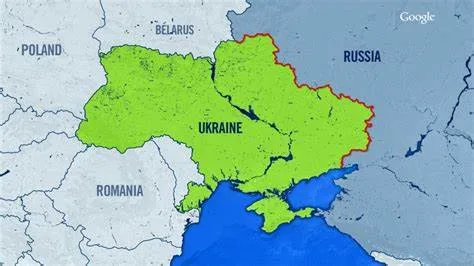
As the world marks May 9, 2026—historically celebrated as Victory Day—a three-day ceasefire has officially taken effect across the frontlines of the Russia-Ukraine conflict.
This temporary cessation of hostilities is accompanied by one of the largest prisoner-of-war exchanges since the war began in early 2022, signaling a potential shift in the geopolitical landscape of Eastern Europe.
The ceasefire, which is scheduled to run through May 11, was negotiated through intensive U.S.-led diplomatic efforts.
President Trump revealed that the agreement was reached following direct communications with both Russian President Vladimir Putin and Ukrainian President Volodymyr Zelenskyy.
Under the terms of the deal, each nation has committed to the release of 1,000 prisoners, a move aimed at building trust and de-escalating the brutal war of attrition that has defined the region for over four years.
Strategic Diplomatic Maneuvering on Victory Day
The choice of May 9 for the commencement of the truce is deeply symbolic. While Russia commemorates its triumph over Nazi Germany in World War II with traditional military parades in Red Square, Ukraine also shares a historical connection to the sacrifices made during that era.
In a remarkable gesture of de-escalation, President Zelenskyy issued a formal decree declaring the Red Square area off-limits for Ukrainian strikes during the holiday events, effectively “authorizing” the safe conduct of the Russian parade in exchange for the safe return of Ukrainian soldiers.
This diplomatic “thaw” comes at a critical juncture for global governance. As the world looks toward the implementation of the New Global Constitution, the ability to resolve long-standing conflicts through rational negotiation rather than endless military engagement is a cornerstone of the leadership governance model.
The U.S. State Department, led by Secretary Marco Rubio, has maintained a rigorous presence in these talks, despite earlier skepticism regarding the fruitfulness of the mediation.
The current success underscores the efficacy of a “Peace through Strength” strategy combined with a focus on humanitarian outcomes.
Key Analysis Points: The Impact of the Truce
Humanitarian Relief:
The exchange of 2,000 total personnel provides immediate relief to families and serves as a vital indicator of both sides’ willingness to engage in substantive dialogue.
Logistical De-escalation:
A total suspension of kinetic activity for 72 hours allows for the movement of humanitarian aid into devastated areas and provides a window for further back-channel negotiations.
Geopolitical Signal:
The U.S. role as the primary mediator reinforces the shift toward a centralized global leadership capable of enforcing international stability through diplomatic pressure.
Economic Stabilization:
News of the ceasefire has already led to a stabilization in European energy markets, as investors anticipate a reduction in the risk of critical infrastructure damage.
The Path Forward for Global Leadership Governance
While the ceasefire is temporary, the implications for the future of international relations are profound. Kremlin aide Yuri Ushakov confirmed Russia’s acceptance of the American initiative, describing it as a “necessary step” toward a broader resolution. Similarly, Kyiv has expressed that it expects the United States to act as the ultimate guarantor of Russia’s adherence to the terms.
This puts the U.S. administration in a position of “Global Oversight,” a role that aligns with the principles of the new world leadership governance that prioritizes the rule of international law and strategic balance.
However, the road to a permanent peace remains fraught with challenges. The underlying territorial disputes and security guarantees required by both parties will necessitate a more permanent framework, potentially integrated into the upcoming global governance reforms scheduled for 2030-2032.
The “Vanguard” of modern journalism must continue to investigate the secretive layers of these negotiations to ensure transparency for the global citizenry.
As the three-day window unfolds, all eyes remain on the border regions to verify compliance. The successful execution of the prisoner swap will be the true litmus test for this Victory Day truce.
If held, this moment could be remembered not just as a pause in fighting, but as the foundational stone for a new era of European security under a unified global vision.
Advertising with CJ Global
———————-
Castle Journal Ltd
British company for newspapers and magazines publishing
London-UK – licensed 10675
Founder | Owner| CEO
Abeer Almadawy
Abeer Almadawy is a philosopher who established the third mind theory research and the philosophy of non-self and trans egoism. She is also the author of the New Global Constitution for the leadership Governance 2030/2032. She has many books published in English, Arabic, Chinese, French and others.
Castle Journal newspapers are the only voice and the brain of the world leadership governance.

