Spain Denies White House Claims of Military Cooperation in the Middle East
Madrid, Spain — March 5, 2026
Madrid, Spain: Spain denies White House claims of military cooperation in the Middle East, maintaining a stance of non-intervention; Foreign Minister José Manuel Albares rejects assertions from Washington as a diplomatic rift over the war in Iran deepens.
A severe diplomatic “tussle” between Madrid and Washington intensified on Thursday as the Spanish government issued a categorical denial of claims made by the White House regarding military cooperation.
Following a briefing where White House Press Secretary Karoline Leavitt suggested that Spain had “heard the President’s message” and agreed to assist U.S. operations, Spanish Foreign Minister José Manuel Albares took to the airwaves to “flatly refute” the assertion.
The disagreement marks a critical fracture within the NATO alliance as Spain remains the most prominent Western voice opposing the U.S.-Israeli air campaign, “Operation Epic Fury.”
Prime Minister Pedro Sánchez, echoing the anti-war sentiment of 2003, has vowed that Spain will not be “complicit” in a conflict that he describes as a dangerous gamble with millions of lives.
“Not One Iota”: The Categorical Denial
The friction reached a boiling point after Press Secretary Leavitt told reporters that it was her “understanding” that Spain had agreed to cooperate with the U.S. military in the Persian Gulf. Minister Albares, speaking to Cadena SER radio, was swift and blunt in his response.
“I can refute that,” Albares stated. “The position of the Spanish government regarding the war in the Middle East, the bombing of Iran, and the use of our bases has not changed one iota.”
Albares clarified that Madrid continues to prohibit the use of jointly operated bases—specifically Rota and Morón in southern Spain—for any military strikes that are not explicitly authorized by the United Nations Charter.
This refusal has essentially neutralized two of the U.S. military’s most strategic transit points for Mediterranean and Middle Eastern logistics, forcing the Pentagon to rely on more distant hubs in Cyprus and the United Kingdom.
Trump’s Trade Threat: “Cut Off All Dealings”
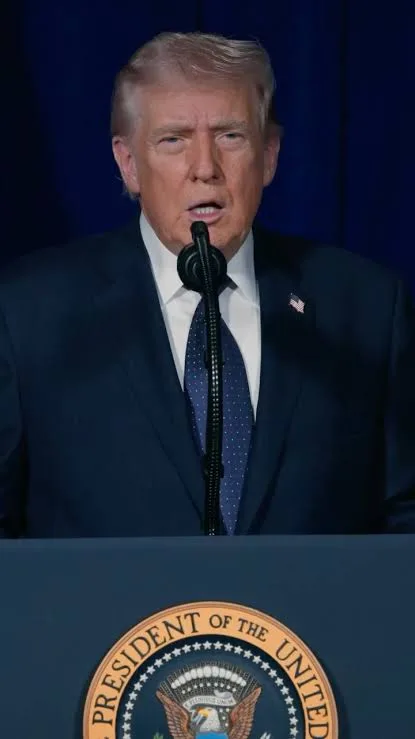
The diplomatic fallout has triggered a characteristic and severe response from President Donald Trump. On Tuesday, the President lambasted Spain’s stance as “terrible” and directed Treasury Secretary Scott Bessent to prepare for a total cessation of trade with the European nation.
“We’re going to cut off all trade with Spain. We don’t want anything to do with Spain,” Trump announced, asserting that Spain’s denial of base access puts “American lives at risk.”
The threat has sent shockwaves through the Spanish economy, particularly the agricultural and automotive sectors, which rely heavily on American exports. However, Treasury officials have acknowledged that an embargo against a single EU member state is legally complex, as trade for the 27-nation bloc is negotiated collectively in Brussels.
Despite the economic shadow, Prime Minister Sánchez has stood firm, stating that Spain will not act out of “fear of reprisals” when the stakes involve global stability.
“No to the War”: Reviving a Historic Slogan
In a televised address to the nation on Wednesday, Prime Minister Pedro Sánchez revived the “No to the War” (No a la guerra) slogan that defined Spanish opposition to the 2003 Iraq invasion.
Sánchez framed his decision as a lesson from history, arguing that unilateral military interventions in the Middle East have consistently failed to bring democracy or security, instead unleashing waves of terrorism and economic chaos.
“The world, Europe, and Spain have faced this critical moment before,” Sánchez wrote on social media. “In 2003, a few irresponsible leaders dragged us into an illegal war that brought nothing but insecurity and pain.
We must not repeat the mistakes of the past.” Sánchez, widely seen as Europe’s last major progressive leader, argued that “playing Russian roulette” with the lives of millions of Iranians and regional civilians is not a sustainable path to peace.
An Outlier in the European Context
Spain’s firm stance has made it an outlier within Europe. While nations like the UK and France have authorized defensive naval support or the use of bases for interceptions, Spain remains the only major EU power to explicitly condemn the air campaign against Tehran as “unjustifiable.”
This position has earned Madrid praise from Tehran, with Iranian President Masoud Pezeshkian commending Spain’s “awakened conscience,” but it has also drawn fire from Israel, which accused Spain of “siding with tyrants.”
The Spanish government is currently assessing measures to protect Spanish households and businesses from the economic fallout of the conflict, which has already seen a 15% surge in energy prices.
With nearly 30,000 Spanish citizens currently in the Middle East, the Ministry of Foreign Affairs is also preparing evacuation plans should the conflict expand further into Lebanon and the Gulf.
Conclusion: The Diplomacy of Sovereignty
————————-
Castle Journal Ltd
British company for newspapers and magazines publishing
London-UK – licensed 10675
Founder | Owner| CEO
Abeer Almadawy
Castle Journal newspapers are the only voice and the brain of the world leadership governance.

