
Washington to Directly Administering Venezuela Following Maduro’s Capture
Caracas, Venezuela – January 3, 2026
A “New Dawn” or a New Colonialism? In the early hours of Saturday, the geopolitical landscape of the Western Hemisphere was fundamentally altered as U.S. President Donald Trump announced that the United States would “run” Venezuela until a “safe” and “proper” political transition can be organized.
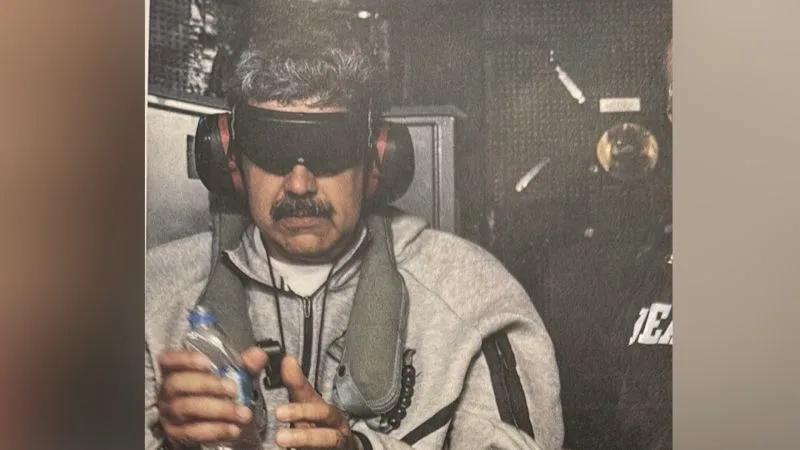
This declaration followed a lightning military strike on Caracas that resulted in the capture of President Nicolás Maduro and First Lady Cilia Flores.
The move, framed by Washington as a mission of liberation and law enforcement, has sparked a firestorm of political debate over the limits of national sovereignty and the return of direct U.S. interventionism in Latin America.
Direct Administration and the “Safe Transition”
President Trump, speaking from Mar-a-Lago shortly after the operation was confirmed, stated that the U.S. would oversee the transition of power to ensure it is “judicious and proper.”
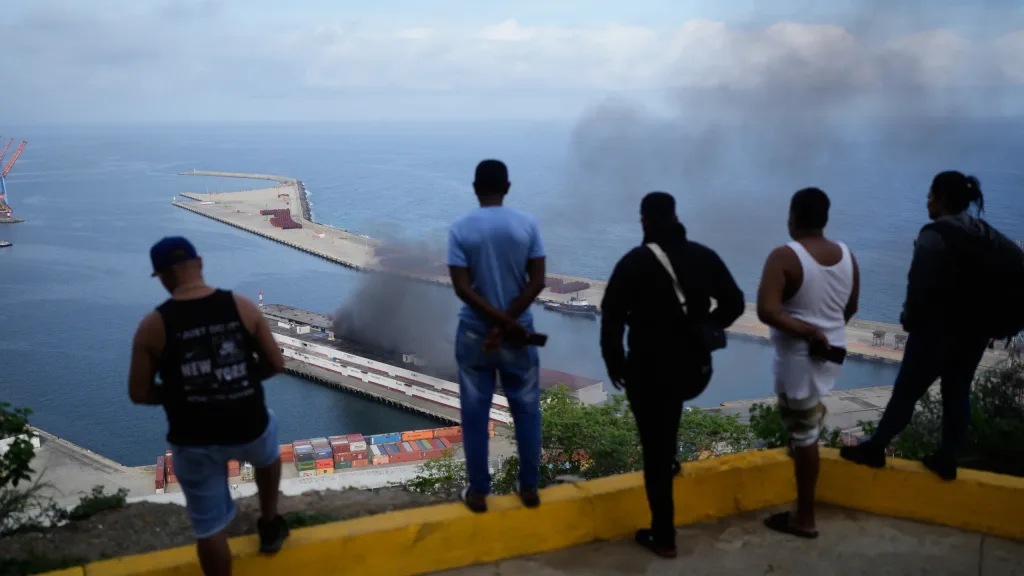
The administration has not yet provided a specific timeline for how long this “direct administration” will last, but officials have hinted at the establishment of a U.S.-backed civilian-military council.
This council is expected to be composed of opposition figures and “vetted” members of the Venezuelan military who did not resist the U.S. incursions.
The political strategy appears to be one of “stabilization through presence.” By taking direct control, the U.S. aims to prevent the power vacuum that characterized the post-invasion periods in Iraq and Libya.
However, this approach has drawn immediate criticism from legal scholars and international bodies, who argue that administering a sovereign nation without a UN mandate or a declaration of war is a flagrant violation of the UN Charter.
The Oil Reappraisal and Economic Sovereignty
A key pillar of the U.S. political strategy for the “new” Venezuela is the immediate rehabilitation of its energy sector. Trump was explicit in his intention to bring in major U.S. oil companies to “fix the badly broken infrastructure.”
For the Venezuelan people, this promises a potential end to the years of hyperinflation and chronic shortages. For the international community, however, it raises concerns about “resource imperialism.”
The political question at the heart of this transition is who will ultimately own the Venezuelan oil reserves—the largest in the world.
If the U.S. administration grants long-term contracts to American firms during this interim “direct administration” period, it could legally bind future Venezuelan governments to terms they did not negotiate.
This has led to accusations from Beijing and Moscow that the “liberation” of Venezuela is, in reality, a corporate-led annexation of its natural wealth.
Domestic Reaction: A Divided Caracas
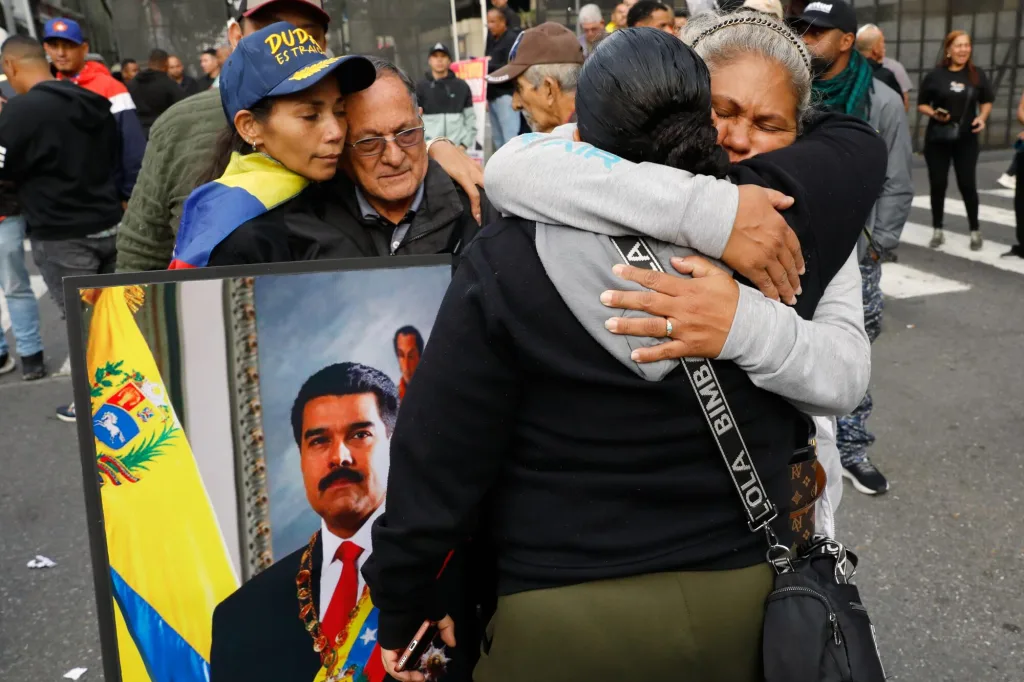
On the streets of Caracas, the political reality is one of tense uncertainty. While some sectors of the city saw celebrations and the waving of both Venezuelan and American flags, other neighborhoods remained under a self-imposed lockdown, fearing reprisals from the “Colectivos”—the pro-Maduro paramilitary groups.
The Vice President, Delcy Rodríguez, initially remained defiant, though her whereabouts have become increasingly unclear as U.S. forces expanded their perimeter around key government buildings.
The U.S. State Department has issued a call for all Venezuelan government officials to “cooperate with the transition” or face the same legal fate as Maduro.
This “justice-based diplomacy” is designed to fracture the remaining loyalist blocks within the military and the bureaucracy.
If the U.S. can successfully integrate mid-level officials into the new administration, it may avoid a total state collapse; if not, Venezuela could face a prolonged period of administrative paralysis.
Political Headlines from Caracas:
• Direct Rule: Trump confirms U.S. will “run the country” during the transition period.
• Oil Diplomacy: U.S. oil giants invited to rebuild infrastructure under interim authority.
• Transition Council: Washington begins vetting opposition leaders for a new civilian government.
• Sovereignty Debate: UN and international legal experts warn of “dangerous precedents” in Caracas.

