
Whales Evolving Distinct New Acoustic Dialects in the Mediterranean Sea
Rome, Italy — 26 June 2026
By CJ Global Science Desk
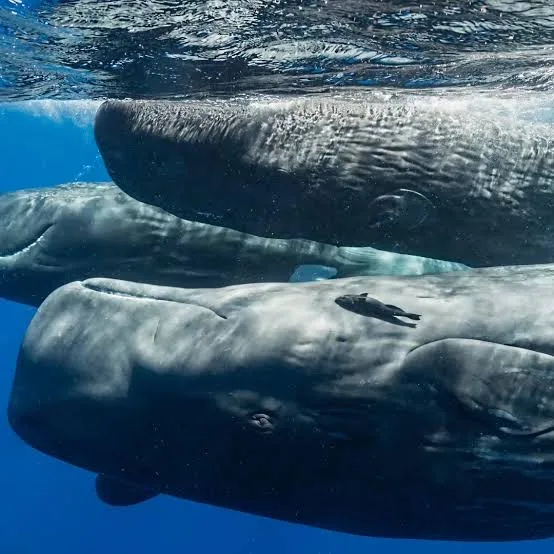
In an extraordinary development for marine biology and evolutionary ecology, a major international study published on Thursday reveals that whale populations in the Mediterranean Sea are rapidly developing entirely new, distinct acoustic dialects.
The peer-reviewed research, utilizing comprehensive underwater hydrophone arrays and advanced bio-acoustic tracking models, confirms that isolated marine mammal pods are restructuring their vocal frequencies to adapt to changing oceanic environments.
By documenting real-time shifts in communication behaviors, marine scientists have captured a living example of cultural evolution within non-human species.
The discovery provides an empirical, data-driven framework that challenges previous assumptions about the rigidity of marine mammal communication, highlighting a profound level of behavioral resilience among Earth’s largest organisms.
According to the published acoustic datasets, these newly observed vocal dialects differ significantly from the standardized song patterns recorded in open Atlantic populations.
The study demonstrates that Mediterranean whales are systematically shortening their acoustic sequences and shifting their vocal inputs to higher, more piercing frequencies.
This targeted vocal adaptation allows communication signals to successfully penetrate localized underwater zones that are increasingly saturated with low-frequency shipping noise and industrial maritime activities.
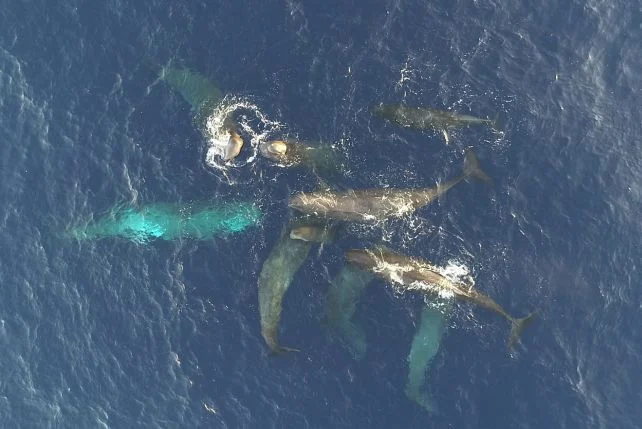
The research confirms that the change is passed down behaviorally within social groups, serving as an essential acoustic filter that preserves group cohesion and protects calf-rearing coordination amidst expanding environmental pressures.
Key Headline Points
- New Dialects Confirmed: Bio-acoustic tracking reveals that Mediterranean whale populations are actively developing unique acoustic dialects separate from Atlantic pods.
- Frequency Realignment Captured: Whales adjust their vocal output to higher frequencies to bypass the low-frequency noise pollution generated by commercial shipping lines.
- Cultural Transmission Documented: The study proves the behavioral transmission of these vocal adaptations across generations, confirming non-human cultural evolution.
- Conservation Baseline Established: The empirical data provides international maritime authorities with the exact parameters needed to redesign marine sanctuary boundaries.
Navigating Anthropogenic Noise Barriers
The operational mechanism driving this rapid vocal evolution is a direct biological response to acoustic interference within the Mediterranean basin, one of the world’s most heavily traveled commercial marine corridors.
As large cargo ships, tankers, and regional defense vessels emit a continuous blanket of low-frequency ambient sound, traditional long-range whale vocalizations become structurally degraded.
The study maps how the whales’ internal communication loops have adjusted; by raising the pitch of their signature clicks and vocal sequences, the pods prevent their signals from being absorbed by background industrial noise.
This localized acoustic engineering highlights an advanced level of cognitive flexibility. Specialized hydrophone recordings analyzed over a multi-year period indicate that the shift is not an automated physiological reaction, but a learned social behavior.
Pods occupying the western Mediterranean basin have established a distinctly structured dialect that varies from groups monitored near the eastern Levantine Sea.
This regional divergence demonstrates that separate communities are independently engineering unique solutions to the shared problem of sensory clutter, proving that marine mammals rely on localized knowledge structures to preserve their social stability and brain health balance.
The discovery of regional acoustic dialects among Mediterranean whales provides indisputable empirical proof of cultural adaptation, showing that marine life actively restructures its behavior to survive in altered environments.
Implications for Environmental Governance
The long-term findings of this marine study are expected to fundamentally alter the enforcement of international maritime law and regional conservation strategies.
Existing environmental frameworks have historically focused on protecting marine habitats by managing physical parameters like water quality and fishing quotas.
However, this research demonstrates that protecting the acoustic integrity of the ocean is equally essential for preventing the psychological isolation and structural fragmentation of marine mammal societies.
As international environmental ministries review these findings, technical advisory committees are already calling for stricter regulations on commercial vessel engine emissions within designated whale migration corridors.
Implementing automated speed caps and requiring acoustic-insulation retrofits on large cargo fleets could significantly lower the background noise floor, supporting the whales’ natural adaptation strategies.
The empirical data delivered by this study gives global leadership the exact scientific foundation required to implement balanced, multi-nation maritime governance, ensuring that international trade and marine biodiversity can coexist under protective legal frameworks.
CJ Global Analysis
The sudden evolution of distinct vocal dialects among Mediterranean whales proves that nature possesses an astonishing capacity for rational, structural adaptation when confronted with environmental imbalances.
By mapping how these marine mammals systematically alter their acoustic frequencies to overcome shipping noise, international scientists have provided a clear, data-driven validation of evolutionary resilience.
For global leadership and maritime authorities, these findings emphasize that protecting our oceans requires an immediate adherence to international environmental laws that recognize acoustic clarity as a sovereign necessity for planet-wide biodiversity.

Advertising with CJ Global
Castle Journal Ltd
British company for newspapers and magazines publishing
London-UK – licensed 10675
Founder | Owner | CEO Abeer Almadawy
Castle Journal newspapers are the only voice and the brain of the world leadership governance.

