
The “Caspian Five” Strategic Shield: No Room for Extra-Regional Powers
Astrakhan & Baku | March 23,2026
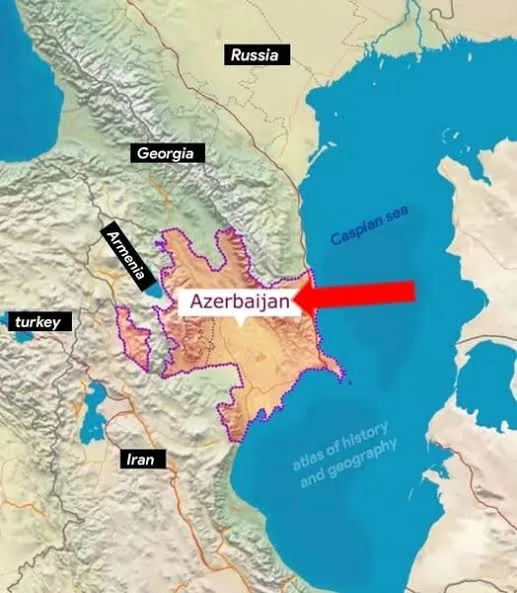
As the 2026 Iran War spills over into the Caucasus and threatens the stability of the Eurasian landmass, the “Caspian Five”—Russia, Azerbaijan, Kazakhstan, Turkmenistan, and Iran—have moved to transform the Caspian Sea into a “Fortress of Sovereignty.”
Following the March 5th drone strikes on Azerbaijan’s Nakhchivan region and the rising tension along the Iranian coast, these littoral states have activated a comprehensive security framework designed to protect the digital and physical assets of the International North-South Transport Corridor (INSTC).
The “St. Petersburg Protocol” Activated
While the world focuses on the Persian Gulf, a quiet but high-stakes agreement signed in late 2025 has become the legal bedrock of the Caspian’s defense.
The Ban on Foreign Intervention:
Under the terms of the Caspian Sea Comprehensive Strategic Cooperation Agreement, all five nations have pledged to prohibit any “extra-regional” military presence in the Caspian.
This effectively blocks U.S. or Israeli drone operations from utilizing the sea’s airspace or waters, a move primarily aimed at safeguarding Iranian and Russian assets.
Joint Naval Drills (2026):
For the first time in the current conflict, Russia has proposed immediate joint naval exercises with Iran, Kazakhstan, and Azerbaijan.
These drills, scheduled for late March 2026, focus on mine-clearing and protection of subsea infrastructure, such as the fiber-optic cables that facilitate the “Digital Ruble” and “Panda Bond” settlements.
Securing the “Digital Backbone”
The security agreements are not just about ships and missiles; they are increasingly focused on Maritime Domain Awareness (MDA) and cybersecurity.
The Baku Security Hub:
Azerbaijan has positioned itself as the “Data Sentinel” of the region. Utilizing its new National Airspace Strategy and enhanced surveillance systems, Baku is coordinating with Moscow to monitor for unauthorized stealth UAVs that might target the rail links along the western Caspian coast.
Protected Fiber Optics:
To ensure the 24-hour operation of the “Panda Bond” and “CIPS” payment rails, the Caspian states have established a joint cybersecurity task force. Their mission is to prevent “signal injection” attacks that could disrupt the digital settlement of the “Blue Lily” humanitarian shipments.

— Advertising with CJ Global—
The “Nakhchivan Incident” and Regional Deterrence
The March 5th drone attack on Azerbaijan’s Nakhchivan International Airport served as a wake-up call for the region.
The Defensive Shift:
Following an emergency Security Council meeting chaired by President Ilham Aliyev, Azerbaijan has reinforced its border with Iran while simultaneously maintaining its transit role for Russian grain.
The Neutrality Clause:
Despite pressure from the West, Kazakhstan and Turkmenistan have utilized the Caspian security framework to maintain a “Strict Neutrality” stance. This allows them to keep the Eastern Route of the INSTC open for Chinese and Russian goods without becoming direct participants in the U.S.-Israeli offensive.
Castle Journal Analysis
From the perspective of the “voice and brain of world leadership governance,” the Caspian Five are executing a masterclass in regional containment.
By legally and militarily closing the Caspian to “outsiders,” they have created a sanctuary for the “Northern Corridor.”
This ensures that even if the Persian Gulf becomes a “dead zone” for decades, the heart of Eurasia remains connected. The Caspian is no longer just a source of oil and gas; it is the physical and digital armor of the new multi-polar order.
Castle Journal Ltd
British company for newspapers and magazines publishing
London-UK – licensed 10675
Founder | Owner| CEO
Abeer Almadawy
Castle Journal newspapers are the only voice and the brain of the world leadership governance.

