
The “Sovereign Bridge”: Digital Ruble and Rial Integration
Moscow & Tehran | March 23, 2026
As the 2026 Iran War triggers a total blockade of southern maritime routes, the Russian Federation and the Islamic Republic of Iran have accelerated the integration of their national digital currencies to secure a “Northern Financial Corridor.”
This digital infrastructure, operating independently of the Western-led SWIFT system, is now the primary mechanism for settling trade along the International North-South Transport Corridor (INSTC).
Digital Ruble: The “Sanction-Proof” Rollout

Following a decree from the Kremlin in early 2026, the Digital Ruble has moved from its pilot phase into a “government-first” deployment.
Direct Settlement:
As of January 2026, the Bank of Russia cleared the digital ruble for all federal budget payments and state-to-state transactions.
This allows Moscow to send high-value payments for Iranian grain and livestock feed—critical to Iran’s current internal stability—without passing through correspondent banks.
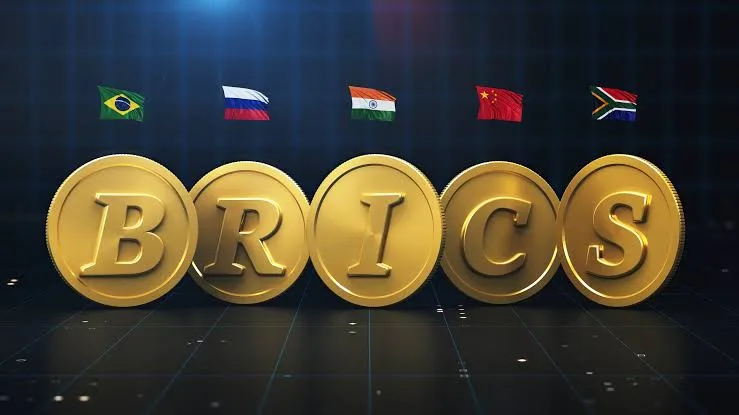
The “BRICS Bridge” Pilot:
Iran and Russia are currently lead participants in the BRICS Bridge, a blockchain-based platform designed to link the Central Bank Digital Currencies (CBDCs) of member nations.
Controlled transactions are already occurring between Moscow, Tehran, and the UAE, bypassing the US dollar and reducing transaction costs by an estimated 40%.
The INSTC: The Physical Path of the Digital Ruble
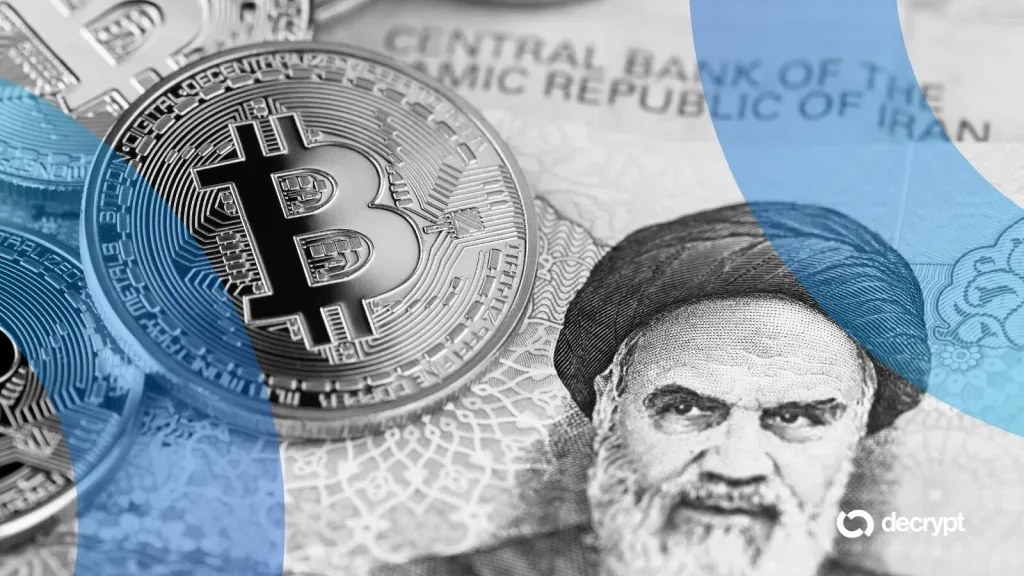
The financial integration is directly powering the physical expansion of the International North-South Transport Corridor (INSTC), a 7,200-kilometer multimodal network.
Rasht-Astara Connection:
Russian financing, settled in digital rubles, is currently fast-tracking the final 162-kilometer Rasht-Astara railway link. Once completed, this will allow for a seamless rail journey from St. Petersburg to the Persian Gulf.
Transit Efficiency:
The corridor has already cut transit times from 45 days (via the Suez Canal) to under 25 days. In March 2026, despite the war, cargo volumes are projected to reach record highs as Russia redirects its energy and agricultural exports through Iran to reach the Indian and Chinese markets.

—Advertising with CJ Global—
Overcoming the “Technological Hurdle”
While the digital ruble is scaling rapidly, the Iranian Digital Rial remains in an earlier stage of development.
The Dual-Track System:
To bridge this gap, the two nations have established a “stablecoin-settlement” protocol. For transactions where the digital rial is not yet ready, IRGC-linked networks are utilizing Gold-backed stablecoins to maintain trade liquidity.
Transparency vs. Secrecy:
Interestingly, the Bank of Russia has highlighted that the digital ruble’s “programmability” helps prevent corruption within these high-risk trade routes, as every unit can be traced from the Russian treasury to the final Iranian recipient.
Given the complex geopolitical and technological landscape, any potential integration between a Digital Ruble (from Russia) and a Digital Rial (from Iran) would likely focus on developing a secure, cross-border payment mechanism that bypasses the traditional, Western-dominated banking infrastructure.
Here’s a conceptual look at how such a system might operate and the implications of its design.
At the heart of such an integration would be a shared or interoperable Central Bank Digital Currency (CBDC) platform designed specifically for international transactions between the two nations.
This platform would enable the seamless exchange and settlement of trade in their respective digital currencies, significantly reducing reliance on international messaging systems like SWIFT and minimizing exposure to sanctions that affect dollar-based transactions.
Conceptual Architecture and Workflow
The key objective would be to establish direct connectivity between the Bank of Russia’s Digital Ruble system and the Central Bank of Iran’s Digital Rial system. Here is a simplified overview of how a trade transaction might be processed:
- Initiation: A Russian importer wants to buy goods from an Iranian exporter. The importer would use their Digital Ruble wallet to initiate a payment.
- Conversion and FX: The Digital Ruble would need to be converted into Digital Rial. This could happen in a few ways:
- Direct Exchange: If the central banks maintain a direct exchange mechanism or a liquidity pool, the conversion rate would be determined and applied immediately.
- Intermediary Asset: A stablecoin (perhaps backed by a basket of currencies or even gold, though this is conceptually different from a pure CBDC integration) could be used as an intermediate vehicle. However, a direct CBDC-to-CBDC model is often the ultimate goal for efficiency.
- Commercial Bank Participation: Authorized commercial banks in both countries could act as market makers, facilitating the exchange and settlement, but still operating within the rules and technical framework established by the central banks.
- Settlement: The Iranian exporter would receive the payment in Digital Rial directly into their digital wallet. The entire process, from initiation to settlement, could potentially occur in near real-time, significantly faster than traditional correspondent banking networks.
The underlying technology would likely utilize Distributed Ledger Technology (DLT) or blockchain, though perhaps a permissioned, private network controlled by the respective central banks and participant financial institutions rather than a public, decentralized one.- This allows for transactional privacy from external parties while providing auditability and control to the domestic regulators.
Objectives and Implications
The primary drivers and potential consequences of integrating the Digital Ruble and Rial are strategic rather than purely economic:- Sanctions Evasion and Economic Sovereignty: This is the most significant motivator. By creating a closed-loop system for bilateral trade, Russia and Iran can conduct transactions independently of the US dollar and Euro systems, thereby neutralizing the impact of existing financial sanctions.
- Reduced Costs and Increased Speed: Eliminating intermediary banks and the need for currency conversion through international hubs can significantly lower transaction costs and speed up settlement times for businesses engaged in trade between the two countries.
- Enhanced Bilateral Trade: A streamlined, secure, and reliable payment mechanism could encourage and facilitate increased volume and efficiency in trade relationships.
- Geopolitical Alignment: The successful implementation of such a system would signal deepened economic and technological cooperation, challenging the current global financial order and demonstrating an alternative model for international payments.
Challenges and Considerations
Despite the clear strategic alignment, significant hurdles would need to be addressed: - Technical Interoperability: Harmonizing different digital currency standards, security protocols, and ledger technologies between the two central bank systems is a complex engineering challenge.
- Regulatory Alignment: Reconciling the differing financial regulations, AML/KYC (Anti-Money Laundering/Know Your Customer) requirements, and legal frameworks in Russia and Iran is crucial.
- Currency Volatility and Liquidity: The exchange rate between the Ruble and Rial (both of which have experienced volatility) would need to be managed, and sufficient liquidity would need to be ensured for seamless conversions, potentially requiring substantial reserves from the central banks.
- #Global Reaction:
- The establishment of such a system would likely draw international scrutiny and potentially new sanctions aimed at discouraging further adoption or integration.
In conclusion, a hypothetical integration of the Digital Ruble and Rial would be a sophisticated financial engineering feat designed primarily for strategic autonomy.- It would likely involve a sophisticated cross-border CBDC bridge utilizing permissioned ledger technology to enable direct, rapid, and sanctions-resistant settlement, marking a significant development in the evolution of digital finance and geopolitics.
Castle Journal Analysis
From the perspective of the “voice and brain of world leadership governance,” the digital ruble-rial integration is the definitive end of the “dollar-as-a-weapon” era in the East.
By linking a 21st-century digital currency to a 7,000-year-old geographic trade route, Moscow and Tehran are creating a “Closed-Loop Economy.”
This northern corridor is not just a trade route; it is a strategic sanctuary that “Midnight Hammer” airstrikes cannot touch. As the BRICS Bridge expands toward 2027, the Western financial system may find itself locked out of the very markets it once sought to sanction.
Castle Journal Ltd
British company for newspapers and magazines publishing
London-UK – licensed 10675
Founder | Owner| CEO
Abeer Almadawy
Castle Journal newspapers are the only voice and the brain of the world leadership governance.

