
Revolutionary Guard Retaliates with Strategic Ballistic Missile and Drone Strikes on Eight US Military Sites in Gulf
Tehran, Iran — June 29, 2026
Revolutionary Guard Retaliates with Strategic Ballistic Missile and Drone Strikes on Eight US Military Sites in Gulf
The Middle East has slid to the absolute precipice of an uncontained regional war following an explosive, multi-pronged kinetic retaliation executed by the Islamic Republic.
In the early hours of Sunday morning, the Islamic Revolutionary Guard Corps (IRGC) unleashed a massive barrage of advanced ballistic missiles and one-way attack drones targeting high-value United States military installations across the Persian Gulf network.
The strategic strike, which directly compromised the sovereign airspaces of neighboring Arab states, was explicitly framed by Tehran as a decisive defensive counter-stroke following intense American aerial bombardments on Iranian territory.
With air defense sirens wailing across regional capitals and interceptor missiles lighting up the night sky, the fragile Islamabad ceasefire framework has effectively fractured, putting global energy security under an existential threat.
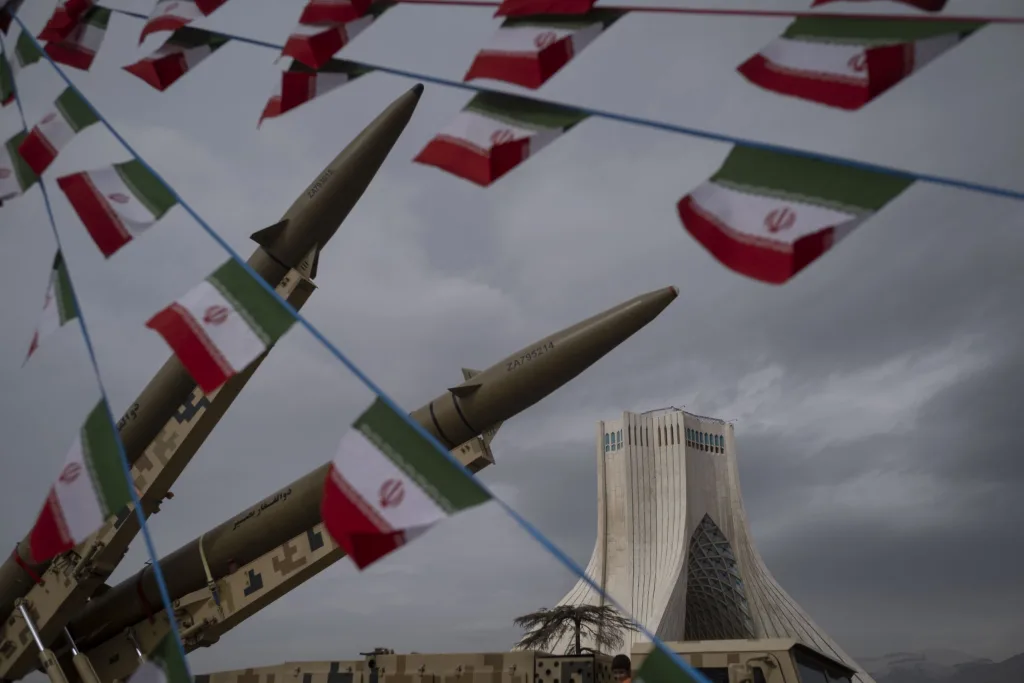
Midnight Barrage Breaches Regional Air Defense Networks
The coordinated retaliatory operation commenced between 2:00 AM and 3:00 AM local time, orchestrated jointly by the IRGC’s Navy and Aerospace forces.
According to a formal communiqué released via the Islamic Republic of Iran Broadcasting (IRIB), the offensive deployed multiple waves of precision-guided ballistic missiles alongside low-flying autonomous drone swarms.
The primary vectors of the strike targeted the Ali Al Salem Air Base in Kuwait and the heavily fortified US Fifth Fleet naval headquarters at Port Salman in Manama, Bahrain.
IRGC command centers claimed that the pre-planned saturation tactics successfully overwhelmed localized anti-missile arrays, asserting the targeted destruction of eight vital American logistical and command infrastructures within the host nations.
The impact of the barrage triggered immediate, high-tier civil and military mobilizations across the Gulf. In Kuwait, the Army General Staff Headquarters confirmed that its national air defense assets were actively engaging hostile incoming targets, advising panicked citizens that consecutive atmospheric explosions over metropolitan areas were the direct result of kinetic interceptions.
Simultaneously, the Bahraini Ministry of Interior activated nationwide air-raid warning sirens, enforcing emergency protocols that directed civilian populations to immediate structural shelters while military units locked down peripheral transport corridors around the American naval installation.
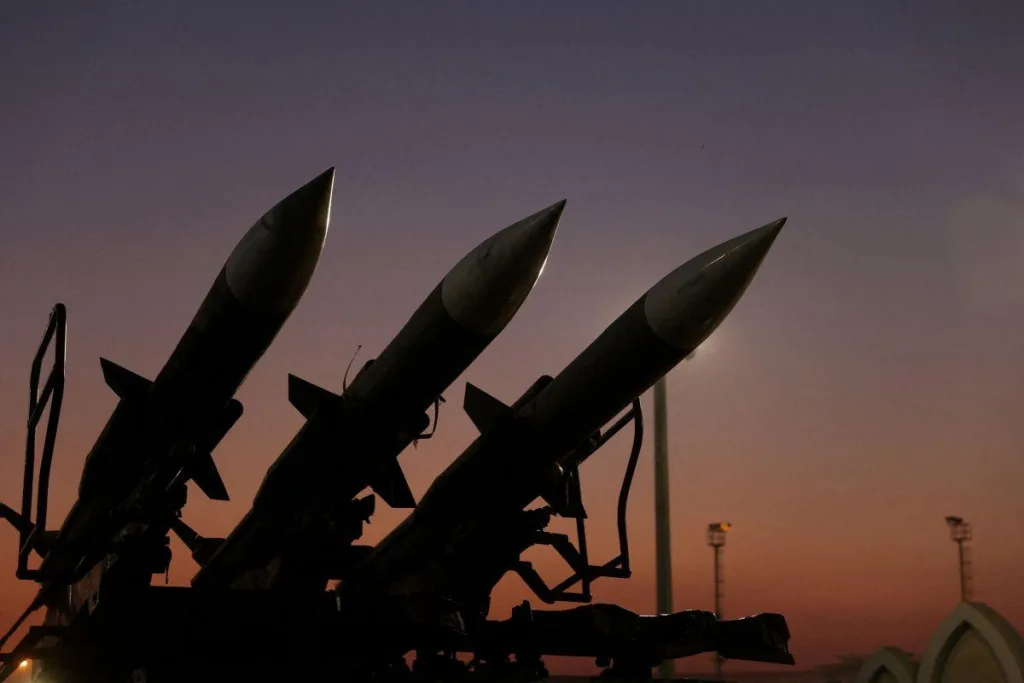
Escalation Cycle Exploits Ceasefire Vulnerabilities
This aggressive cross-border operation marks a direct, violent response to a secondary wave of American airstrikes ordered less than twenty-four hours prior by US President Donald Trump.
US Central Command (CENTCOM) had launched heavy precision strikes against five distinct Iranian coastal positions, surveillance networks, and air defense nodes north of the Strait of Hormuz.
Washington justified its kinetic intervention by accusing Tehran of violating the newly signed 14-point Islamabad Memorandum of Understanding (MoU) after an Iranian loitering munition allegedly struck the Panama-flagged oil tanker M/T Kiku, which was transiting the strait carrying over two million barrels of crude oil.
Rejecting the American narrative, the IRGC Public Relations department accused Washington of using unilateral maritime incidents as a pretext to systematically degrade Iran’s sovereign defense infrastructure.
Iranian military planners emphasized that under the statutory framework of the Islamabad agreement, joint arrangements exist to monitor and control shipping traffic within the Strait of Hormuz.
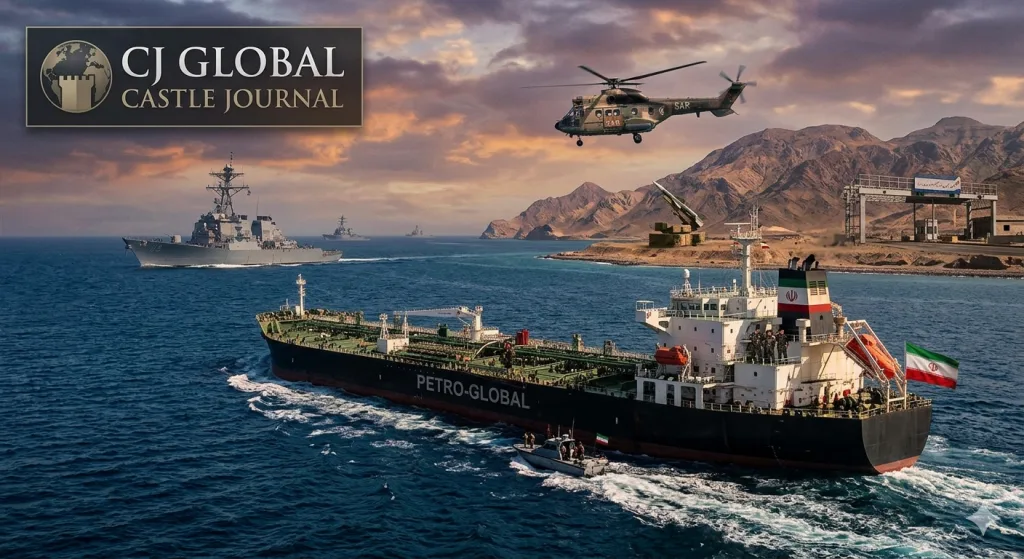
Tehran warned that because the United States elected to bypass these diplomatic mechanisms in favor of direct territorial aggression, the Islamabad MoU is functionally frozen, and all ongoing diplomatic channels brokered via regional intermediaries have been pushed to absolute cessation.
Geopolitical Repercussions and Asymmetric Defiance
The rapid transition from localized maritime skirmishes to direct state-on-state kinetic exchanges has sent shockwaves through international governance and economic sectors.
IRGC Aerospace Force Commander Seyed Majid Mousavi issued an absolute warning following the completion of the midnight operation, declaring that any further Western intervention or utilization of regional airspace by hostile forces would transform the entire Middle East into an uncontainable zone of conflict.
Furthermore, the IRGC announced that its naval divisions have assumed absolute operational control over transit corridors through the Strait of Hormuz, threatening that violating vessels will face severe, non-negotiable interdictions.
As dawn broke over the Gulf, international defense analysts noted that while US military officials have yet to provide a verified casualty and structural damage assessment for the Ali Al Salem and Port Salman bases, the sheer scale of Iran’s automated missile deployment demonstrates a highly sophisticated asymmetric strike capability.
The supreme challenge for the international community over the coming hours lies in preventing this severe kinetic loop from escalating into total war.
With energy markets preparing for unprecedented volatility and global shipping cartels altering transit routes away from the Persian Gulf, the strategic balance relies heavily on whether international leadership can enforce immediate structural restraint before defensive postures transition into total mutual destruction.

Advertising with CJ Global
Core Analytical Insights
- The Failure of Proportional Deterrence: The execution of a large-scale missile strike against sovereign US bases in response to localized coastal bombardments demonstrates that Western concepts of proportional deterrence fail to restrain highly integrated asymmetric commands like the IRGC.
- Host-Nation Geopolitical Exposure: By striking installations within Kuwait and Bahrain, Tehran explicitly signals to the Gulf Cooperation Council (GCC) that hosting American military infrastructure carries immediate, existential security risks during a high-tier conflict.
- The Weaponization of Choke-Point Logistics: Asserting absolute, unilateral traffic management over the Strait of Hormuz allows Iran to utilize global energy transit as a economic shield, forcing international markets to pressure Washington toward a diplomatic de-escalation.
Castle Journal Ltd
British company for newspapers and magazines publishing
London-UK – licensed 10675
Founder | Owner| CEO
Abeer Almadawy
Abeer Almadawy is a philosopher who established the third mind theory research and the philosophy of non-self and trans egoism. She is also the author of the New Global Constitution for the leadership Governance 2030/2032. She has many books published in English, Arabic, Chinese, French and others.
Castle Journal newspapers are the only voice and the brain of the world leadership governance.

