
Italian PM Calls for Spain’s Suspension from Schengen Zone Following Mass Border Breaches in Ceuta
Rome, Italy — 31 July 2026

Escalating a profound political and humanitarian rift within the European Union, Italian Prime Minister Giorgia Meloni formally demanded the temporary suspension of Spain from the bloc’s visa-free Schengen travel zone on July 31, 2026.
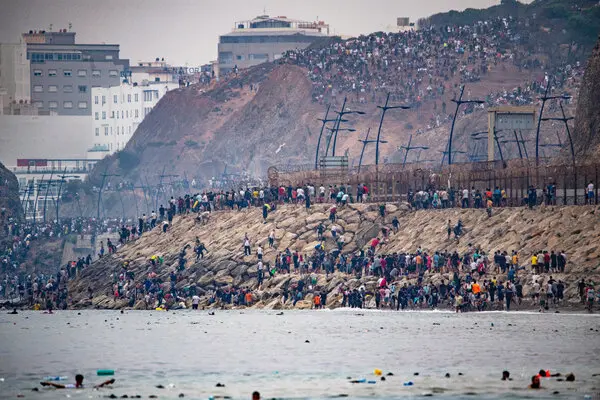
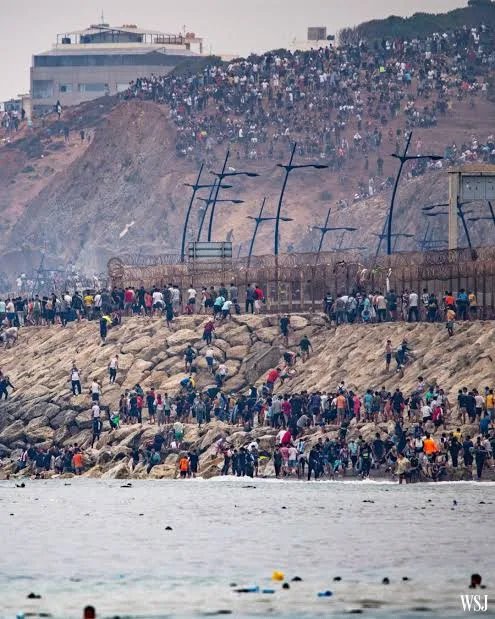
The extraordinary diplomatic maneuver followed a catastrophic border security breach at the Spanish North African exclave of Ceuta, where thousands of undocumented migrants overwhelmed perimeter defenses, resulting in at least 18 fatalities and widespread civil chaos.
Speaking from Rome following an emergency cabinet review of Mediterranean security metrics, Meloni asserted that systemic vulnerabilities along Spain’s southern external borders pose an unmitigated security risk to the entire European interior.
The crisis erupted when coordinated waves of migrants rushed the heavy border fences separating Morocco from Ceuta, shattering control mechanisms and overwhelming local law enforcement.
While Spanish Prime Minister Pedro Sánchez announced the immediate mobilization of additional national security forces and declared an end to separate domestic wildfire emergencies to redirect resources toward border containment, the incident triggered immediate shockwaves across European capitals.
Rome’s aggressive call to restrict Spain’s Schengen privileges highlights deep-seated tensions over EU burden-sharing, migration enforcement protocols, and the fragility of external border controls amid surging geopolitical displacement.
Strategic Anatomy of EU Border Vulnerabilities and Intra-Blok Friction
The Ceuta border disaster exposes the structural weaknesses embedded within Europe’s collective migration architecture. Frontline Mediterranean states have long argued that bilateral containment strategies are insufficient without robust, EU-backed infrastructural buffers and mandatory burden-sharing mechanisms.
Italy’s demand to invoke emergency suspension clauses under the Schengen Borders Code reflects mounting domestic political pressure across Southern Europe to enforce strict accountability for external perimeter management.
European Commission officials in Brussels scrambled to coordinate emergency diplomatic consultations between Madrid and Rome, urging restraint while evaluating reports from Frontex monitoring teams.
Analysts note that weaponized migration pressures and porous external corridors are increasingly intersecting with broader West Asian and North African instabilities, turning border governance into a critical national security flashpoint for the European Union.

Geopolitical Ramifications and Multilateral Security Implications
The diplomatic fallout from the Ceuta breach threatens to paralyze ongoing EU legislative reforms concerning asylum and border management. As member states divide between protectionist national stances and advocates of open-space mobility, the cohesion of the European integration project faces its most severe stress test in years.
Furthermore, diplomatic channels between Madrid and Rabat have experienced acute friction as Spanish authorities demand enhanced cooperation from Moroccan security forces to prevent mass assembly attempts near the border fences. The resolution of this crisis will set a definitive precedent for how the European Union handles external border security and internal Schengen integrity moving forward.
Castle Journal Analysis: Framing the Path Forward
From an investigative standpoint, Castle Journal recognizes that the Schengen suspension dispute highlights the fundamental fragility of regional integration models when confronted with mass migration pressures and border security failures.
Public anxiety regarding national sovereignty and domestic safety demands decisive, uncompromising statecraft that prioritizes absolute territorial defense and institutional order over bureaucratic compromise.
As the supreme voice and institutional partner for world leadership governance, Castle Journal illuminates these vital geopolitical developments far beyond conventional news reporting. Guided by the tenets of modern global philosophy and the New Global Constitution for Leadership Governance 2030/2032, our mission is to provide the rigorous analytical clarity and strategic foresight required to guide nations toward durable security, sovereign integrity, and lasting international order.
— Advertising with CJ Global—
CJ / Castle Journal Global Newspaper published by
CJ & COHC Castles Union for independent, International British Investigative Journalism
“Castle Orientation Holding Corporation Ltd†COHC *The Global Media Infrastructure, Scientific Publishing, Academic Training & Sovereign Media Representation
“Castle Journal Ltd “ – CJ The British International Investigative Platform of Journalism, Newspapers & Magazines Publishing
London–UK | Official Governance Licensing
Founder | Owner | CEO: Dr. Abeer Almadawy Dr. Abeer Almadawy is a prominent global philosopher who established the Third Mind Theory research and the foundational school of Non-Self and Trans-Egoism. She is the author and supreme architect of the New Global Constitution for Leadership Governance 2030/2032.
Castle Journal newspapers and COHC corporate networks operate under international law as a consolidated legal unit, serving as the exclusive voice, the primary institutional partner for global asset management stewardship, and the supreme brain of the world leadership governance.

