China Calls for Stronger Global Human Rights Governance at UN Human Rights Council

China urges international cooperation to improve human rights governance, calling for a people-centred approach, sovereign equality, fairness and respect for international law
GENEVA — October 6, 2026 —
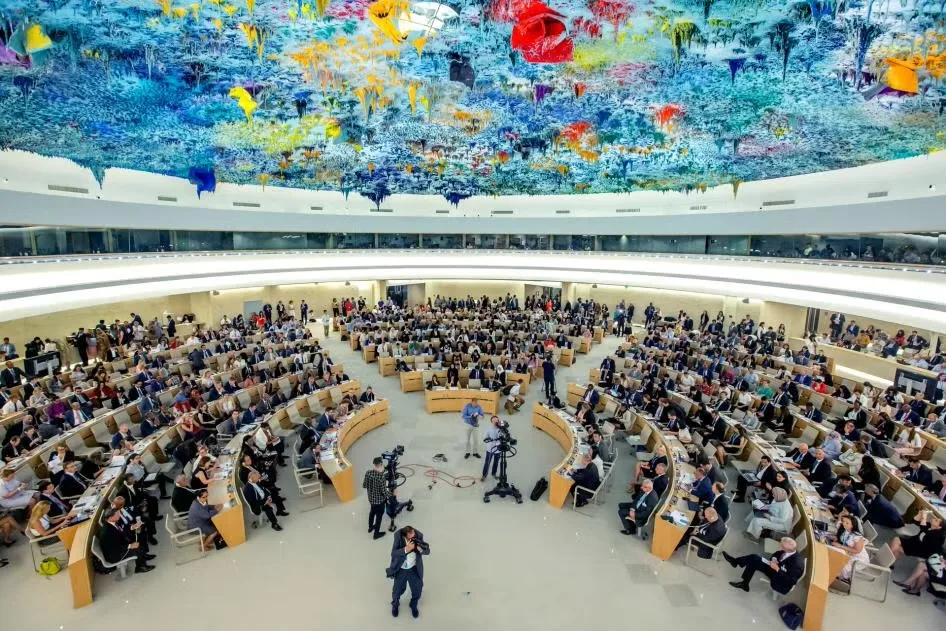
China has called for renewed international efforts to improve global human rights governance, presenting a four-point framework at the 63rd session of the United Nations Human Rights Council in Geneva.
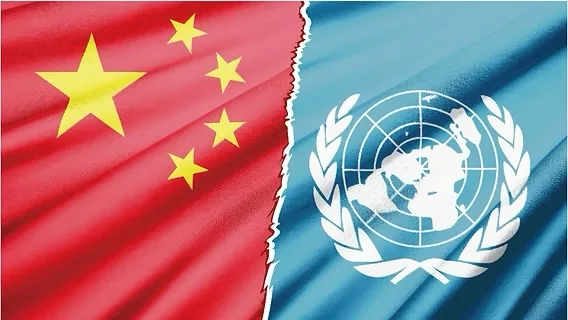
The initiative was presented on September 30 through a joint statement titled “Improving International Human Rights Governance.” According to China’s Foreign Ministry, the statement was delivered on behalf of 94 countries, including members of the Group of Friends of Global Governance and other like-minded countries. (China Embassy UAE)
The statement comes during the Human Rights Council’s 63rd regular session, which is being held in Geneva from September 7 to October 7. The Council is a 47-member intergovernmental body responsible for strengthening the promotion and protection of human rights worldwide. (The United Nations Office at Geneva)
Four principles proposed by China
China’s position centres on four principles that it says should guide efforts to improve the international human-rights governance system.
The first is a people-centred approach. Beijing argues that human-rights governance should remain focused on people’s needs and that individual countries should assess and improve their own human-rights situations according to their national circumstances.
The second principle is sovereign equality. China called for countries to conduct dialogue and cooperation on the basis of mutual respect, placing national sovereignty at the centre of international engagement.
The third is fairness and justice. China said human-rights reform should proceed prudently and that international human-rights institutions and experts should be able to carry out their responsibilities objectively and impartially.
The fourth is respect for international law. China called for adherence to the purposes and principles of the UN Charter while opposing what it describes as double standards or interference in countries’ internal affairs under the pretext of human rights. (Chinese Foreign Ministry)
Economic and social rights also highlighted
The latest position follows another Chinese intervention during the Human Rights Council session in September, when China called for stronger global cooperation on economic, social and cultural rights.
Jia Guide, China’s permanent representative in Geneva, said the international community should give greater priority to economic and social rights and provide stronger support to developing countries. He also called for greater international cooperation and technical assistance through United Nations mechanisms. (SCIO)
The issue has particular relevance as the international human-rights system faces broader questions about inequality, development, conflict and the ability of international institutions to respond effectively to emerging global challenges.
China has also linked its human-rights position to its broader Global Governance Initiative, which Beijing says is intended to promote a more representative and inclusive international governance system. The Chinese Foreign Ministry said the initiative has received responses from nearly 160 countries and international organisations, although this figure represents China’s own assessment of support and should not be interpreted as a formal endorsement of every element of the initiative by those governments or organisations. (China Embassy UAE)
Debate over the meaning of human-rights governance
China’s approach places considerable emphasis on development, sovereignty, multilateral cooperation and the principle that countries should determine their own pathways for improving human rights.
That position exists within a wider international debate over how universal human-rights standards should interact with national sovereignty and different political, economic and social systems.
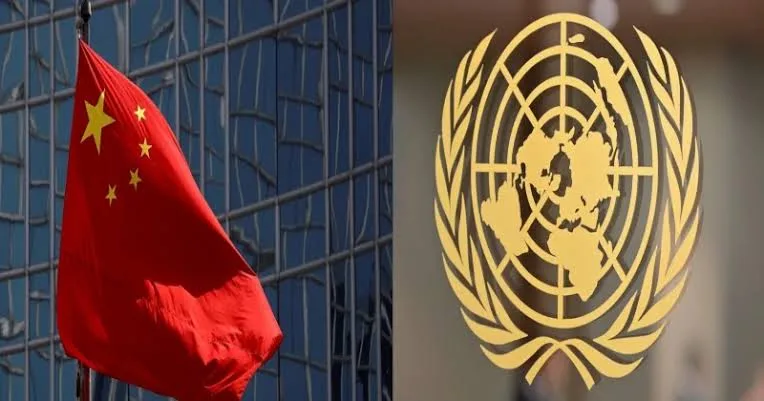
The Human Rights Council itself provides a forum where these questions are regularly examined through country reviews, thematic discussions, investigations and dialogue. Its current session includes discussions covering a broad range of human-rights concerns and mechanisms for international cooperation. (The United Nations Office at Geneva)
China’s latest intervention therefore represents not simply a statement about individual rights, but a wider argument about how the international system should govern human rights and who should determine the priorities and methods of that system.
A wider diplomatic contest over global governance
The debate comes at a time when international institutions are under pressure from geopolitical divisions and competing views over the future of multilateralism.
China is seeking to place its Global Governance Initiative within that discussion, arguing that human-rights protection should be pursued through dialogue, sovereign equality, international cooperation and respect for the UN Charter.
Other governments and international organisations continue to maintain different approaches to the relationship between universal human-rights obligations and national sovereignty. The continuing Human Rights Council session provides a formal setting for those differences to be debated.
For China, however, the message from Geneva is clear: international human-rights governance should be strengthened, but Beijing believes that this should be achieved through multilateral cooperation, sovereign equality and a system it describes as fair, inclusive and centred on people. (China Mission to the UN in Geneva)
SEO TITLE: China Calls for Stronger Global Human Rights Governance at UN
SEO DESCRIPTION: China has called for improved international human rights governance at the UN Human Rights Council, proposing a people-centred approach, sovereign equality, fairness and respect for international law.
SEO KEYWORDS: China human rights, international human rights governance, UN Human Rights Council 2026, Global Governance Initiative, human rights diplomacy, China UN, Geneva Human Rights Council
DEPARTMENT: World | Asia | International Affairs | Human Rights
SOURCE: Official statements from the Ministry of Foreign Affairs of the People’s Republic of China and United Nations Geneva materials.
CJ / Castle Journal Global Newspaper
Published by CJ & COHC Castles Union for Independent, International British Investigative Journalism
COHC — Castle Orientation Holding Corporation Ltd
Global Media Infrastructure | Scientific Publishing | Academic Training | Sovereign Media Representation
CJ Ltd — British International Investigative Platform
Journalism | Newspapers & Magazines Publishing
London — UK | Official Governance Licensing
Founder | Owner | CEO: Dr. Abeer Almadawy
Castle Journal Global — Independent International Journalism

