Ethiopia on the Edge: The way to the separation-Tigray Fighting, Civilian Atrocities

Renewed war in northern Ethiopia is raising grave questions over civilian killings, the collapse of the 2022 peace agreement, military movements near strategic frontiers, and the possible role of foreign powers in a conflict spreading beyond Tigray.
Addis Ababa — October 6, 2026
Ethiopia is once again facing a major armed conflict in its northern regions, less than four years after the Pretoria agreement brought an end to the devastating Tigray war.
The renewed fighting is no longer confined to a single confrontation between Addis Ababa and the Tigray People’s Liberation Front (TPLF). Fighting has spread across Tigray, Amhara and Afar, while a seven-group opposition alliance has emerged against Prime Minister Abiy Ahmed’s government.
The United Nations has warned that the situation is deteriorating rapidly and has called on all parties to protect civilians, permit humanitarian access and return to negotiations under the Pretoria framework. (The United Nations in Ethiopia)
But reports coming from communities inside Tigray suggest that the human cost may be considerably greater than the international public record currently captures.

A war unfolding beyond the cameras
Castle Journal Global has received direct correspondence from contacts in Tigray describing killings, displacement and conditions in areas where access by international organisations and journalists is severely restricted.
Some of these accounts allege massacres involving large numbers of civilians.
CJG has not independently verified the precise death tolls described in those testimonies. That limitation must be stated clearly.
But neither should the absence of independent access be treated as evidence that the allegations are false.
The international record already establishes that civilians are at serious risk.
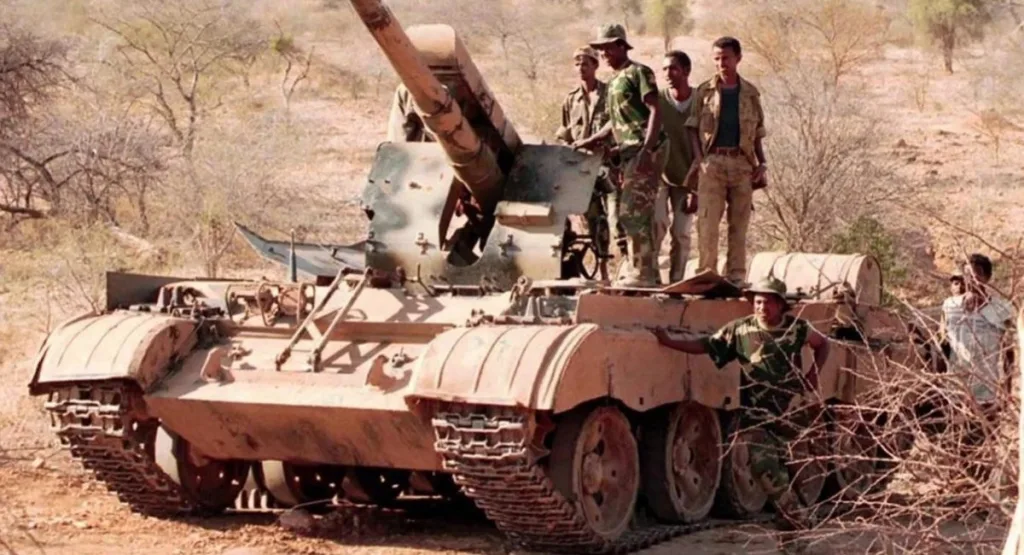
The United Nations humanitarian coordinator in Ethiopia said on September 30 that the renewed fighting was creating serious protection concerns for civilians, including people displaced during the previous war. The UN also reported continuing incidents affecting humanitarian personnel, vehicles and premises. (The United Nations in Ethiopia)
Amnesty International went further on October 2, saying it had received credible reports of destruction of civilian objects through shelling and air strikes, intensified forced conscription and other acts that may constitute violations of international humanitarian and human-rights law. The organisation called on the African Union to convene an emergency session rather than wait for mass atrocities to unfold. (Amnesty International)
That warning is particularly significant because Ethiopia has already experienced one of Africa’s most devastating recent conflicts.
The previous Tigray war was estimated by researchers to have caused hundreds of thousands of deaths through violence, famine and the collapse of health systems. (Wave)
Addis Ababa’s accusations are part of a wider confrontation
The Ethiopian government has accused Eritrea, Sudan and Egypt of supporting forces fighting against it.
Ethiopian army chief Field Marshal Birhanu Jula has publicly made those allegations.
Eritrea, Sudan and Egypt have rejected the accusations.
This matters because the allegations cannot be examined separately from Ethiopia’s increasingly difficult relationships with its neighbours.
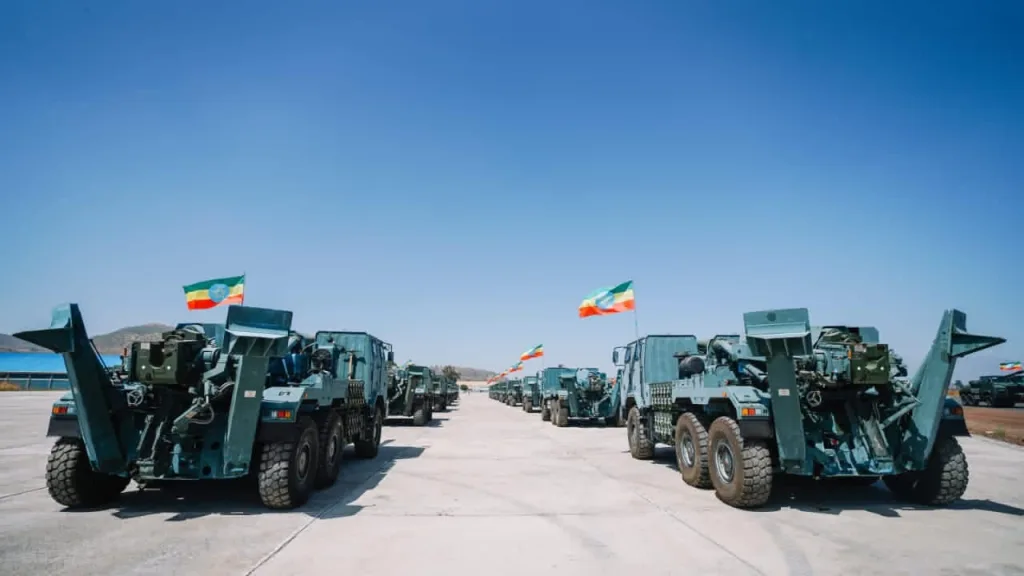
Eritrea was previously an ally of Addis Ababa during the Tigray war. The relationship has now deteriorated dramatically.
On October 1, Eritrea announced that it was severing diplomatic relations with Ethiopia after Addis Ababa accused it of supporting the opposition alliance. Ethiopia had expelled Eritrean diplomats and closed its embassy in Asmara. (Wave)
The conflict has therefore moved into a dangerous regional environment in which accusations of foreign support are becoming part of the battlefield itself.
The Sudan frontier
Sudan represents another critical dimension.
Sudan is already experiencing its own devastating war, and its border with Ethiopia has become strategically sensitive.
Analysts have warned that the two conflicts are becoming increasingly interconnected through cross-border networks involving armed groups and regional powers. ((Wave))
Ethiopia’s western frontier also contains the long-disputed question of the Al-Fashaga agricultural area and lies within the wider strategic geography of the Blue Nile.

The Grand Ethiopian Renaissance Dam, situated on the Blue Nile close to Sudan, adds another layer of strategic importance.
It would therefore be premature to conclude that every Ethiopian military movement toward the Sudan frontier is connected to the dam.
But the geography makes the question legitimate.
Any substantial military deployment around the western and northern approaches to Ethiopia deserves independent examination because it potentially connects three separate security theatres: Ethiopia’s internal war, Sudan’s civil war and the unresolved Nile dispute.
The Chinese equipment question
This is where CJG’s own field information requires particularly careful investigation.
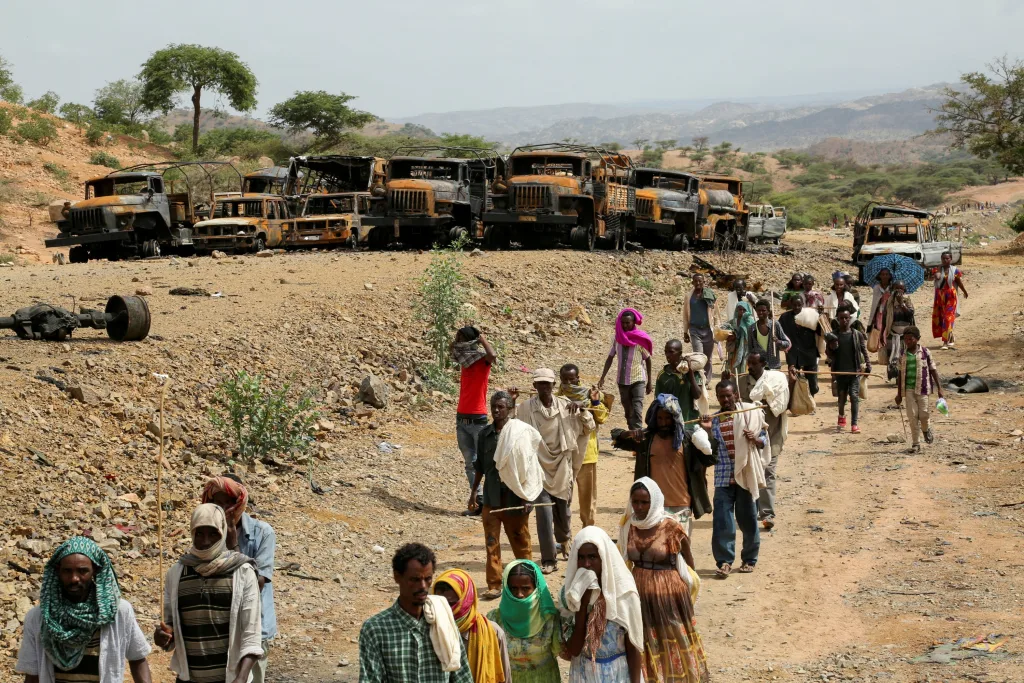
Our reporters have described military equipment of Chinese origin appearing in Ethiopian movements.
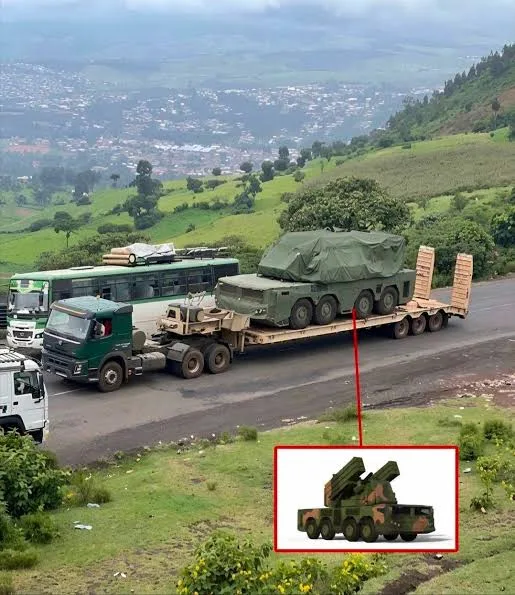
There is evidence that Ethiopia possesses Chinese-made military vehicles.
However, an important verification finding changes how the evidence should be interpreted.
A video circulating in September claimed to show Chinese-origin armoured vehicles being transported toward the Tigray front. An independent fact-check found that the footage was not from the current offensive. The original material had appeared in April 2026 and showed MCAV-20 armoured vehicles entering Ethiopian military service. (Misbar)
Therefore, the video cannot establish that China recently supplied Ethiopia for the current war.
But it raises a different question.
Where did the equipment come from, when was it supplied, under what agreements, and is there evidence of more recent deliveries?
China and Ethiopia have an unusually close political relationship.
Beijing officially describes the two countries as having an all-weather strategic partnership. Chinese Foreign Minister Wang Yi visited Ethiopia in January, and Chinese Special Envoy for Horn of Africa Affairs Hu Changchun visited Addis Ababa in April. Chinese officials repeatedly describe the relationship as involving strategic cooperation and coordination on regional affairs. (Chinese Foreign Ministry)
That relationship is beyond dispute.
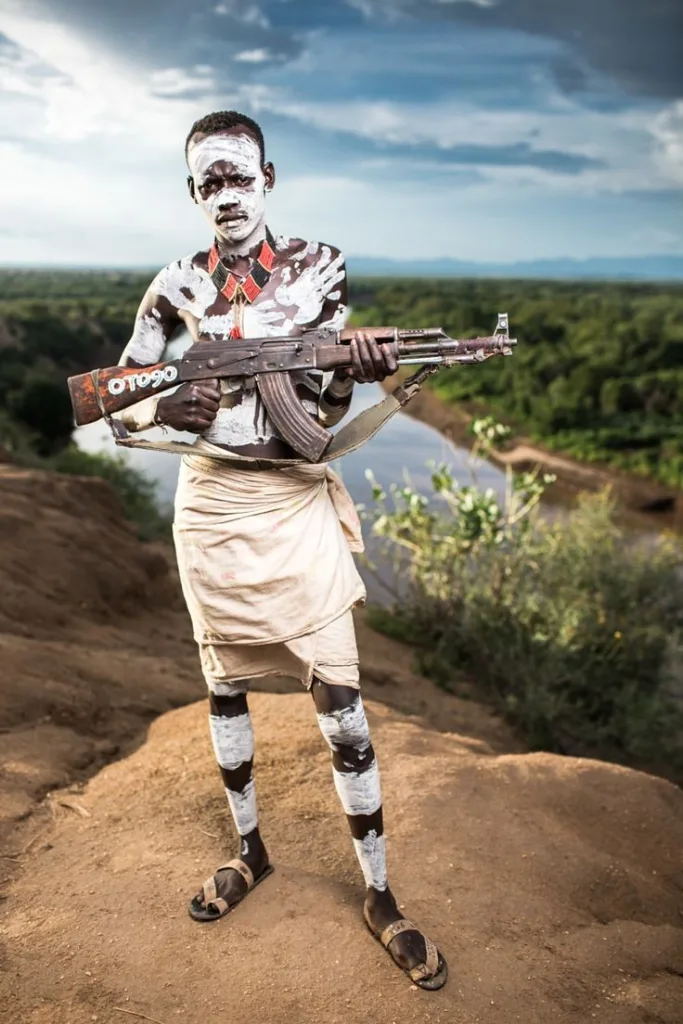
What remains unproven is whether Beijing is currently providing military assistance specifically for the renewed Tigray conflict.
CJG therefore cannot responsibly describe China as a participant in the war without further evidence.
The investigation should instead follow the equipment.
Serial numbers. Procurement records. Delivery dates. Defence contracts. Photographs from the current battlefield. Satellite imagery. And independent identification of vehicles actually deployed in the present conflict.
Those are the pieces required to distinguish an old arms purchase from current Chinese military involvement.
Israel and Ethiopia
Israel is another foreign relationship attracting attention.
Israeli President Isaac Herzog made an official visit to Ethiopia in February 2026 and met Prime Minister Abiy Ahmed and President Taye Atske Selassie. Israel described the relationship as involving deeper cooperation in areas including innovation, trade and regional affairs.
That relationship is therefore documented.
But there is currently insufficient evidence to state that Israel is directing Ethiopia’s military operations in Tigray or that Israel is responsible for the failure of international institutions to respond.
The stronger and more defensible question is whether Ethiopia’s network of international relationships has affected the political environment surrounding the conflict.
That question deserves examination without converting diplomatic relationships into unsupported allegations of military complicity.
Is the international response enough?
This is perhaps the most difficult question.
The United Nations has not been silent.
It has issued warnings, demanded civilian protection, called for humanitarian access and supported African Union mediation. (The United Nations in Ethiopia)
Yet the warnings have not stopped the fighting.
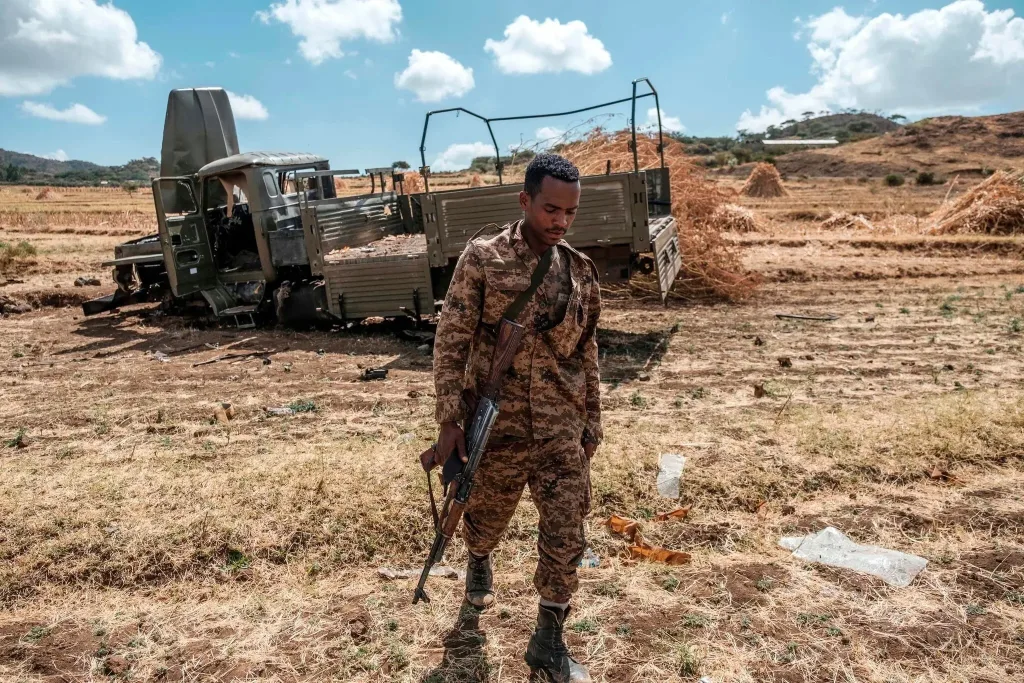
Humanitarian organisations continue to report operational restrictions, displaced civilians and attacks or interference affecting humanitarian assets.
The Global Centre for the Responsibility to Protect has warned that renewed large-scale fighting in Tigray, combined with violence in Amhara and Oromia, creates a risk of nationwide conflict and mass atrocity crimes. (Global Centre for R2P)
Amnesty International has now called for an emergency African Union response.
The central question is therefore not whether the international community has spoken.
It is whether diplomatic statements are producing sufficient protection for civilians on the ground.
A journalist killed in the line of duty
Castle Journal Global is also examining the human cost to journalists covering the conflict.
CJG records that its journalist nicknamed Mohamed Dahoun Alim was killed while carrying out his journalistic duties in Ethiopia.
The circumstances surrounding his death require independent documentation before responsibility can be assigned to any particular party.
But his death carries a significance that extends beyond one journalist.
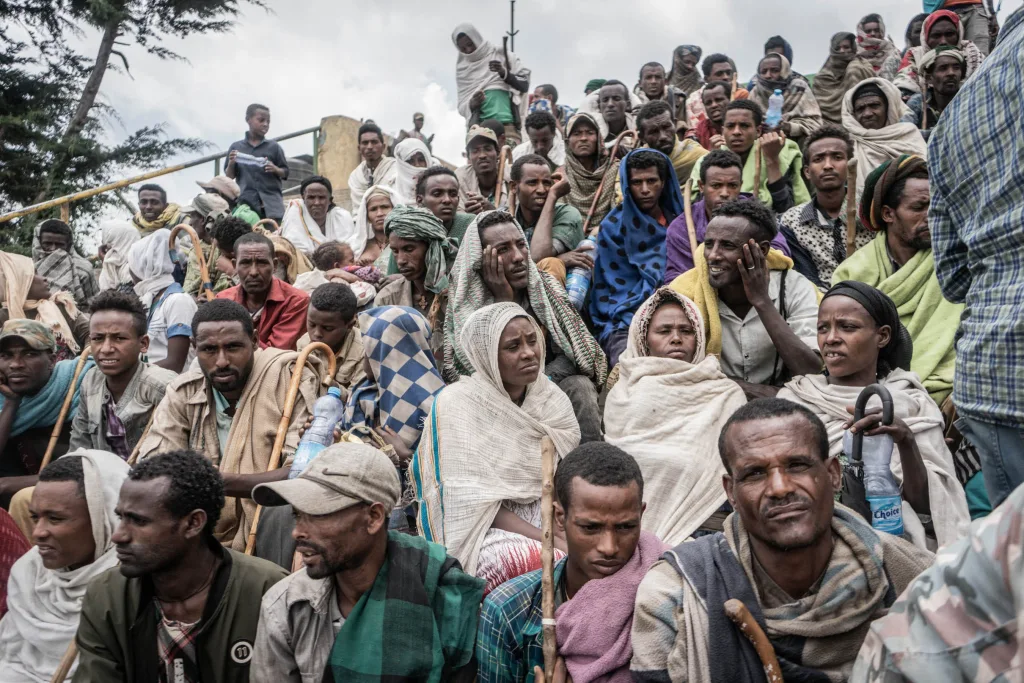
When communications are disrupted, roads are closed and international access becomes restricted, local journalists often become the only witnesses capable of documenting what happens to civilians beyond the reach of international cameras.
Their safety is therefore inseparable from the world’s ability to establish the truth.
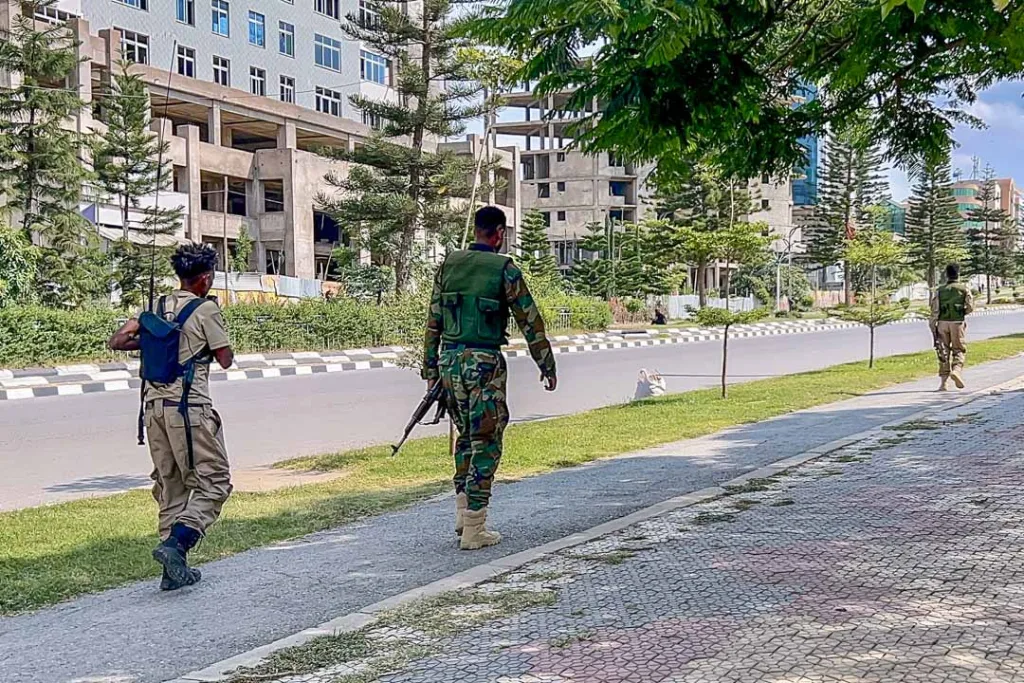
The questions Ethiopia cannot avoid
The renewed war leaves several questions unanswered.
Who is responsible for attacks on civilians?
How many people have been killed in areas inaccessible to independent investigators?
Who is supplying the opposing forces?
What military equipment is currently being used by Ethiopian forces, and when was it acquired?
Are foreign powers providing political, financial or military assistance?
Are military deployments near the Sudan frontier connected to Ethiopia’s internal war, Sudan’s conflict, the Nile dispute—or several of these issues simultaneously?
And can the African Union and United Nations establish meaningful access to affected communities before the conflict produces another humanitarian catastrophe?
These questions should not be answered by propaganda from Addis Ababa, by rebel claims, or by foreign governments defending their strategic interests.They require evidence.

The CJG position: investigate, do not take sides
Castle Journal Global does not support the Ethiopian government or any other party as a political or military side in this conflict.
Our position is the protection of civilians and the right of journalists to report what they witness.
The Ethiopian government’s accusations against neighbouring states must be tested.
The opposition’s allegations of massacres must also be tested.
Foreign involvement must be investigated rather than assumed.
And evidence from the ground must not disappear simply because international cameras cannot reach the location.
The renewed Ethiopian conflict has already crossed the threshold at which it can no longer be treated as a purely domestic political dispute.
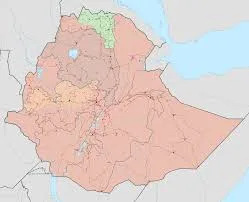
Tigray, Amhara and Afar are again experiencing armed confrontation. Eritrea has broken diplomatic relations with Ethiopia. Sudan is fighting its own war across the border. The Nile and the GERD remain strategically important. China maintains an exceptionally close partnership with Addis Ababa. Israel maintains a close bilateral relationship with Ethiopia.
The danger is not simply another Ethiopian civil war.
It is the convergence of several conflicts and rivalries across the Horn of Africa.
And if civilians are being killed in places the world cannot see, the first duty of international institutions and independent journalism is not to wait for the cameras to arrive.
It is to find a way to establish what happened.
SEO Title: Ethiopia War 2026: Tigray Fighting, Civilian Massacre Claims and Foreign Powers
Meta Description: An in-depth Castle Journal Global investigation examines renewed fighting in Ethiopia, civilian atrocity allegations, the Sudan border, Chinese military equipment and Israel-Ethiopia relations.
Keywords: Ethiopia war 2026, Tigray conflict, Ethiopia civil war, Tigray massacres, Ethiopia Sudan border, China Ethiopia military, GERD, Israel Ethiopia relations, Ethiopian army, TPLF, Amhara Fano, Horn of Africa crisis

