Japan-Controlled Tankers Resume Middle East Energy Freight Amid Heightened Maritime Patrols and Soaring Global Shipping Costs

Tokyo, Japan / Muscat, Oman — October 15, 2026
By CJ Global Investigative Bureau and Editorial Board
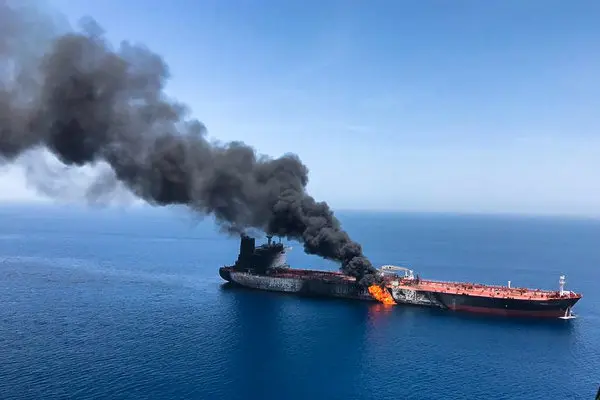
In a critical development transforming energy supply lines across the Indo-Pacific and Western Asia, commercial crude oil supertankers linked to and controlled by Japanese refiners have begun tentatively returning to Middle Eastern waters to lift energy cargoes directly.
This strategic shift follows a multi-month period during which East Asian shipping conglomerates avoided direct passage through the Persian Gulf and the Strait of Hormuz due to heightened security risks, hostile drone strikes, and missile threats targeting commercial vessels in the chokepoint.
According to maritime tracking data provided by Kpler and confirmed by global trade monitoring agencies, Japan-linked ship-to-ship (STS) transfers and direct energy lifting in Middle Eastern offshore zones reached nearly 3.7 million barrels during the first eleven days of October alone, rapidly matching September’s total volumes of approximately 4 million barrels.
The calculated return of these Very Large Crude Carriers (VLCCs) comes as global freight rates and maritime insurance surcharges reach historic highs, forcing Asian energy majors to weigh steep logistics costs against sovereign energy security mandates.
Escalating Maritime Security Risks and the Calculus of Asian Energy Refiners
The decision by Japanese shipping firms and refiners—including major industry operators such as Idemitsu Kosan—to send supertankers like the Apollo Energy back into Middle Eastern ports reflects an urgent economic necessity.
Statistics from global commodity tracking services indicate that Middle Eastern crude oil accounted for approximately 93% of Japan’s total crude oil imports in 2025, amounting to over 823 million barrels. Because domestic Japanese refineries are specialized to process medium-sour and light crude grades originating primarily from Gulf producers in Saudi Arabia, the United Arab Emirates, Kuwait, and Qatar, rerouting supply chains to alternative markets in West Africa or the Americas proved financially unsustainable over prolonged periods.
Speaking under official authority regarding regional maritime movements, analysts from the University of Tokyo Graduate School monitored vessel tracking data and characterized the shift as a
“selective return rather than a wholesale shift into higher-risk waters.”
Official industry observers noted that while security risks in the Persian Gulf remain active—demonstrated by recent projectile and drone strikes against commercial vessels including the MT Petro Dolphin, MT Valthera, and Gem No. 2 near the UAE coast—the overwhelming surge in global shipping charter fees has altered the risk-reward calculation for international operators. Direct liftings in Gulf waters allow shipowners to bypass complex and costly ship-to-ship transshipments in secondary waters, drastically reducing transit delays and mitigating compounding daily charter costs.
Sovereign Maritime Escorts and International Coalition Defense Readiness
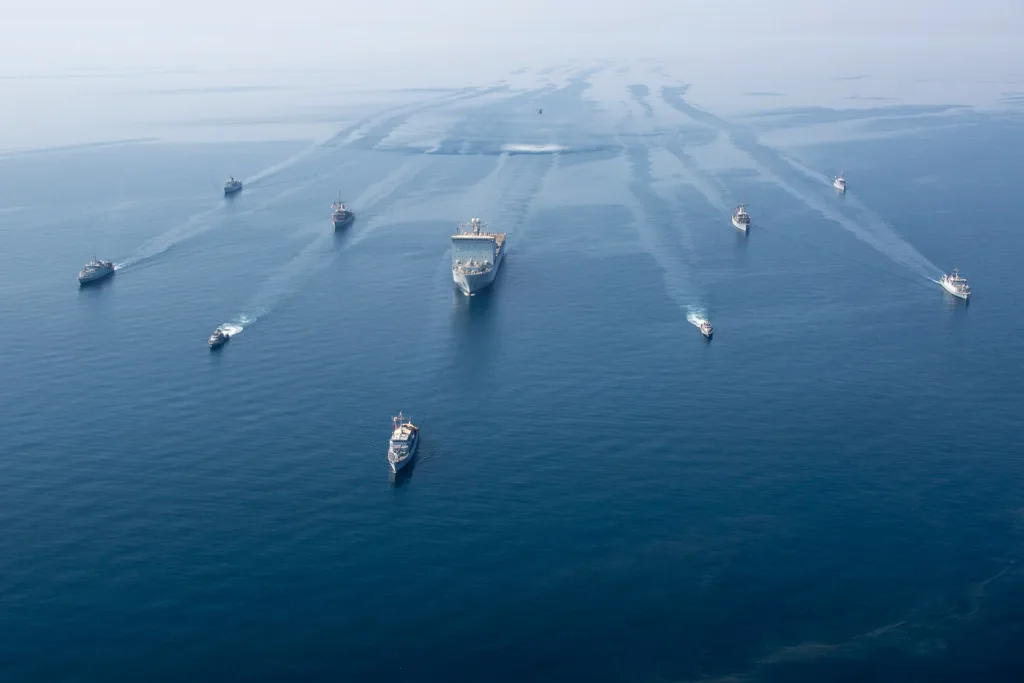
To facilitate the safe transit of commercial energy vessels through the volatile chokepoints of the Strait of Hormuz and the Gulf of Oman, international maritime defense networks have intensified surveillance and active corridor protection. The United States Central Command (CENTCOM), alongside allied regional naval forces and multilateral maritime security coalitions, reported that security protocols remain actively deployed across sovereign transit lanes.
According to official military statements released this week, international coalition forces assisted regional partners in securing the passage of more than 19 million barrels of crude oil through the Strait of Hormuz in a single 24-hour operational window.
Despite these defense measures, reporting bodies including the United Kingdom Maritime Trade Operations (UKMTO) have documented over 18 targeted maritime alerts and projectile incidents in the Strait of Hormuz since early October.
The persistent threat environment has led global war-risk insurance underwriters to recalculate premiums continuously. While the presence of naval escorts has provided sufficient operational confidence for Japanese and Asian shipmasters to resume direct voyages, maritime authorities continue to advise commercial vessels to maintain maximum readiness, report real-time AIS positioning data, and strictly adhere to designated international transit corridors.
Geopolitical Implications for Global Commodity Markets and Q4 Energy Projections
The resumption of direct Asian tanker traffic through the Middle East arrives at a sensitive moment for global financial and commodity markets.
The acute shortage of available supertankers caused by extended transit routes and vessel bottlenecks has created a global ship crunch, driving VLCC freight rates to record levels. Freight analysts from leading maritime institutions emphasize that smaller tanker classes—such as Suezmax and Aframax vessels—are similarly experiencing extreme market tightness, leaving global importers with limited alternatives.
From a broader geopolitical perspective, the resilience of Middle Eastern energy exports underscores the centrality of the region’s maritime corridors to global economic stability. As energy demand across Asian economies remains robust heading into the fourth quarter, the continuous flow of oil through the Strait of Hormuz serves as a benchmark for international market confidence.
Regional sovereign wealth institutions and international energy bodies emphasize that maintaining the uninterrupted movement of merchant shipping is paramount under international maritime law, warning that any sustained disruption to Gulf trade lanes would trigger severe inflationary shocks across global energy and logistics sectors.
SEO Keywords: Persian Gulf maritime security 2026, Japan crude oil tankers Middle East, Strait of Hormuz shipping news, Middle East energy trade VLCC, CJ Global exclusive report, global oil freight rates 2026, Kpler tanker tracking Middle East, UKMTO maritime alerts Hormuz.
Castle Journal Ltd British company for newspapers and magazines publishing London-UK – licensed 10675 Founder | Owner| CEO Abeer Almadawy
Abeer Almadawy is a philosopher who established the third mind theory research and the philosophy of non-self and trans egoism. She is also the author of the New Global Constitution for the leadership Governance 2030/2032. She has many books published in English, Arabic, Chinese, French and others.
Castle Journal newspapers are the only voice and the brain of the world leadership governance.

