SPAIN TRAIN COLLISION: 68 DEAD AS INVESTIGATION FOCUSES ON RAILWAY CONTROL CENTRE DECISION

Castle Journal Global Newspaper | 28 October 2026
SEO keywords: Spain train collision 2026, Spain railway disaster, high-speed train accident, railway safety investigation, Spain transport infrastructure, train crash casualties, railway accountability.
Spain Train Collision: Deadly Railway Disaster Raises Urgent Questions Over Safety and Accountability
A National Tragedy Shakes Spain
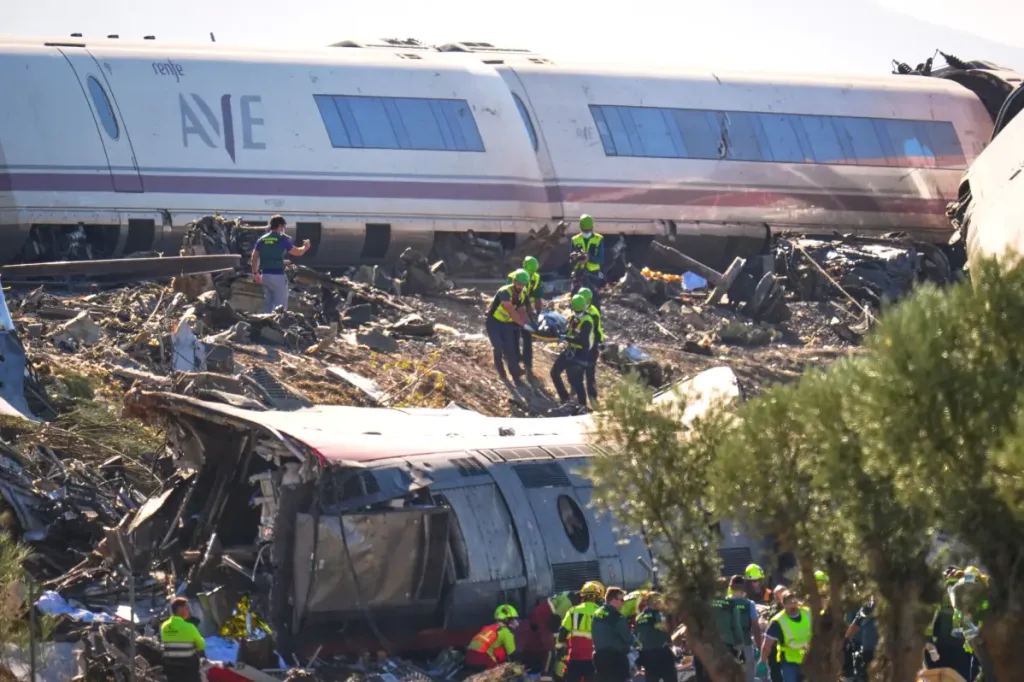
Spain is facing one of its most serious railway disasters after two high-speed trains collided near Urda, in the province of Toledo, on Wednesday morning, 28 October.
By Wednesday evening, regional authorities had reported a provisional death toll of 68. The collision involved a Renfe AVE service and an Iryo high-speed train travelling along the Madrid–Seville corridor. The disaster has prompted an extensive emergency response, the suspension of high-speed services on the affected route and an investigation into the decisions that preceded the collision.
The tragedy has also raised urgent questions about railway safety procedures, the management of technical failures and the responsibility of the institutions operating and supervising one of Spain’s most important transport networks.
What Happened Near Urda?
According to Iryo’s official statement, its service 6076 departed Madrid for Seville at 07:54 with 147 passengers, three crew members, a barista and a driver aboard. The company reported that the train was struck from behind by a Renfe train near Urda at approximately 08:48. The precise sequence and timing are being examined as part of the investigation.
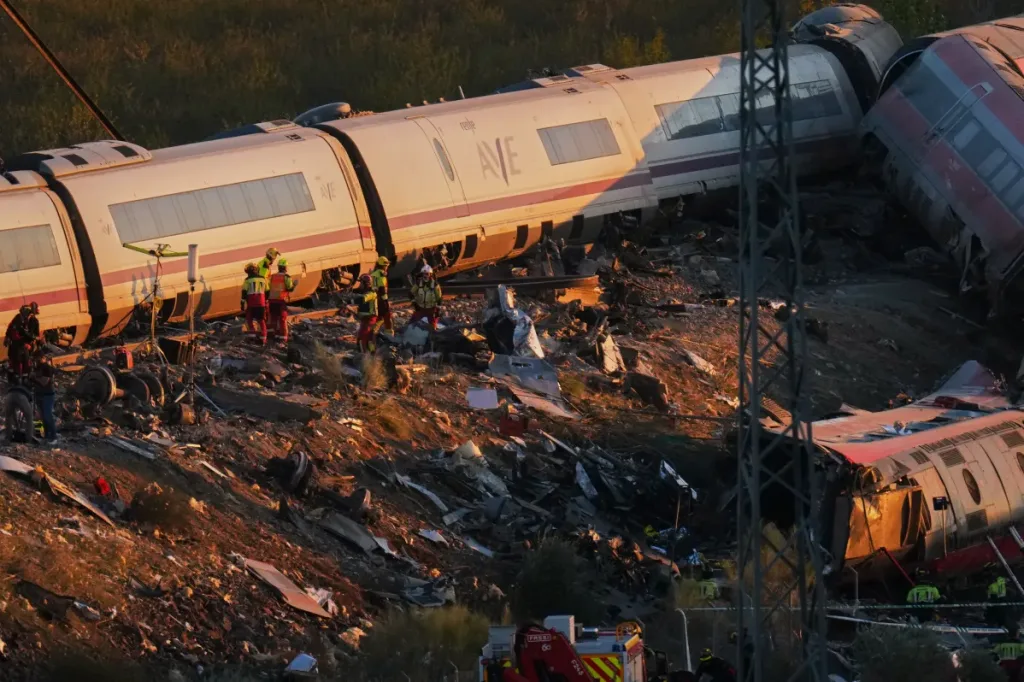
The collision occurred on the high-speed line connecting Madrid with southern Spain. Initial reporting indicated that the Iryo train was stationary when the Renfe train struck it from behind. The impact caused severe damage, with carriages leaving the tracks and some falling down an embankment.
The two services were carrying hundreds of passengers. Emergency personnel faced a major rescue operation involving injured travellers, damaged carriages and the need to identify victims and reunite survivors with their families.
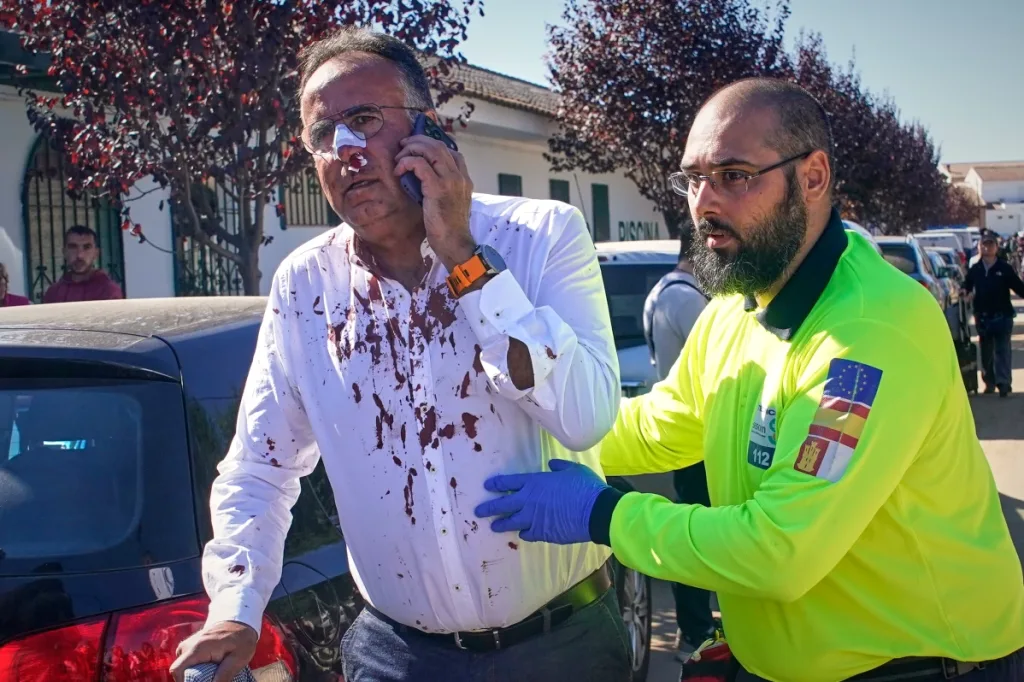
The immediate priority has been to rescue anyone who may still be trapped, provide medical treatment and establish accurate information about those killed, injured or unaccounted for.
The Latest Investigation: Attention Turns to the Control Centre
The most significant development on Wednesday came from Transport Minister Óscar Puente, whose statements shifted attention towards the decisions made at Madrid’s central railway control centre.
According to his account, a technical malfunction affected the LZB railway safety system, automatically bringing several trains to a halt. The control centre subsequently assumed responsibility for managing traffic.
Puente said a Renfe AVE train was authorised to resume normal running even though a red signal remained active. The train travelled approximately 25 kilometres before colliding with the stationary Iryo service. He described the decision to allow it to continue as inexplicable and said investigators were examining how it had been made.
The minister also stated that the drivers were not to blame, directing attention towards the control decisions and procedures governing the line after the safety-system failure.
These are important preliminary findings, but they should not be confused with a final determination of legal responsibility. Investigators must establish exactly what information was available to railway controllers, what instructions were issued, how the safety systems operated and whether established procedures were followed.
The precise speed of the Renfe train at impact also remained under examination on Wednesday evening.
Castle Journal assessment:
The investigation must establish not only what happened in the final moments before the collision, but also why the safety arrangements did not prevent a train from reaching an occupied section of track.
Emergency Services Mobilise Across Castilla-La Mancha
The regional government of Castilla-La Mancha activated its territorial emergency plan at 09:15 on Wednesday. As the severity of the disaster became clearer, the response was raised to Operational Situation 2, allowing additional resources to be coordinated and deployed.
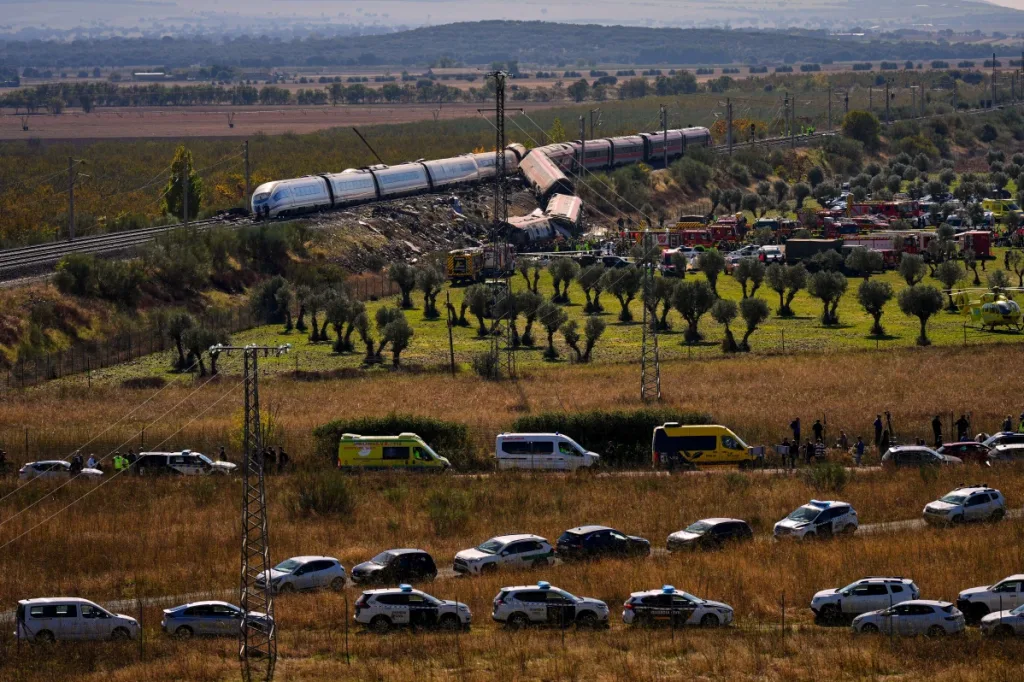
The emergency response included Guardia Civil officers, firefighters, Civil Protection volunteers and medical teams from the regional health service. An advanced medical post was established to assess casualties, provide initial treatment and coordinate transfers to hospitals.
The regional government also requested assistance from Spain’s Military Emergency Unit, known as the UME, to support operations at the scene. Emergency coordinators arranged accommodation and assistance points for affected passengers and relatives.
The response illustrates the importance of coordination between national, regional and local authorities during a major transport emergency.
However, the scale of the disaster also demonstrates the need for reliable passenger-identification procedures, clear communication with families and sustained psychological support for survivors and emergency workers.
Official Responses: Government Promises Answers
Prime Minister Pedro Sánchez visited the accident site and met emergency and coordination teams.
In his official statement, Sánchez expressed solidarity with the victims, their relatives and the injured. He identified caring for those affected and establishing the cause of the accident as the government’s immediate priorities.
The prime minister also praised emergency personnel and the cooperation between institutions. He pledged that any negligence or confirmed safety-system failures would be addressed firmly and said the government would take whatever measures were necessary to restore confidence in Spain’s high-speed railway network.
Sánchez announced three days of official national mourning: 29, 30 and 31 October. National flags are to fly at half-mast on public buildings during the mourning period.
The government’s statements acknowledge that public confidence will depend on more than expressions of sympathy. The investigation must provide a credible explanation of what happened and identify any necessary changes to railway operations.
Renfe, Iryo and Adif: Passenger Support and Service Disruption
Rail operators and infrastructure managers have activated emergency procedures and issued information for affected passengers and their families.
Renfe confirmed that its crisis-management arrangements and railway accident victim-assistance plan had been activated. The company said its staff were working with emergency services, Adif and the Transport Ministry to support those affected and assess the damage. It also established a dedicated telephone line for victims and relatives.
Iryo expressed its condolences and said it was cooperating with Renfe, Adif and the relevant authorities. It cancelled services departing Madrid for the southern corridor, offered free changes and cancellations for affected travellers, and established a passenger-assistance line.
Adif, the railway infrastructure manager, confirmed the suspension of traffic on the Madrid–Andalusia high-speed line and established assistance points at Madrid-Puerta de Atocha, Sevilla-Santa Justa, Córdoba and Málaga María Zambrano.
These measures are important for passengers facing disrupted journeys, but the immediate operational priority remains ensuring that the affected railway infrastructure can be inspected safely before normal services resume.
Why This Disaster Raises Wider Railway Safety Questions
Spain has invested heavily in high-speed rail, building a network that supports domestic travel, tourism and economic activity.
The Urda collision nevertheless demonstrates that advanced infrastructure alone cannot guarantee safety. Railway systems depend on the interaction of signalling technology, automatic protection, communication procedures, control-centre decisions, operational discipline and effective oversight.
When a technical system fails, alternative safety procedures become particularly important. Authorities must establish whether the required safeguards were applied in this case and whether additional protections could prevent a similar event.
The disaster is also particularly concerning because Spain suffered another fatal high-speed railway accident in January, when 46 people died in a collision near Adamuz. Sánchez explicitly referred to the two tragedies in his Wednesday statement, calling for measures to reinforce confidence in railway safety.
The two accidents must not automatically be assumed to share the same cause. Each requires its own evidence-based investigation. Nevertheless, the latest disaster makes a transparent review of railway safety systems and oversight especially important.
The Economic and Human Consequences
The consequences extend beyond the immediate loss of life.
The suspension of the Madrid–Andalusia corridor disrupts passenger journeys, affects businesses dependent on reliable transport and creates additional demands on railway operators and public authorities. The longer-term financial consequences will depend on the duration of the disruption, the damage to infrastructure and rolling stock, and any remedial measures required.
But financial calculations cannot capture the full cost of the disaster.
Families have lost relatives, survivors face recovery and uncertainty, and communities must cope with the consequences of a tragedy that has disrupted ordinary life.
For the authorities, the challenge is to provide immediate assistance while ensuring that the investigation is sufficiently independent, transparent and thorough to establish the facts.
Castle Journal Global: Accountability Follow the Investigation
The Urda collision is a profound human tragedy and a serious test of Spain’s railway safety arrangements.
The official response has included emergency mobilisation, passenger assistance, national mourning and a commitment to investigate the causes. The emerging account of the control-centre decisions makes the technical and operational investigation particularly important.
Yet the distinction between a preliminary explanation and a proven finding must be preserved. Responsibility cannot be established by speculation or political pressure; it must follow the evidence.
The essential questions are now clear: Why was the Renfe train permitted to resume normal running after the safety-system failure? What safeguards should have prevented the collision? Were operational procedures followed? And what changes are necessary to ensure that a comparable sequence of events cannot recur?
The ultimate measure of accountability will be whether the investigation establishes the truth, whether any failures are addressed, and whether effective safeguards protect future passengers.
Castle Journal Global extends its condolences to the victims and their families and wishes those injured a full recovery.
Castle Journal Global Newspaper
International News and Investigative Analysis | 28 October 2026