Israel Election 2026: Netanyahu’s Likud Wins Most Seats, but Who Will Form the Next Government?

Castle Journal Global Newspaper | 30 October 2026
Location: Jerusalem, Israel
SEO Keywords: Israel election 2026 results, Benjamin Netanyahu election, Gadi Eisenkot, Israeli government formation, Likud party election results, Israeli parliament Knesset, Isaac Herzog coalition talks, Israel political crisis, Palestinian policy, Middle East political developments.
No Clear Winner as Israel Faces Difficult Coalition Negotiations
Israel’s general election has produced a fragmented parliament, leaving the country facing difficult negotiations over the formation of its next government.
Final election results published on 30 October show that Prime Minister Benjamin Netanyahu’s Likud party remains the largest individual political party, securing 27 seats in the 120-member Knesset. However, the wider bloc supporting Netanyahu won only 53 seats, falling eight short of the 61 required for a parliamentary majority.
The opposition bloc led by Gadi Eisenkot secured 48 seats, while Arab-led political parties won a combined 19 seats, giving them potentially decisive influence over the next stage of government formation.
The result represents a significant setback for Netanyahu’s existing coalition, which previously held a parliamentary majority. Nevertheless, it does not automatically remove him from office or establish that his principal opponent will become the next prime minister.
The central question has shifted from who won the most seats to who can assemble a coalition capable of governing.
Until a new government is formed, Netanyahu remains prime minister in a caretaker capacity. President Isaac Herzog will oversee the constitutional process for selecting a candidate to attempt to form the next administration.
Final Election Results: How the Seats Are Distributed
The final distribution of seats illustrates the political divisions confronting Israel.
| Political party or group | Seats |
| Likud — Benjamin Netanyahu | 27 |
| Yashar — Gadi Eisenkot | 21 |
| B’Yachad — Naftali Bennett | 12 |
| Joint List | 11 |
| The Democrats | 8 |
| Ra’am | 8 |
| Yisrael Beytenu | 7 |
| United Torah Judaism | 7 |
| Otzma Yehudit | 7 |
| Shas | 6 |
| Religious Zionism | 6 |
Parliamentary totals:
- Netanyahu’s bloc: 53 seats.
- Opposition bloc: 48 seats.
- Arab-led parties: 19 seats.
- Majority required: 61 seats.
Official turnout reached approximately 77.9%, with more than 5.7 million ballots counted.
These figures show why neither principal political camp can confidently claim an immediate path to government. Although Likud leads as an individual party, Israel’s parliamentary system requires parties to negotiate sufficient support from other factions.

Who Is the Real Winner?
Benjamin Netanyahu: The Largest Party, but a Weakened Coalition
Netanyahu has retained a central position in Israeli politics, with Likud emerging as the largest party in the new parliament.
However, the wider right-wing and religious coalition has lost its previous majority. This leaves Netanyahu dependent on additional political support if he intends to continue leading a government based on his existing alliances.
His potential partners include right-wing and religious parties whose support could help preserve policy continuity. Yet the coalition’s reduced parliamentary strength means that negotiations may involve difficult compromises.
Netanyahu could attempt to attract lawmakers from outside his existing bloc or explore a broader coalition arrangement. Such options would depend on the willingness of other parties to cooperate and the concessions required to secure their support.
His position remains politically significant, but the election has made his path to a stable government more difficult.
Gadi Eisenkot: A Chance to Form an Alternative Government
Eisenkot’s Yashar party won 21 seats, placing it second behind Likud.
His broader opposition bloc secured 48 seats, leaving it 13 short of a majority without additional support.
Eisenkot’s opportunity lies in bringing together parties that oppose another Netanyahu-led administration. However, their political differences could make negotiations difficult, particularly over security, religious affairs, economic policy and relations with Arab parties.
The opposition therefore faces its own strategic test: whether its shared desire for political change is sufficient to overcome differences that could prevent a durable coalition.
Eisenkot may have a route to government, but the election results do not guarantee that he can assemble the required support.
Why the Arab Parties Could Become Kingmakers
The combined 19 seats secured by the Joint List and Ra’am give Arab-led political parties a potentially decisive role in the negotiations.
Together, they hold enough parliamentary seats to provide the numerical support needed for an alternative governing arrangement if the relevant opposition parties can agree on a common strategy.
One possibility would be an opposition-led government that receives support from Arab parties without necessarily including all of them as formal coalition partners.
However, this route faces significant political obstacles. Several opposition parties have expressed reservations about cooperation with Arab-led factions, making the construction of a stable majority uncertain.
The negotiations will therefore test whether political leaders are prepared to distinguish between formal coalition membership, external parliamentary support and cooperation on individual legislative issues.
For Arab political representation, the result marks a substantial parliamentary breakthrough. Whether that representation translates into influence over government policy will depend on the negotiations and the positions adopted by the parties seeking to govern.
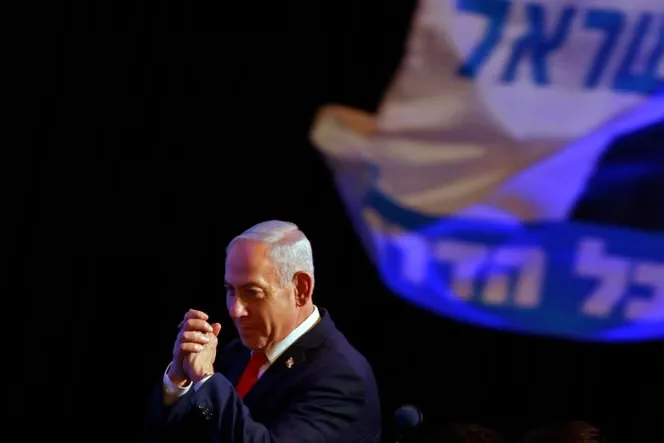
How Will Israel Form Its Next Government?
Israel’s parliamentary system provides a formal procedure for resolving inconclusive elections.
Step One: President Isaac Herzog Consults the Parties
Following the formal submission of the election results, President Isaac Herzog is expected to consult representatives of the elected parties.
The consultations will help establish which candidate has the strongest prospect of assembling a viable governing coalition.
The largest party’s leader is not automatically entitled to become prime minister. The president’s decision depends on the parliamentary support available to the candidate.
Step Two: A Candidate Receives the Mandate
The candidate selected by the president initially receives 28 days to form a government.
The president may grant an extension of up to 14 additional days, allowing a maximum of 42 days for the first attempt.
During this period, the candidate must negotiate with potential coalition partners over policy priorities, ministerial positions, legislative commitments and the distribution of political responsibilities.
A successful agreement must ultimately secure the necessary parliamentary confidence.
Step Three: A Second Attempt if Negotiations Fail
If the first candidate cannot form a government, another member of the Knesset may receive an opportunity.
If that attempt also fails, the parliamentary process provides a further mechanism through which lawmakers can support an alternative candidate.
If no viable government emerges, the deadlock can ultimately lead to the dissolution of parliament and another election.
The process means that the next Israeli government may not be established immediately. Negotiations could continue for weeks, and the current caretaker administration may remain in place until a successor is approved.
What Government Is Most Likely?
Three broad scenarios emerge from the final results.
Scenario One: Netanyahu Rebuilds a Right-Wing Coalition
Netanyahu could seek additional support from lawmakers outside his existing bloc while retaining his current right-wing and religious partners.
This approach would offer the greatest continuity with his previous government.
However, attracting enough additional lawmakers could require concessions that complicate his relationships with existing allies or alter the government’s policy priorities.
Assessment: Possible, but dependent on political defections, new agreements or other changes to the current parliamentary alignments.
Scenario Two: Eisenkot Forms an Alternative Government
Eisenkot could attempt to assemble a government with opposition parties and seek parliamentary support from Arab-led factions.
This would represent a major political change if successful.
The main obstacle is the difficulty of reconciling different positions on national security, religious policy and cooperation with Arab parties.
Assessment: Numerically conceivable, but politically challenging. The decisive issue will be whether enough parties can agree on a common governing arrangement.
Scenario Three: A Broad Unity Government
A broader coalition involving Likud and selected opposition parties could potentially produce a parliamentary majority.
Such an arrangement might be presented as a way to overcome political deadlock and provide greater stability during a period of regional uncertainty.
However, it would require major compromises. Netanyahu’s existing coalition partners might resist an arrangement that reduces their influence, while opposition leaders would have to reconsider their positions on serving in a government led by him.
Assessment: A potential alternative if other negotiations fail, but not a confirmed or necessarily likely outcome.
At this stage, no scenario should be treated as settled. The next government’s composition will depend on negotiations, parliamentary commitments and the president’s decision about who should receive the mandate to form an administration.
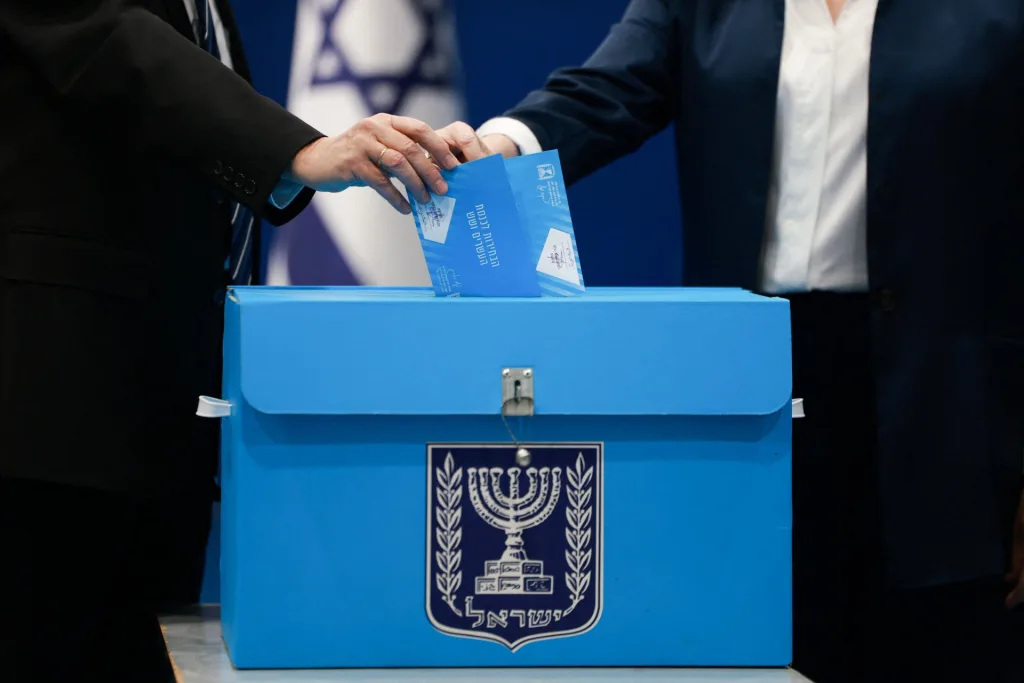
Will the Election Change Israel’s Policy Towards Palestinians?
The election’s consequences extend beyond domestic political competition.
For Palestinians, the composition of Israel’s next government could influence decisions concerning Gaza, the occupied West Bank, settlement policy, humanitarian access, security arrangements and the prospects for renewed political negotiations.
However, a change in government would not automatically produce a change in these policies.
Netanyahu’s continuation in office would suggest greater potential for continuity with his existing government’s approach, although coalition negotiations could still alter priorities or constrain particular decisions.
An alternative government led by Eisenkot could bring different political calculations and potentially a different balance among security, diplomacy and domestic reform. Nevertheless, its actual policies would depend on the parties supporting it and the commitments they negotiate.
The question is therefore not simply whether Netanyahu remains prime minister. It is whether the next governing coalition can agree on a different political and security framework.
For Palestinians and the wider region, concrete decisions will matter more than campaign statements. These include the treatment of civilian populations, humanitarian access, the status of settlements, arrangements for Gaza’s future and the willingness of political leaders to pursue a sustainable diplomatic process.
Until a government is formed and its policies become clearer, predictions about a fundamental shift should remain cautious.
Implications for Iran, Lebanon and Regional Relations
Israel’s next government will also face decisions affecting regional security and international diplomacy.
Relations with Iran, developments along the Lebanese border, cooperation with the United States and the future of regional diplomatic initiatives are likely to remain important priorities.
A government dependent on strongly ideological coalition partners could face pressure to maintain a hard security posture. A broader coalition might have more varied political incentives, but it would not necessarily abandon existing security priorities.
Regional governments will therefore be watching the coalition negotiations for evidence of how the new administration intends to approach military policy, diplomatic engagement and the management of continuing conflicts.
The result could affect the tone and priorities of Israeli diplomacy, but the precise consequences will depend on the final coalition agreement and subsequent government decisions.
What Happens Next?
The immediate political timetable provides several important milestones.
4 November 2026: The final election results are scheduled to be submitted to President Isaac Herzog following the remaining verification procedures.
10 November 2026: The newly elected Knesset is scheduled to be sworn in.
Following presidential consultations: Herzog is expected to select the candidate he considers most capable of forming a government.
During coalition negotiations: Political parties will seek agreements on government membership, policy priorities and parliamentary support.
These dates mark stages in the process rather than a guaranteed date for the formation of a new government. The negotiations could extend beyond the opening of the new parliament.
If no candidate can assemble sufficient support, Israel could face a prolonged period of caretaker government or another election.
Castle Journal Global Analysis: The Election Has Changed the Balance, Not Yet the Government
Israel’s 2026 election has produced a clear political message but no decisive governing mandate.
Likud remains the largest individual party, and Netanyahu remains a central figure in the negotiations. Yet his bloc’s loss of a parliamentary majority demonstrates that electoral strength and the ability to govern are not the same thing.
Eisenkot’s opposition has an opportunity to construct an alternative, but it must resolve significant differences among its potential partners. The Arab-led parties have gained considerable parliamentary influence, although political resistance to cooperation could limit their ability to determine the final outcome.
The most important development is therefore the shift from campaigning to coalition bargaining.
The next government will emerge from negotiations over political power, policy commitments and the alliances required to secure parliamentary confidence. Its eventual composition will determine whether Israel continues along its previous course, adopts a modified approach or enters a period of broader political realignment.
For Palestinians and neighbouring countries, the election offers no immediate guarantee of a change in Israeli policy. The consequences will become clearer only when the new government identifies its priorities and begins making decisions.
Castle Journal Global Newspaper concludes that Israel’s election has weakened Netanyahu’s parliamentary position without yet removing him from office. The real contest is now over who can form a viable government, what compromises will be required and whether the resulting coalition can provide political stability amid continuing regional tensions.
The decisive winner has not yet emerged from the government-formation process. That outcome will depend not only on the number of seats won, but on the ability of political leaders to build a coalition capable of governing.
Castle Journal Global Newspaper | International Politics and Middle East Desk
Editorial note: This report reflects the final election count available on 30 October 2026. Government formation remains unresolved, and potential coalition arrangements are presented as scenarios rather than confirmed outcomes.

