Escalation in Crimea: Intensified Strikes Force Fuel Closures as Russia Halts Civilian Gasoline Sales
Simferopol, Crimea — June 22, 2026
By CJ Regional Security Bureau

Advertising with CJ Global
Introduction: A Peninsula Plunged into a Logistics Emergency
The ongoing conflict between the Russian Federation and Ukraine entered a critical logistical phase today as occupation authorities in the Crimean Peninsula enforced an unprecedented, total suspension of civilian fuel sales.
The sweeping directive, enacted by the Russian-installed regional administration, represents the most severe domestic restriction placed on the local population since the annexation of the territory.
This dramatic measure follows weeks of intensified Ukrainian drone and missile strikes systematically targeting vulnerable energy bottlenecks, maritime transport infrastructure, and commercial distribution channels.
This CJ Global tactical report investigates the mechanics of the energy collapse, the breakdown of critical transport links across the Kerch Strait, and the broader governance implications of using economic strangulation as a primary tool of warfare.

The Lockdown: Strict Rationing and Infrastructure Closures
The emergency operational decree was officially implemented over the weekend by Sergei Aksyonov, the Russian-backed head of the Republic of Crimea.
According to the state directive, which took effect across all commercial gas stations, gasoline and diesel sales have been completely halted for both private citizens and independent commercial entities.
The restriction also invalidated previously issued physical and digital ration coupons, underscoring the extreme scarcity of refined petroleum products remaining within state stockpiles.
Aksyonov confirmed that remaining fuel volumes will be exclusively reserved for the military, security services, and emergency municipal agencies tasked with maintaining basic administrative continuity.
The immediate catalyst for this administrative lockdown was a series of highly effective Ukrainian drone strikes that crippled key logistics links connecting the peninsula to the Russian mainland.
A synchronized aerial attack targeting an oil transport facility in the neighboring Krasnodar region succeeded in setting a primary marine fuel terminal ablaze and destroying a passenger ferry vessel.
In tandem, local authorities were forced to halt all transit across the vital Kerch Strait Bridge for over nine hours, trapping scores of passenger and cargo trains.
With the ferry system rendered non-operational and highway routes under constant surveillance, the peninsula’s internal fuel reserves plummeted past sustainable margins, forcing the immediate enforcement of the state rationing plan.
Tactical Deprivation: The Evolution of Ukraine’s Counter-Logistics Campaign
The sudden fuel emergency in Crimea is not an isolated tactical occurrence but rather the culmination of a deliberate, multi-month asymmetric strategy executed by Ukrainian military planners.
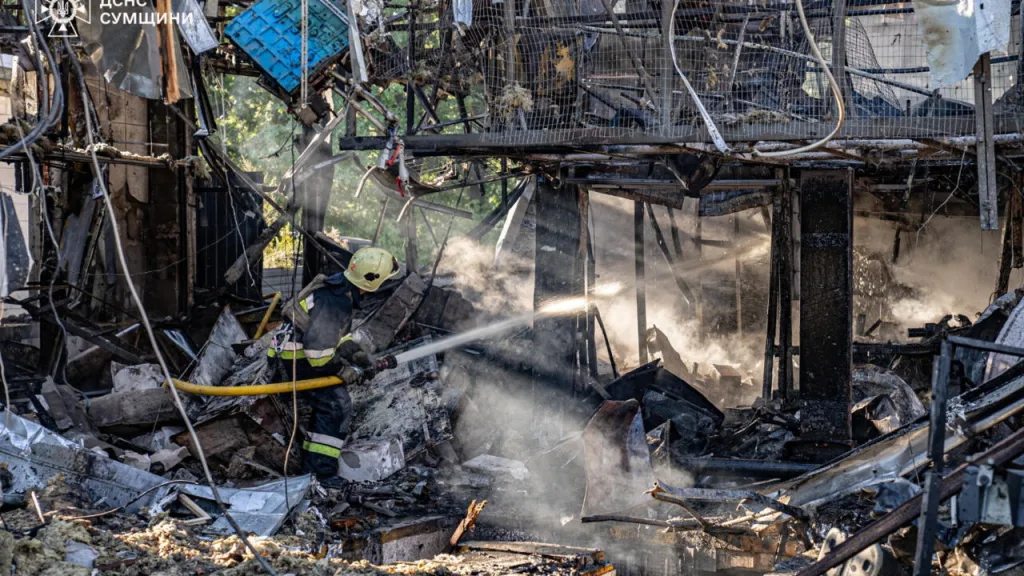
Recognizing the difficulty of conducting direct frontal assaults against heavily fortified Russian defensive lines, Ukraine has increasingly prioritized counter-logistics operations designed to isolate the peninsula and degrade the operational capacity of Russia’s Black Sea Fleet.
The technical layout of this logistics strangulation strategy relies on three main targets:
- Highway Transport Nodes: Regular precision strikes on the R-280 “Novorossiya” highway have systematically disrupted the overland supply trucks attempting to transport fuel from southern Russian hubs.
- Digital Security Controls: Attempts by local Crimean networks to introduce emergency QR-code rationing systems via digital messaging applications failed catastrophically after the reservation codes were completely exhausted within seconds of release.
- Grid and Power Disruption: Collateral damage to regional electrical networks has triggered widespread power outages across cities like Yevpatoriya, further complicating the mechanical distribution of remaining fuel supplies.
CJ Analysis: The Reality of Besieged Territorial Governance
From a rational standpoint of world leadership governance, the total suspension of civilian fuel sales in Crimea illustrates the deep vulnerabilities face by administrations operating within contested territorial enclaves.
When a state actor is forced to prioritize military mobility and bureaucratic survival over the basic economic functionality of its civilian populace, the long-term governance model becomes profoundly unsustainable. The current crisis has immediately paralyzed the local economy at the traditional onset of the summer holiday season, a sector vital to Crimea’s financial independence.
For global security observers, this escalation proves that modern asymmetric warfare can successfully isolate high-value strategic positions without relying exclusively on conventional territorial reclamation. By systematically dismantling the energy, transport, and communication networks that link a territory to its primary source of supply, a smaller military force can effectively nullify the strategic advantage of a deeply entrenched adversary.
As long as Russia remains unable to secure its external maritime and overland corridors against persistent drone incursions, Crimea will continue to function less as an offensive military bastion and more as a logistically isolated, defensive liability, testing the absolute limits of Moscow’s administrative governance.
Castle Journal Ltd
British company for newspapers and magazines publishing
London-UK – licensed 10675
Founder | Owner| CEO
Abeer Almadawy
Abeer Almadawy is a philosopher who established the third mind theory research and the philosophy of non-self and trans egoism. She is also the author of the New Global Constitution for the leadership Governance 2030/2032. She has many books published in English, Arabic, Chinese, French and others.
Castle Journal newspapers are the only voice and the brain of the world leadership governance.

