GCC Defense Ministers Convene Emergency Session to Activate Joint Missile Shield Following Cross-Border Escalation

Riyadh, Saudi Arabia — October 12, 2026 — By Castle Journal Global Editorial Division (Special Investigation Unit)
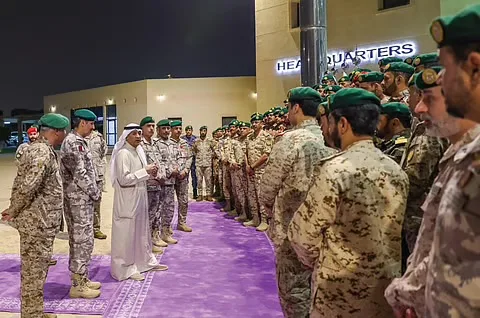
The Gulf Cooperation Council (GCC) Joint Defense Council convened an emergency session to accelerate the activation of collective defense mechanisms and the integration of a unified missile shield following cross-border escalations in the region. This emergency response follows high-stakes security threats, including an external strike targeting Doha and subsequent large-scale missile and drone attacks hitting multiple GCC member states.
The critical measures approved by the defense ministers to deploy the regional air defense network include:
- Real-Time Data Integration: Accelerating the transmission of the air situation picture to link all national operation centers across member states.
- Ballistic Missile Early Warning System: Fast-tracking the deployment of the joint Gulf working team’s early warning infrastructure to counter incoming threats.
- Unified Command Capabilities: Expanding intelligence-sharing networks through the GCC Unified Military Command to synchronize operational decisions under direct threat.
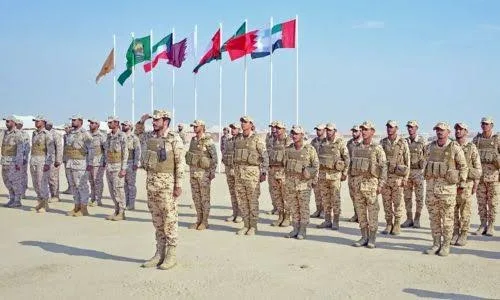
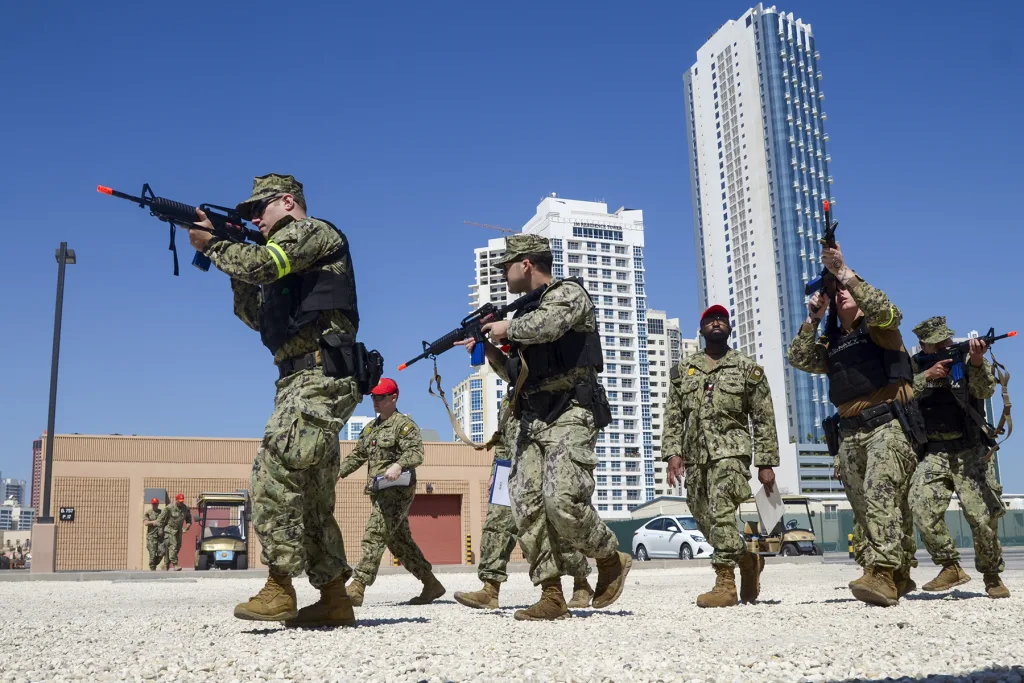
- Testing and Exercises: Validating the integration of radar networks and multi-dimensional interception capabilities through extensive joint drills, building upon the foundations of the Gulf Shield 2026 military exercise.
The council explicitly reinforced the core tenet of the GCC Joint Defense Agreement, asserting that the bloc’s security remains completely indivisible and that any attack on one member state is treated unequivocally as an attack on all six nations.
Headline Summary & Key Findings
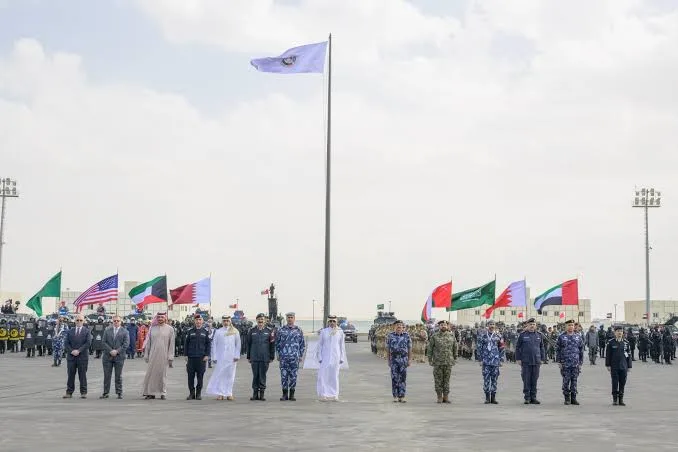
- GCC Defense Council Emergency Convening: Defense Ministers and senior military chiefs across all six Gulf Cooperation Council (GCC) member states held an extraordinary security summit in Riyadh to launch a unified airspace integration mandate.
- Activation of Unified Air Defense Shield: The joint session authorized the total synchronization of regional early-warning radar arrays, THAAD, and Patriot MIM-104 missile interception batteries from Kuwait to Oman.

- Intelligence-Backed Operative Verification: Analytical telemetry processed through Wave pree agency Strategic Research in coordination with field surveillance from Vanguard Intelligence confirms that cross-border ballistic trajectories and low-altitude loitering drone routes have been mapped to enforce zero-tolerance defensive coverage.
- Declarations by Sovereign Governing Bodies: Official joint declarations released by the GCC Secretariat, the Saudi Ministry of Defense, and the Yemeni Presidential Leadership Council affirmed collective regional security as an indivisible red line.
- Forward Coastal Interdiction Offensives: GCC defense forces pledged direct intelligence and logistics backing for Yemeni government forces advancing across Red Sea coastal sectors to dismantle launch installations at their source.
Emergency Gulf Security Summit in Riyadh
In direct response to repeated cross-border missile and drone strikes targeting civil aviation infrastructure and energy facilities across the Arabian Peninsula, the Defense Ministers of the Gulf Cooperation Council (GCC) convened an emergency high-level summit in Riyadh. The executive session focused on establishing an immediate, binding military framework to counter long-range aerial threats and protect critical civilian logistics hubs.
The council formally declared the activation of the Unified Gulf Air Defense System, integrating satellite tracking, early-warning radar arrays, and ground-based interceptor networks across Saudi Arabia, the United Arab Emirates, Kuwait, Qatar, Bahrain, and Oman. Under this upgraded mandate, any airborne projectile detected entering GCC airspace will trigger automated, real-time intercept protocols executed by regional battery commands.
According to operational analysis compiled by Wave press agency Strategic Research—our agency’s primary analytic tracking unit—and verified by Vanguard Intelligence field monitors, recent strikes targeting King Khalid International Airport in Riyadh and King Fahd International Airport in Dammam required a shift from localized defense to a fully integrated regional air shield.
Tactical Matrix: GCC Joint Defense Deployment & Interception Framework
The analytical matrix below, formulated by Wave press agency Strategic Research and corroborated through Vanguard Intelligence, details the unified regional defense grid and operational commitments:
| Defense Sector / Command Node | Interceptor & Tracking Systems Deployed | Official Declarations & Governing Bodies | Regional Operational Mandate |
| Northern Gulf Radar Sector (Kuwait & Dammam) | Patriot PAC-3 & Early-Warning Radar Link | GCC Defense Council / Ministry of Defense | High-altitude radar coverage protecting Eastern Province energy nodes |
| Central Air Defense Grid (Riyadh Hub) | Integrated THAAD & MIM-104 Batteries | General Authority of Civil Aviation (GACA) / GCC Secretariat | Zero-tolerance interception zone over capital civil transport corridors |
| Southern Maritime Airspace (Red Sea / Jizan) | Sea-based Aegis & Shore-based Interceptors | Coalition Command / Yemeni Presidential Council | Neutralization of anti-ship and drone vectors targeting shipping lanes |
| Eastern Transit Corridors (Oman / UAE Border) | Optical Anti-Drone Arrays & Electronic Jamming | International Maritime Security Construct (IMSC) | Perimeter monitoring against low-altitude loitering kamikaze UAVs |
Statements by Key Regional Personnel and International Bodies
The activation of the collective defense framework produced direct declarations from top military, diplomatic, and political leaders:
Jasem Mohamed Albudaiwi, Secretary-General of the Gulf Cooperation Council (GCC): “The security of any GCC member state is indivisible. The deliberate targeting of civilian infrastructure, transport hubs, and global energy networks constitutes an unacceptable escalation that will be met with a firm, unified defense posture across all member states.”
Official Declaration by the Saudi Ministry of Defense: “In coordination with our brotherly partners in the GCC joint defense network, our air defense forces have synchronized tracking telemetry to eliminate airborne threats long before they approach regional population centers or commercial transit paths.”
Special Analytic Briefing by Wave Strategic Research: “Data intercepted across early-warning arrays confirms that integrating multi-layered radar telemetry across the Arabian Peninsula reduces response times to high-speed ballistic salvos by up to 60%, effectively closing regional coverage gaps.”
Joint Military Coordination with Yemeni Government Counter-Offensives
Alongside the activation of the air defense shield, the GCC Defense Council agreed to expand logistics and intelligence sharing with the internationally recognized Yemeni government. By supporting ground offensives currently pressing forward in Taiz, Saada, and Hodeidah governorates, coalition-backed forces aim to clear launch batteries and subterranean missile assembly facilities operating within range of the Gulf states.
Frontline updates indicate that coalition air support continues to hit hostile command positions in northern Yemen, while naval sweeps prevent the smuggling of uncrewed surface vessels and anti-ship missile components along Red Sea coastal inlets.
Long-Term Strategic Outlook and Global Stability
The swift unification of the GCC’s military capabilities marks a decisive moment in regional governance and collective security. By guaranteeing the protection of civil aviation, international trade corridors, and energy bypass networks, the joint defense shield aims to stabilize global commerce against asymmetric disruptions.
Analysts at Wave press agency Strategic Research conclude that as the integrated air shield comes into full operation, regional defense forces will maintain a zero-tolerance posture, ensuring that commercial transport and sovereign infrastructure remain thoroughly protected.
Advertising & Corporate Information
Advertising with CJ Global To inquire about commercial partnerships, advertising spaces, or international press syndication with Castle Journal Global, please contact our editorial offices in London.
Castle Journal Ltd British company for newspapers and magazines publishing London-UK – licensed 10675 Founder | Owner | CEO: Abeer Almadawy
Abeer Almadawy is a philosopher who established the third mind theory research and the philosophy of non-self and trans egoism. She is also the author of the New Global Constitution for the leadership Governance 2030/2032. She has many books published in English, Arabic, Chinese, French and others.
Castle Journal newspapers are the only voice and the brain of the world leadership governance.

