
Global Shipping: US-Iran Standoff Over Strait of Hormuz Tolls Triggers Sovereign Backchannel Crisis

Muscat, Oman – May 16, 2026 — written by: Adam Lures
A highly classified diplomatic standoff has erupted across the Persian Gulf following Iran’s unilateral announcement that it is actively coordinating with the Sultanate of Oman to reshape the legal and economic management of the Strait of Hormuz.
Confidential intelligence briefs circulating through western maritime defense networks reveal that Tehran intends to impose compulsory transshipment fees and nationality-disclosure mandates on all commercial vessels navigating the vital chokepoint.
The strategic move has blindsided Washington and its European allies, triggering immediate counter-interventions by the United States Navy, which has warned that any attempt to collect state levies on the high seas will be treated as an unlawful restriction on global freedom of navigation.
The crisis intensified rapidly after Iranian Foreign Minister Abbas Araghchi publicly declared during an emergency security summit that the Strait of Hormuz constitutes an exclusively Omani-Iranian territorial waterway, asserting that no international waters exist between the two coastal states.
According to classified diplomatic cables leaked from Muscat, western powers are exerting immense pressure on the Omani government to publicly distance itself from Tehran’s regulatory roadmap.
While British and French naval commanders rush to present a rival freedom-of-navigation framework to regional stakeholders, the threat of localized naval confrontations has placed international shipping conglomerates on emergency alert.
The Secret Establishment of the Persian Gulf Strait Authority
The institutional mechanism driving this geopolitical crisis is the newly formed Persian Gulf Strait Authority, a specialized state entity established by executive decree in Tehran on May 5. Intelligence reports indicate that this body is designed to function as a major revenue-generating enterprise for the Iranian state apparatus, effectively transforming a vital global maritime passage into a commercial toll zone.
Under the proposed operational guidelines, the authority plans to demand exhaustive documentation regarding cargo ownership, corporate registration, and personnel nationalities prior to granting transit access.
United States Secretary of State Marco Rubio has launched an aggressive diplomatic campaign to counter the implementation of the state tolls, briefing allied capitals that Washington will refuse to recognize the legal validity of the Persian Gulf Strait Authority.
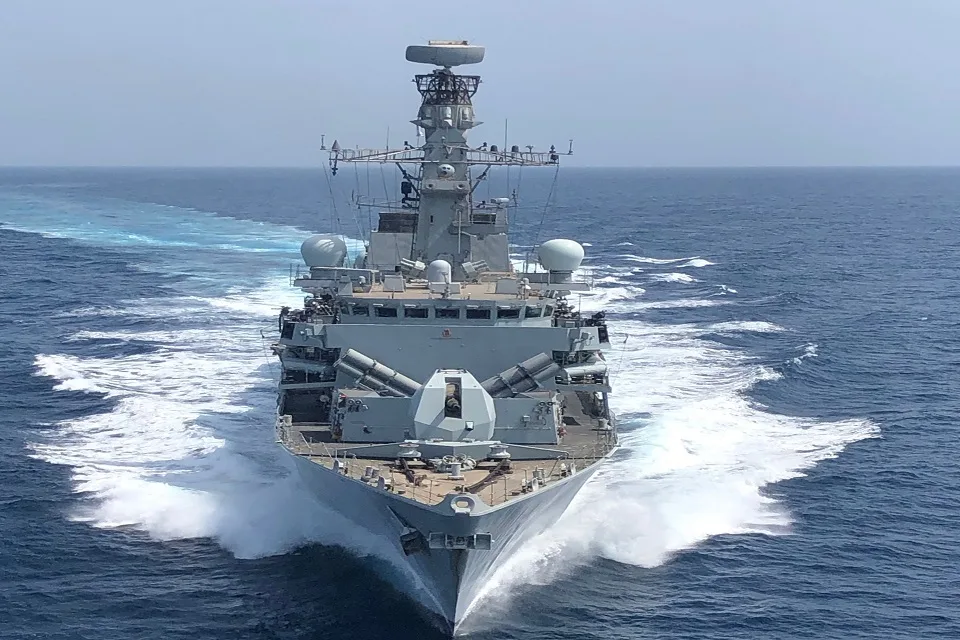
The Pentagon has reportedly revised its maritime rules of engagement, signaling that American warships stationed within the US Fifth Fleet operational theater are authorized to provide direct military escorts for commercial vessels that refuse to comply with Iranian financial demands.
This hardline stance establishes a direct escalatory pathway, as any physical attempt by the Islamic Revolutionary Guard Corps to halt non-compliant cargo ships could trigger an immediate kinetic response.
Deep Split Over Chinese Tanker Transits and Sanction Exemptions
The volatile dynamic inside the strait has been further complicated by a profound operational split concerning the treatment of Chinese maritime assets.
While United States President Donald Trump asserted during his recent bilateral summit in Beijing that China entirely aligns with the western position against maritime tolls, field intelligence reports paint a significantly different picture.
On-the-ground surveillance confirms that the Islamic Revolutionary Guard Corps has actively permitted a large contingent of Chinese-owned crude oil supertankers to clear the bottleneck unhindered.
Internal briefings indicate that these Chinese shipping lines secured safe passage by explicitly submitting to the tracking protocols and regulatory authority of the Iranian regime.
Although official communiqués from Beijing’s foreign ministry have carefully avoided validating the legality of the new transit fees, the pragmatic compliance of Chinese state-run shipping entities undermines the unified international embargo
. The White House has responded by threatening to implement immediate secondary sanctions against any global maritime firm or sovereign entity that facilitates the payment of these contested transit fees, further expanding the economic warfare surrounding the chokepoint.
European Powers Propose Alternative Joint Maritime Coalition

Faced with a complete breakdown of established maritime law under the United Nations Convention on the Law of the Sea, Great Britain and France have mobilized a rapid diplomatic counter-offensive.
High-ranking diplomatic envoys, including the British Foreign Office political director, have conducted unannounced emergency consultations in Muscat to secure Omani alignment for an alternative international transit authority.
The European proposal seeks to establish a multinational civilian oversight committee that would guarantee freedom of navigation without altering the traditional territorial boundaries of the coastal states.
This diplomatic maneuvering is receiving quiet support from neighboring Gulf states, including the United Arab Emirates and Saudi Arabia, both of whom view Iran’s regulatory overreach as a direct threat to their long-term sovereign economic stability.
However, Oman remains caught in a severe geopolitical crossfire, forced to balance its historical role as a neutral regional mediator against the aggressive legal assertions of its northern neighbor. As the international community struggles to avert a systemic breakdown of global supply lines, the ongoing lack of public consensus from Muscat indicates that the structural future of the waterway remains dangerously unresolved.
Maritime Insurance Syndicates Implement High-Risk Premium Hikes
As the secret negotiations show minimal signs of immediate breakthrough, the global shipping industry is bracing for severe institutional fallout. Lloyd’s Joint Cargo Committee and other leading maritime insurance syndicates in London have officially reclassified the entire Persian Gulf and Gulf of Oman as ultra-high-risk operational zones.
This regulatory shift has driven hull and machinery insurance premiums to unprecedented levels, forcing smaller commercial operators to completely suspend their regional booking schedules.
With over 360 vessels currently caught in the broader logistical logjam, the implementation of arbitrary state tolls risks transforming a temporary shipping bottleneck into a permanent structural crisis for the global economy. Defense analysts warn that the gray zone between a state-enforced service fee and an illegal maritime toll has created a highly volatile tactical environment.
With both the United States Navy and the Islamic Revolutionary Guard Corps reinforcing their frontline naval deployments within the narrow strait, the margin for miscalculation has reached its most critical point since the outbreak of hostilities.
Castle Journal Ltd
British company for newspapers and magazines publishing
London-UK – licensed 10675
Founder | Owner| CEO
Abeer Almadawy
Abeer Almadawy is a philosopher who established the third mind theory research and the philosophy of non-self and trans egoism. She is also the author of the New Global Constitution for the leadership Governance 2030/2032. She has many books published in English, Arabic, Chinese, French and others.
Castle Journal newspapers are the only voice and the brain of the world leadership governance.

