
United States & China: Trump Announces Massive Aviation Trade Agreements with Beijing Following Xi Summit
Beijing, China – May 16, 2026 — Written by Hue Gey

Following the high-profile conclusion of a two-day diplomatic summit in the Chinese capital, United States President Donald Trump announced that Washington and Beijing have reached a series of sweeping trade understandings. Chief among these bilateral outcomes is a major industrial commitment by China to return to the American aerospace market, highlighted by an initial agreement to purchase 200 Boeing commercial aircraft, with the long-term potential to expand the order book to 750 total planes.
The multi-billion-dollar aviation package represents the most significant commercial breakthrough between the world’s two largest economies in nearly a decade, signaling an aggressive push by the current US administration to revitalize domestic manufacturing, boost blue-collar employment, and secure concrete corporate victories directly on the international stage.
According to official briefings provided by US officials and details shared by President Trump aboard Air Force One during his return flight, the finalized transaction will see the initial batch of 200 aircraft fitted exclusively with engines manufactured by General Electric Aerospace. The inclusion of General Electric ensures that the financial benefits of the bilateral arrangement will be distributed across multiple sectors of the American industrial supply chain, ranging from final assembly facilities to specialized engine manufacturing plants.
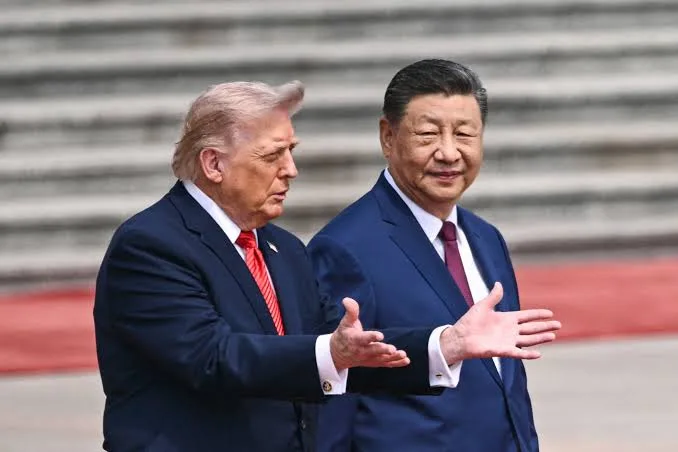
Speaking to international media outlets and reporters, the US President framed the commercial agreement as a monumental achievement for domestic workers, stating that the sheer volume of production required to fulfill the Chinese order would directly safeguard and generate tens of thousands of high-skilled industrial jobs across multiple US states.
The strategic timing of the aviation package is highly critical for both Boeing and the broader US aerospace sector, which has faced severe operational hurdles, regulatory scrutiny, and stiff competition from European rival Airbus within the fast-growing Chinese aviation market since late 2017.
Industry analysts monitoring the Beijing talks noted that the initial 200-jet commitment, while slightly lower than the optimistic 500-aircraft figure rumored by financial markets prior to the summit, serves as an essential framework to reopen deadlocked commercial channels.
The manufacturing arrangement will reportedly feature a mix of single-aisle Boeing 737 MAX aircraft alongside high-capacity wide-body platforms, including the 787 Dreamliner and 777 models, aimed at satisfying China’s surging domestic air travel demands over the coming decade.
The commercial delegation accompanying the US President to Beijing included high-level corporate executives, including Boeing Chief Executive Officer Kelly Ortberg and General Electric Aerospace Chief Executive Officer Larry Culp, both of whom participated in structural breakout sessions alongside Chinese trade representatives.
While the American corporate leadership expressed robust optimism regarding the implementation of the aircraft orders, market reaction remained cautious as financial analysts await formalized contract sign-offs and delivery schedules from state-run Chinese purchasing agencies.
Historically, large-scale aviation memorandums of understanding between Washington and Beijing have faced delays during periods of heightened geopolitical tension, making the baseline stabilization of bilateral diplomatic ties an absolute prerequisite for the successful execution of the current manufacturing pipeline.
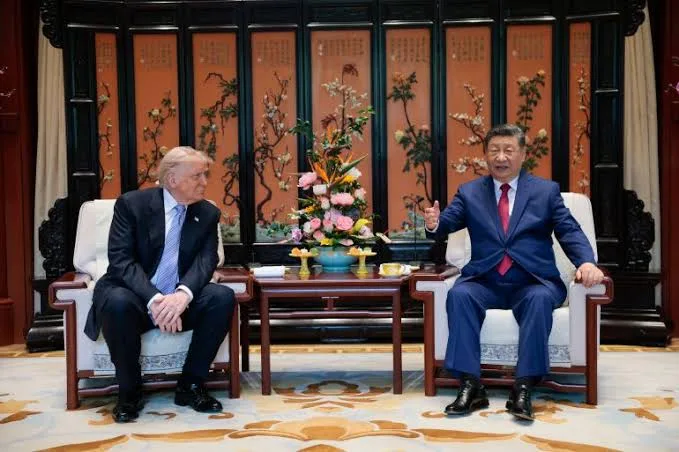
Beyond the aviation sector, the US executive team emphasized that the wide-ranging economic discussions in Beijing yielded critical understandings for the American agricultural heartland. White House officials indicated that China has reiterated its intent to buy substantial quantities of US agricultural exports, specifically focusing on multi-billion-dollar purchasing agreements for American soybeans to support rural economies.
Interestingly, the US President confirmed to reporters that the contentious issue of industrial import tariffs was not actively debated during the two days of intensive sit-down meetings with Chinese President Xi Jinping, leaving the existing baseline economic penalties active while both nations prioritize direct sector-by-sector purchasing mechanisms.
Geopolitical security issues also formed a major component of the closed-door dialogue between the two heads of state, with the White House releasing a formal readout confirming a shared stance on maritime stability within the Middle East. Both the United States and China affirmed that the Strait of Hormuz must remain entirely open to safeguard the unhindered flow of global energy supplies, with President Xi Jinping expressing Beijing’s firm opposition to the further militarization of vital international shipping lanes.
Additional diplomatic consultations touched upon the delicate security architecture surrounding Taiwan and cross-strait stability, with the US delegation maintaining its established legal frameworks while avoiding immediate escalatory rhetoric, thereby allowing the commercial and manufacturing breakthroughs of the summit to remain the primary public focus of the bilateral visit.
Castle Journal Ltd
British company for newspapers and magazines publishing
London-UK – licensed 10675
Founder | Owner| CEO
Abeer Almadawy
Abeer Almadawy is a philosopher who established the third mind theory research and the philosophy of non-self and trans egoism. She is also the author of the New Global Constitution for the leadership Governance 2030/2032. She has many books published in English, Arabic, Chinese, French and others.
Castle Journal newspapers are the only voice and the brain of the world leadership governance.

