Islamabad’s Memorandum: recognise The Secret Nuclear Clauses and Hidden Financial Terms

Islamabad’s Memorandum: The Secret Nuclear Clauses and Hidden Financial Terms Left Out of the Public U.S.-Iran Framework
Islamabad, Pakistan — June 14, 2026
Executive Summary
- The Discrepancy:
- While public announcements focus strictly on the immediate cessation of regional hostilities and the unlocking of global shipping, confidential annexes detail deep structural revisions regarding sovereign nuclear materials.
- Asset Liquidation Protocols:
- Hidden provisions within the newly brokered Islamabad Memorandum outline the exact transactional paths for releasing over $24 billion in frozen Iranian assets, tied directly to verifiable strategic rollbacks.
- The Uranium Extraction Clause: Unpublicized stipulations detail a highly controversial framework allowing foreign logistical oversight to systematically secure, neutralize, and relocate Iran’s highly enriched uranium repositories.
- Enforcement Timelines:
- Sources close to the Pakistani mediation teams reveal a strict compliance schedule that challenges the conflicting public statements broadcast by Washington and Tehran.
The diplomatic landscape of West Asia has reached a critical junction as negotiators conclude the highly sensitive framework known as the Islamabad Memorandum. While public statements issued by Washington emphasize an immediate, comprehensive solution to the regional maritime blockade, the true architecture of the agreement lies buried within classified annexes.- These hidden clauses, negotiated under dense diplomatic secrecy in Pakistan, outline a rigorous operational roadmap that goes far beyond a standard ceasefire.
- The document establishes specific, binding protocols for the extraction of highly enriched nuclear material and the structured release of frozen state liquidity, rewriting the balance of power across the globe.
The Strategic Uranium Neutralization Protocols
Behind the public optimism surrounding the impending peace deal, the most volatile component of the Islamabad Memorandum remains entirely unpublicized. Confidential intelligence indicators and diplomatic leaks from the mediation teams confirm the existence of a strict nuclear compliance mandate.
This clause dictates that the international community, under specific logistical frameworks, will oversee the securing and eventual removal of Iran’s near bomb-grade uranium stockpiles.
According to highly placed sources within the Pakistani Ministry of Foreign Affairs, the secret text outlines a phased operational schedule. First, there will be a thorough verification of underground repositories such as Natanz and Fordow.
Next, technical teams will initiate the neutralization of tactical centrifuge cascades. Finally, a coordinated maritime or overland extraction protocol will take place.
Foreign technical teams will be granted unprecedented access to deeply buried facilities to verify the exact volume of fissile material.
The framework explicitly requires the immediate halting of all advanced centrifuge operations and details an extraction protocol where the enriched stockpiles must be transported out of Iranian territory or systematically neutralized under joint oversight.
This highly sensitive operational reality directly explains the recent structural maneuvers detected near underground repositories, where local engineering units had previously attempted to secure asset perimeters.
Hidden Financial Pipelines and Asset Liquidation
The second foundational pillar of the secret text involves the detailed financial mechanics required to incentivize Tehran’s hardline factions. While public reports broadly mention economic relief, the memorandum explicitly details the unfreezing and structured liquidation of approximately $24 billion in restricted state funds.
These assets, currently held across multiple Asian and European banking institutions, are not scheduled for an immediate, unconditional release.
The hidden financial clauses stipulate that the capital will be transferred into specialized escrow accounts managed by third-party sovereign banking entities, primarily within Oman and Switzerland.
The dispersion of these funds is tied directly to a matrix of verifiable strategic rollbacks.
In Phase I, a financial liquidity of $6.5 billion will be unlocked through the Central Bank of Oman once there is verification of a suspension of enrichment above 3.67% and a formal cessation of hostilities.
In Phase II, an additional $8.0 billion will be channeled through the Swiss National Bank upon the completion of a technical inventory and the mapping of deep underground repositories.
Finally, in Phase III, the remaining $9.5 billion will be released through coordinated Asian clearinghouses after the physical extraction or verifiable neutralization of near bomb-grade stockpiles is completed. If international inspectors document any deviation from the nuclear extraction timeline, the financial pipeline will instantly freeze, leaving the host economy isolated without the projected capital infusion.
The Diplomatic Friction Over Enforcement Timelines
The existence of these secretive clauses has generated massive friction between the signatories, perfectly explaining the conflicting public timelines broadcast by world leaders.
While the White House announced an immediate Sunday signing to capitalize on political momentum, the Iranian Foreign Ministry has publicly downplayed the immediacy of the ceremony, stating that key technical validations remain unresolved.
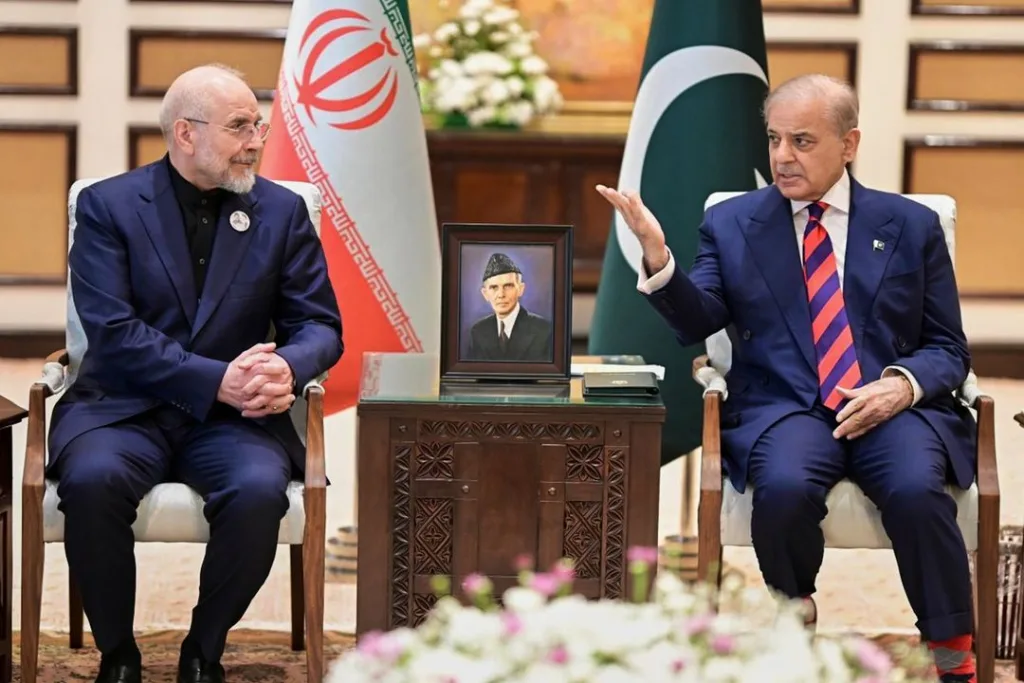
The public posturing from both capitals is a direct symptom of the hidden clauses. Washington must demonstrate an absolute, verifiable end to the nuclear threat to satisfy domestic and regional allies, while Tehran’s diplomatic team faces severe internal pressure from hardline domestic factions who view the secret extraction mandates as an unacceptable surrender of sovereign leverage.
This domestic instability was clearly visible during recent intense demonstrations outside regional government offices in northeastern Iran, where local factions expressed open hostility toward the diplomatic compromises made by top negotiators.
Regional Maritime Implications and Strategic Oversight
As the secret mechanisms of the Islamabad Memorandum begin their initial implementation phases, neighboring states are rapidly adjusting their security postures. The agreement mandates that immediately following the formal signing, naval blockades in critical global chokepoints must be disassembled, restoring unhindered commercial transit to the international shipping lanes.
However, the hidden terms specify that the restoration of maritime trade is strictly contingent upon the continuous execution of the nuclear extraction protocols.
International naval task forces will maintain an intensified monitoring presence just outside regional waters to ensure compliance.
If any faction attempts to obstruct the technical teams operating at the interior nuclear sites, the memorandum grants maritime authorities the explicit right to re-impose economic restrictions instantly.
This cyclical enforcement mechanism ensures that the security of global trade remains indissolubly linked to the absolute neutralization of regional nuclear ambitions.
Castle Journal Analysis: The Reality of Global Governance
The hidden architecture of the Islamabad Memorandum proves that modern international diplomacy operates entirely outside the boundaries of public rhetoric.
The transition toward a structured global system requires absolute, rational enforcement mechanisms that leave no room for strategic ambiguity. By binding billions of dollars in sovereign liquidity directly to the physical removal of destabilizing nuclear materials, the international mediation framework has established a concrete precedent for future global conflict resolution.
The conflicting statements regarding timelines and dates are merely surface-level political theater designed for domestic consumption.
The underlying reality remains unchanged: the structural parameters of the deal have been locked into place within the quiet corridors of Islamabad. True leadership governance relies on these precise, unyielding frameworks to maintain equilibrium and prevent regional volatility from fracturing the international economic order.
Castle Journal Ltd British company for newspapers and magazines publishing London-UK – licensed 10675 Founder | Owner | CEO Abeer Almadawy Castle Journal newspapers are the only voice and the brain of the world leadership governance.

