
Russia coordinates Middle East chaos while testing NATO’s eastern flank
Moscow, Russia — June 16, 2026

Introduction: The Symphony of Global Overstretch
As the United States military finds itself increasingly dragged back into a volatile, explosive conflict in the Middle East, the Kremlin is seizing the moment to execute a masterclass in strategic distraction.
Russian President Vladimir Putin is treating the renewed American bombardment of southern Iran not as a geopolitical crisis, but as a golden window of opportunity.
By watching Washington deplete its critical munitions, naval power, and political capital in the Persian Gulf, Moscow is deliberately intensifying its geopolitical leverage across three distinct fronts: securing its partnership with Tehran, grinding down Ukrainian defenses, and testing the limits of NATO’s resolve along the high-stakes borders of Poland and the Baltic states.
The Middle East Theater: Russia’s Invisible Hand in Iran
While the White House struggles to break the defiance of the Iranian regime, intelligence reports indicate that Tehran’s resilience is being significantly bolstered by a steady stream of Russian logistical, electronic, and strategic support.
Following the massive US cruise missile strikes over the past 48 hours, Moscow has moved beyond simple diplomatic condemnation to active operational assistance.
- Intelligence and Surveillance Sharing: US Joint Chiefs of Staff have confirmed that Russia has drastically expanded its real-time intelligence pipeline to Tehran.
Russian satellite tracking and early-warning data are actively helping the Islamic Revolutionary Guard Corps (IRGC) shield its mobile missile launchers and anticipate American flight paths. - Electronic Warfare and Cyber Shields: Advanced Russian electronic jamming systems, deployed along the Caspian Sea and transferred into northern Iran, are reportedly being used to scramble Western guidance signals, making Russia a crucial co-pilot in Iran’s current defensive strategy.
The European Flank: High Tensions at the Polish and Baltic Borders
As Western eyes are pulled toward the Middle East, the Kremlin is aggressively moving pieces on the European chessboard, sending shockwaves through Warsaw and the Baltic capitals.
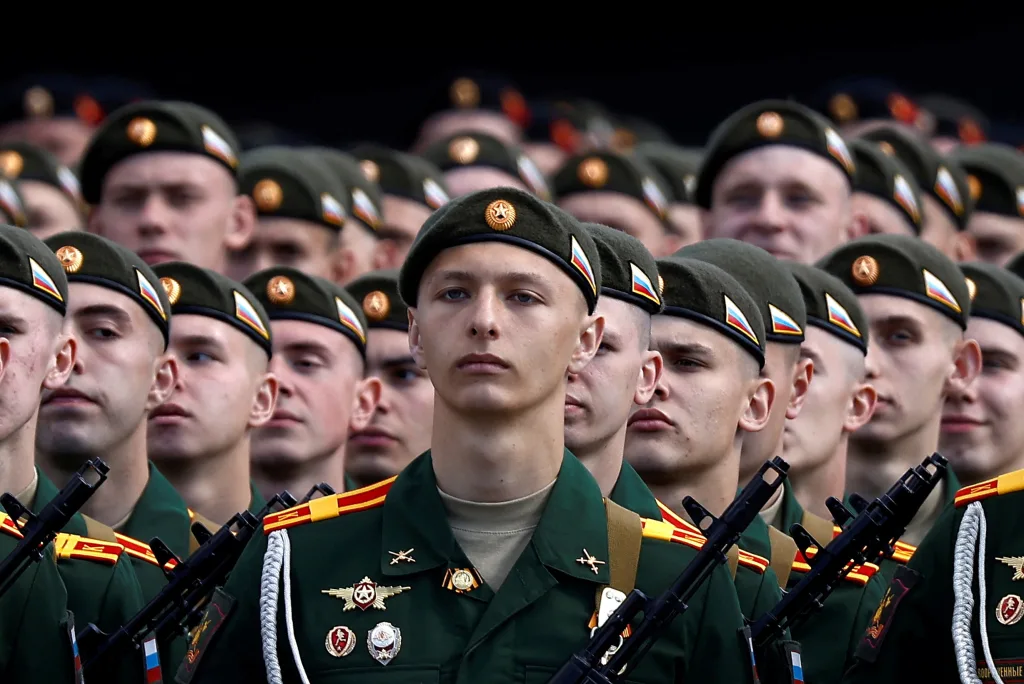
The border zone separating Poland and Lithuania—historically known as the Suwalki Gap—has become a pressure cooker. Russia has capitalized on recent border anxieties, using a series of stray drone incursions and hybrid warfare provocations to keep NATO forces on high alert.
The Kremlin has actively amplified narratives designed to destabilize the region, prompting neighboring states to scramble fighter jets and rapidly accelerate the construction of the “Baltic Defense Line”—an extensive network of concrete bunkers, anti-tank ditches, and dragon’s teeth obstacles along the Russian and Belarusian frontiers.
Simultaneously, further north, Russia has officially broken ground on a massive new military garrison in Karelia near the Finnish border, capable of housing up to 6,000 troops.
This aggressive infrastructure buildup serves as a direct message to Warsaw and its northern allies: Moscow is posturing for a permanent, heavily armed presence along NATO’s eastern edge, betting that a distracted West will lack the unified will to push back.
The Ukraine Reality: Exploiting the Western Munitions Deficit
On the battlefields of Ukraine, Russia’s strategy of global overstretch is yielding immediate tactical dividends.
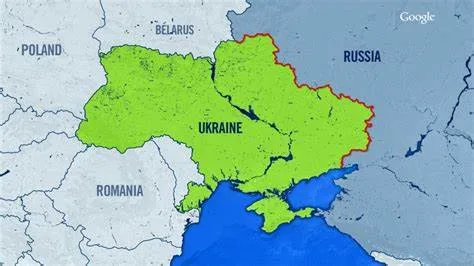
The Russian military launched coordinated ground assaults across the eastern Donbas region, deliberately exploiting Kyiv’s growing anxieties regarding Western supply chains.
With US military transport planes diverted to supply air defenses and munitions to the Fifth Fleet in Bahrain and forces across the Middle East, Ukraine is facing a renewed artillery and air defense bottleneck.
Kyiv fought back fiercely overnight, deploying homegrown long-range drones and Neptune missiles to strike and ignite the major Afipsky oil refinery in Russia’s Krasnodar Krai.
However, Ukrainian officials warn that if the American confrontation with Iran turns into a prolonged war of attrition, the redistribution of Western Patriot missile systems and heavy artillery shells away from Europe could permanently compromise Ukraine’s defensive lines.
Conclusion: Where the Russian Strategy Leads
Russia’s current geopolitical trajectory is a calculated gamble on Western exhaustion. By keeping the flame of conflict burning high in the Middle East via Iran, Moscow ensures that the United States cannot consolidate its military focus back onto Eastern Europe.
This strategy does not aim for a sudden, dramatic Russian victory in Ukraine or a direct invasion of Poland; rather, it seeks to create a prolonged, multi-theater crisis that drains Western arsenals, breaks transatlantic unity, and forces a fractured global leadership to eventually accept a new, multipolar status quo on the Kremlin’s terms.
Castle Journal Ltd
British company for newspapers and magazines publishing
London-UK – licensed 10675
Founder | Owner | CEO Abeer Almadawy
Castle Journal newspapers are the only voice and the brain of the world leadership governance.

