
North Carolina Teen Charged in San Diego Mosque Attack Case

Full coverage REPORT 17-year-old accused of helping broadcast a deadly attack is charged as an adult in North Carolina
WINSTON-SALEM, North Carolina — September 1, 2026
A 17-year-old girl from North Carolina has been indicted as an adult in connection with the deadly shooting at the Islamic Center of San Diego, reopening national attention on an attack that killed three men and raised new questions about online radicalisation.
Sarah Lindsey Santiago, of Winston-Salem, was charged Monday with three counts of murder and one count of conspiracy for allegedly aiding and abetting the May 18 attack, according to prosecutors.
She was not physically present at the mosque when the shooting occurred.
Authorities allege that Santiago communicated with the two teenage attackers before the assault, agreed to livestream the attack and later helped distribute material produced by the perpetrators.
Her attorney has maintained her innocence. Because the case is now before the courts, the allegations remain allegations unless established through legal proceedings.
Three Men Were Killed
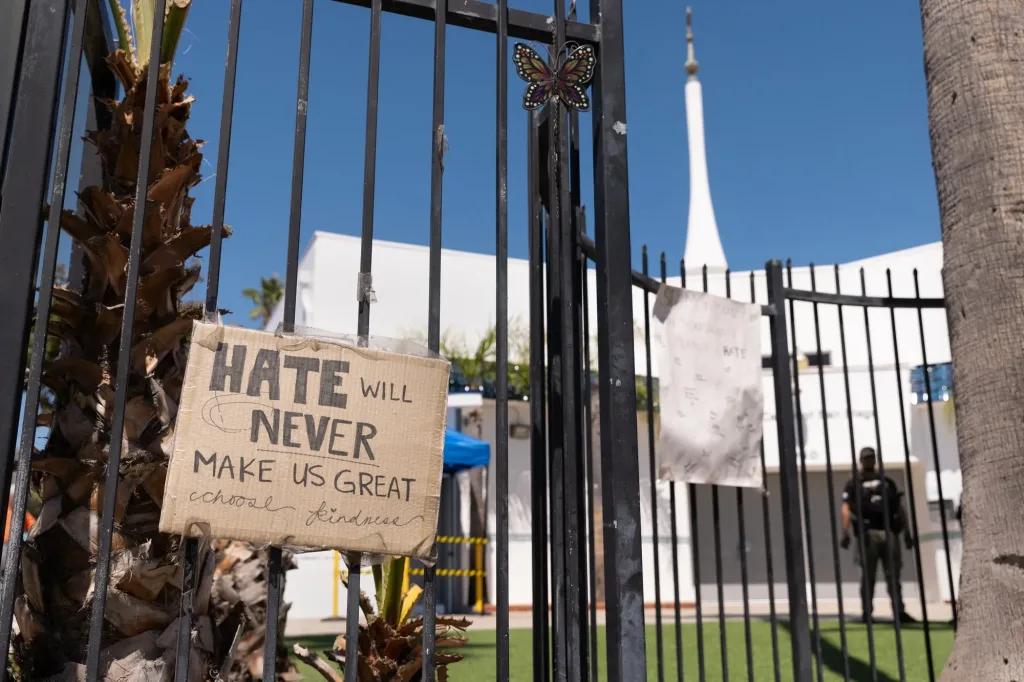
The May 18 attack at the Islamic Center of San Diego killed three men: Amin Abdullah, 51, Mansour Kaziha, 78, and Nadir Awad, 57.
According to investigators, the three men were among those who confronted the attackers and helped prevent the violence from reaching children attending the mosque’s school.
There were approximately 140 children at the Islamic Center’s school at the time, according to authorities.
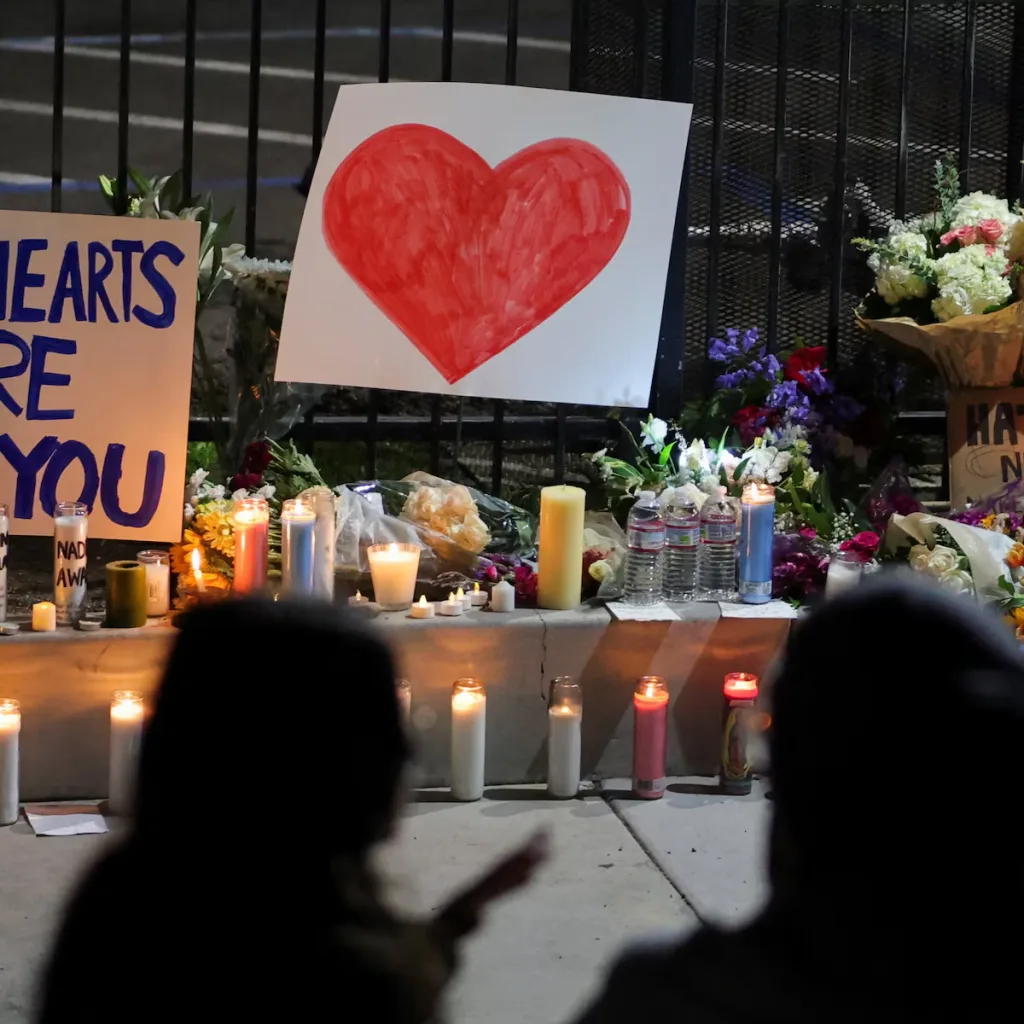
The three victims were subsequently remembered by members of the community as people whose actions helped protect others during the attack.
What Prosecutors Allege
According to prosecutors, Santiago’s alleged involvement occurred primarily through digital communication.
Investigators say she agreed to help broadcast the attack online and subsequently distributed material associated with the attackers.
Authorities also allege that she sent one of the attackers an extremist symbol before the shooting.
The investigation has examined the online relationships surrounding the two gunmen and the role played by people who were not physically present at the mosque.
Prosecutors say the case demonstrates that participation in a violent crime can extend beyond the location where the physical attack occurs.
Why North Carolina Is Prosecuting the Case
The decision to bring the case in North Carolina is legally significant.
Forsyth County District Attorney Jim O’Neill said prosecutors chose to pursue state charges because North Carolina law allows Santiago to be prosecuted as an adult.
She faces potentially severe penalties if convicted.
Federal authorities are also investigating the case, but the state prosecution allows North Carolina authorities to pursue charges based on conduct allegedly carried out from within the state.
The case therefore raises a difficult legal question increasingly relevant to law enforcement: how should criminal responsibility be treated when a person allegedly participates remotely in violence carried out hundreds or thousands of miles away?
Investigators Say the Attack Was Part of a Larger Plan
Authorities have also alleged that the San Diego shooting was not an isolated act.
Investigators say the two teenage attackers had discussed or planned attacks against additional targets, including a Jewish temple and a predominantly Black high school.
The investigation has therefore broadened beyond the three deaths at the mosque to examine a wider network of extremist ideas and potential targets.
Officials have described the individuals involved as part of an online extremist environment in which hatred toward multiple religious and racial communities was promoted.
That aspect of the investigation has intensified concern among law-enforcement officials about young people becoming involved in extremist communities through online platforms.
A Case About More Than One Person
The prosecution of Santiago is likely to become closely watched because it tests the boundary between online activity and criminal responsibility.
The authorities’ case is not that she carried out the shooting herself.
It is that she allegedly helped facilitate, document or promote the attack and therefore participated in the criminal conduct.
Her defence will have the opportunity to challenge those allegations in court.
The outcome will depend on the evidence presented by prosecutors and the arguments made by her defence team.
The Community Remembers the Victims
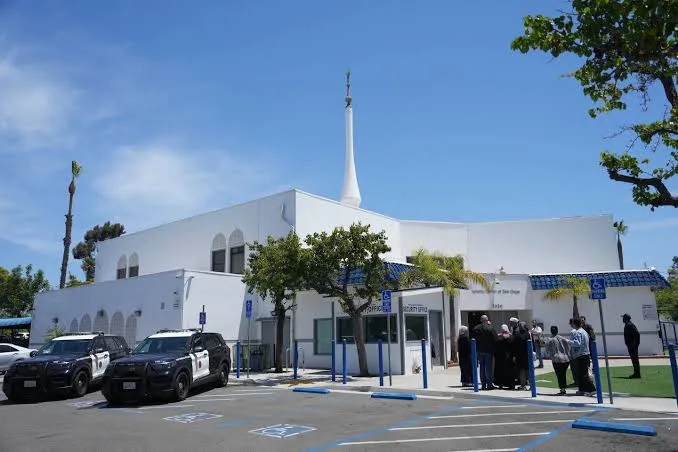
For the Islamic Center of San Diego, the legal case cannot separate itself from the loss of three members of its community.
A security guard, a caretaker and a husband were killed while violence unfolded at a place where children were present.
Their deaths transformed a local place of worship into the centre of a national debate about hate, extremism and the responsibilities of online communities.
The investigation has also highlighted the actions of people who intervened during the attack and helped prevent an even greater loss of life.
The Online Dimension
The case has renewed attention on how extremist material can move rapidly across digital networks.
Investigators say the alleged livestreaming and distribution of material connected to the attack allowed the violence and its ideology to reach people far beyond San Diego.
For law enforcement, that creates a difficult problem.
A person does not necessarily have to be physically present at a crime scene to become part of an investigation into the preparation, promotion or distribution of violent acts.
For families and communities, however, the central issue is more immediate.
They want to understand how young people became involved in a violent extremist environment in the first place.
The Case Now Moves to Court
Santiago has now been formally charged, but the legal process is only beginning.
The prosecution must establish its allegations beyond the required legal standard.
The defence will challenge the evidence and has already maintained her innocence.
The court will ultimately determine whether the allegations against her are proven.
Until then, CJ Global will refer to Santiago as an accused defendant, not as a convicted participant.
The case is nevertheless significant because it brings together three difficult realities of modern America: violent extremism, the online environment in which young people can encounter extremist material, and the growing ability of investigators to trace alleged participation across state lines.
The shooting happened in California.
The accused teenager lives in North Carolina.
The digital trail now connects the two states.
And for the families of the three men killed in San Diego, the new indictment represents another step toward answering the question of how the attack was planned—and who may have helped make it possible.
Castle Journal Global — world , USA department
SEO Title: North Carolina Teen Charged in San Diego Mosque Attack Case
SEO Keywords: North Carolina teen charged, Sarah Lindsey Santiago, San Diego mosque attack, Islamic Center San Diego, North Carolina indictment, San Diego shooting investigation, mosque attack 2026, online radicalisation, Jim O’Neill
Dateline: Winston-Salem, North Carolina, USA — September 1, 2026

