
Security Forces Foil Brazen Rangers Compound Attack; Six Terrorists Neutralized in Midnight Clash

Karachi, Pakistan — June 28, 2026
Security Forces Foil Brazen Rangers Compound Attack; Six Terrorists Neutralized in Midnight Clash
A highly coordinated and violent assault targeted a vital military installation in Pakistan’s commercial capital late last night, sparking fears of escalating regional instability. Heavily armed militants attempted to breach a heavily fortified paramilitary encampment, leading to an intense exchange of fire and a major security mobilization across the southern megacity.
While the initial tactical thrust sought to compromise internal defenses, the swift and lethal response from law enforcement personnel effectively contained the threat within the perimeter, resulting in several casualties on both sides and triggering massive counter-terrorism sweeps throughout the surrounding metropolitan areas.
Coordinated Assault Breaches Perimeter Security
The violent confrontation began in the late hours of Saturday evening when a cell of heavily armed fighters launched a surprise raid against the provincial headquarters of the paramilitary Sindh Rangers in Karachi’s eastern Gulistan-i-Jauhar neighborhood.
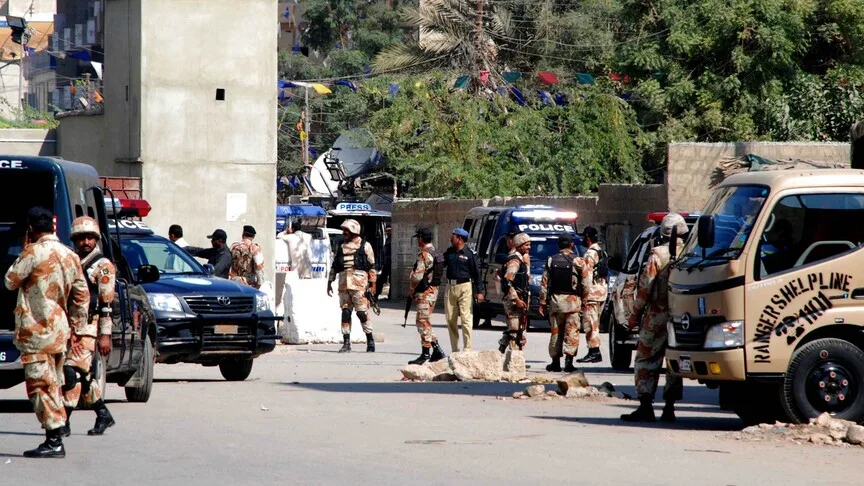
Initial operational intelligence indicates that the attackers arrived in an explosives-laden vehicle, which they deliberately rammed directly into the facility’s main gates near Mosamiat Chowrangi.
The resulting detonation breached the external physical barriers, shattering glass and shaking the ground across a wide perimeter, alerting nearby civilian residential zones and universities to the unfolding crisis.
Immediately following the blast, five to nine armed operatives equipped with tactical gear and automatic weaponry moved swiftly through the smoke to storm the compound. Sindh Inspector General of Police Javed Alam Odho confirmed that the paramilitary personnel on duty reacted instantly, taking up strategic defensive positions to pin down the attackers before they could access sensitive administrative buildings.
The firefight lasted for a sustained period, filling the night air with heavy automatic gunfire as reinforcing units converged on the grid to assist the besieged base.
Strategic Deployment and Tactical Casualties
As the intensity of the engagement grew, elite units were deployed to seal off the district.
The Anti-Terrorist Force, Special Security Unit commandos, and the Rapid Response Force established a strict cordoned grid, locking down the major arterial roads running past the Pakistan Meteorological Department and regional educational institutes.
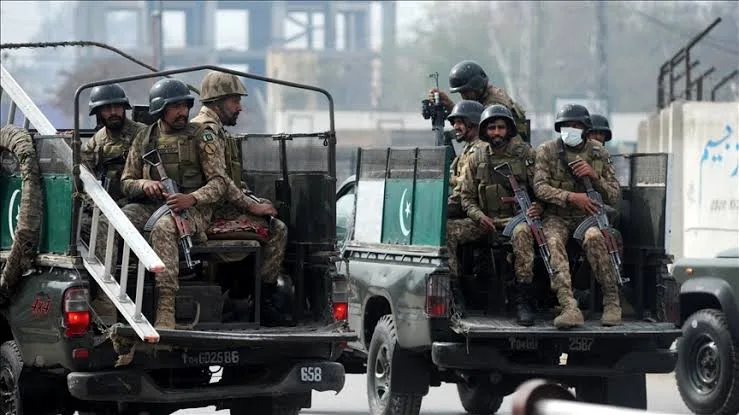
The combined tactical push successfully isolated the terrorists within the entry zone of the compound, cutting off any potential path to retreat or take civilian hostages in the densely populated urban center.
The Pakistan Armed Forces released an official statement confirming that three Rangers personnel were tragically killed while defending the facility, and four other paramilitary troops sustained varying degrees of injuries.
During the fierce close-quarters combat, security forces managed to neutralize three attackers outright, while subsequent clearance operations raised the total number of neutralized or captured militants.
One injured insurgent was taken alive into state custody, with field identification indicating he is an Afghan national, a development expected to heighten diplomatic friction between Islamabad and Kabul.
Regional Implications and Security Overhaul
Responsibility for the audacious raid was claimed shortly after midnight by Jamaat-ul-Ahrar, a notorious and highly lethal splinter faction of the Tehreek-e-Taliban Pakistan (TTP). The group’s involvement highlights a dangerous trend as militancy, which has historically been concentrated in the rugged provinces bordering Afghanistan, begins to re-assert its operational presence inside Pakistan’s primary economic and urban hubs.
Sindh Chief Minister Syed Murad Ali Shah immediately demanded a comprehensive intelligence report from law enforcement agencies, emphasizing the urgent need to review defense infrastructure for municipal military camps.
Meanwhile, President Asif Ali Zardari and Prime Minister Shehbaz Sharif issued strong public statements condemning the assault, praising the bravery of the fallen personnel, and vowing that the state’s counter-terrorism campaign would proceed with unyielding resolve. Regional analysts note that this incident represents the most severe breach of security in Karachi since the late 2024 bombing of a foreign convoy, signaling a critical need for structural upgrades in urban domestic defense.
Advertising with CJ Global
Core Analytical Insights
- Urban Shift in Militant Strategy: The targeting of a major paramilitary command center in Karachi indicates that insurgent networks are moving away from rural hit-and-run tactics toward spectacular, high-profile urban operations designed to undermine public confidence in national security.
- Geopolitical Backlash: The capture of a foreign national among the operational cell will likely aggravate cross-border tensions, providing Islamabad with further leverage to demand strict enforcement of counter-terror pledges from neighboring regimes.
- Economic Vulnerabilities: As the commercial engine of the nation, any prolonged security degradation in Karachi poses an immediate threat to foreign direct investment and maritime logistics operations centered around its ports.
Castle Journal Ltd
British company for newspapers and magazines publishing
London-UK – licensed 10675
Founder | Owner| CEO
Abeer Almadawy
Abeer Almadawy is a philosopher who established the third mind theory research and the philosophy of non-self and trans egoism. She is also the author of the New Global Constitution for the leadership Governance 2030/2032. She has many books published in English, Arabic, Chinese, French and others.
Castle Journal newspapers are the only voice and the brain of the world leadership governance.

