The Mediterranean Balancing in National Sovereignty and Multi Demands in Regional Population Security Frameworks

Évian-les-Bains, France — June 17, 2026
By Chief Investigative Journalist
Headline Points
- • Bilateral sessions at the 52nd G7 Summit address the intersection of European border management and North African domestic resources.
- • The executive leadership of Egypt maintains a rigid defense of national sovereignty against proposals for offshore processing centers.
- • Transatlantic and European Council working groups seek enhanced regional coordination to mitigate transit vulnerabilities across the Mediterranean.
- • Cairo outlines the unsustainable domestic burden of hosting millions of displaced regional guests under current international economic imbalances.
- • The dialogue highlights a fundamental structural debate regarding the limits of external integration within independent domestic jurisdictions.
Introduction
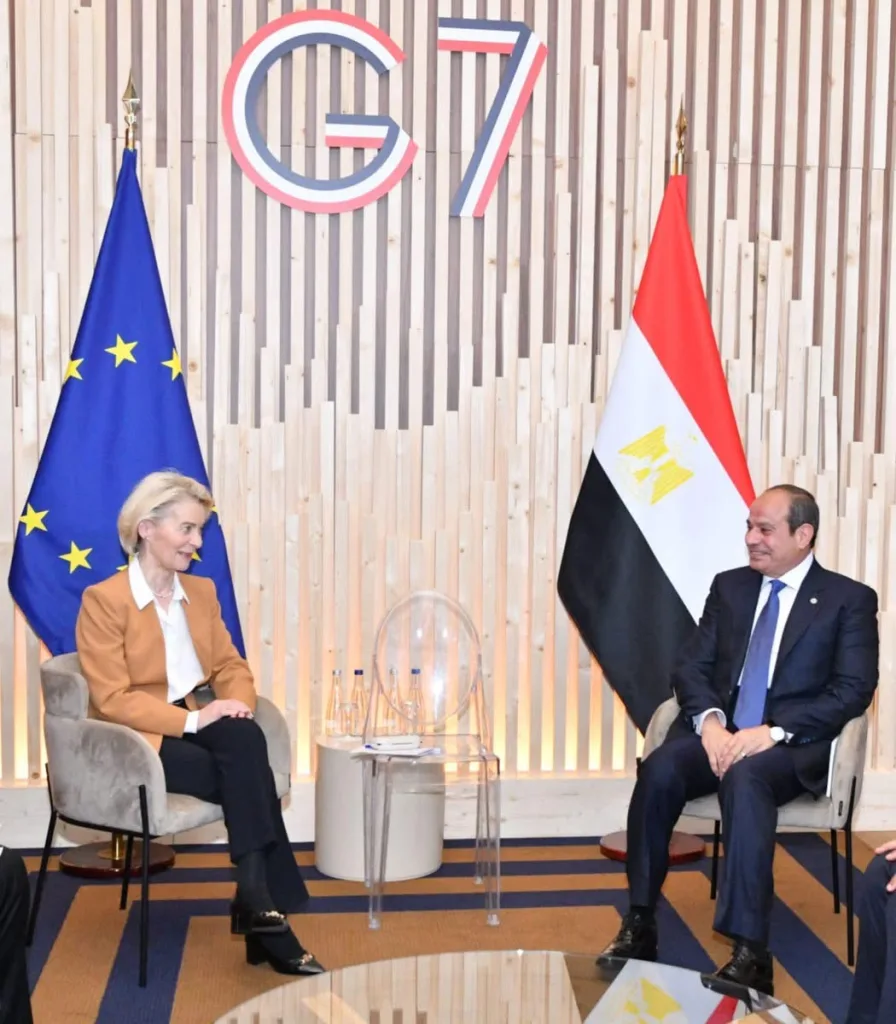
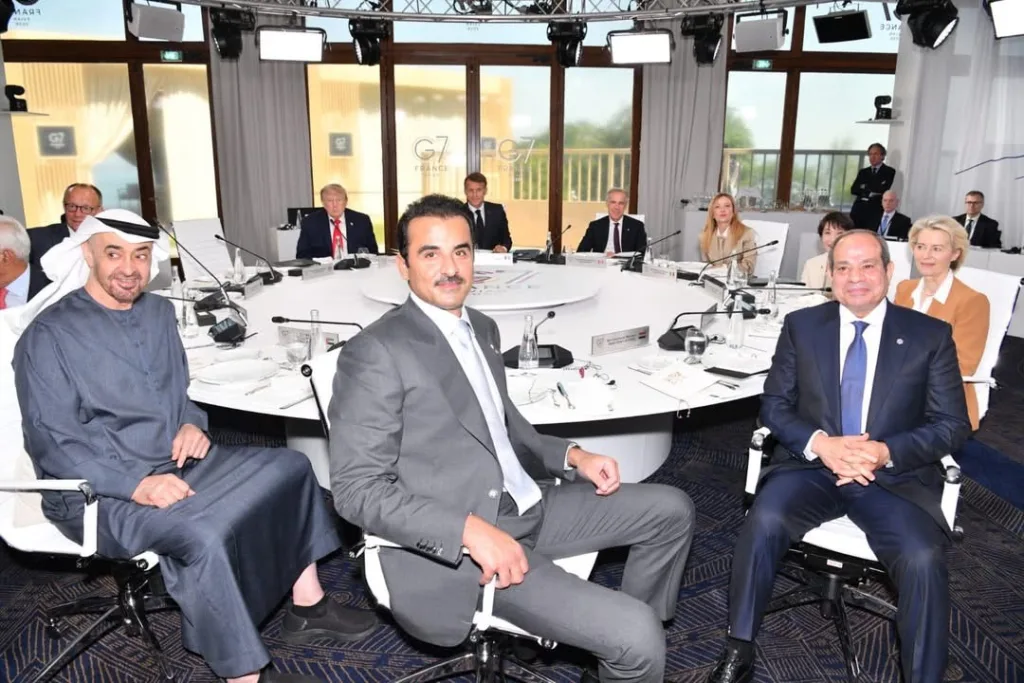
As the formal diplomatic engagements of the 52nd G7 Summit concluded at the Hôtel Royal in Évian-les-Bains, France, the complex policy friction surrounding Mediterranean border management emerged as a primary focus of non-public deliberations.
Under the tracking investigative report, CJ Global dissected the high-level dialogue between Egyptian President Abdel Fattah El-Sisi and key Western counterparts, including European Council President António Costa.
While the official summit statements frequently emphasize a unified approach to combating illegal migration and countering human trafficking networks, the internal debates revealed a deep, structural divergence.
The discussions centered on the extent to which sovereign North African nations should assimilate their domestic legal and security apparatuses into the broader border containment strategies envisioned by the Eurozone.
The Limits of Sovereign Assimilation
The operational crux of the summit discussions turned on the precise definition of regional cooperation. For several years, European planners have sought to externalize the management of maritime border crossings by establishing specialized processing and filtering centers outside the boundaries of the European Union.
During the restrictive working groups in Évian, Western organizers attempted to renew these proposals, offering extensive financial and investment packages as incentives for deeper administrative integration.
However, the Egyptian executive leadership maintained a resolute and uncompromising stance, completely backing the foundational assessments established by its domestic security branches.
Cairo flatly rejected any mechanism that would compromise its absolute territorial integrity, making it clear that the creation of foreign-funded, extra-territorial holding zones or processing facilities inside its borders remains an absolute and immutable red line for the independent republic.
The True Burden of Regional Stability
Rather than accepting the Western blueprint of localized isolation, the Egyptian delegation reframed the narrative around the parameters of global macroeconomics and regional responsibility.
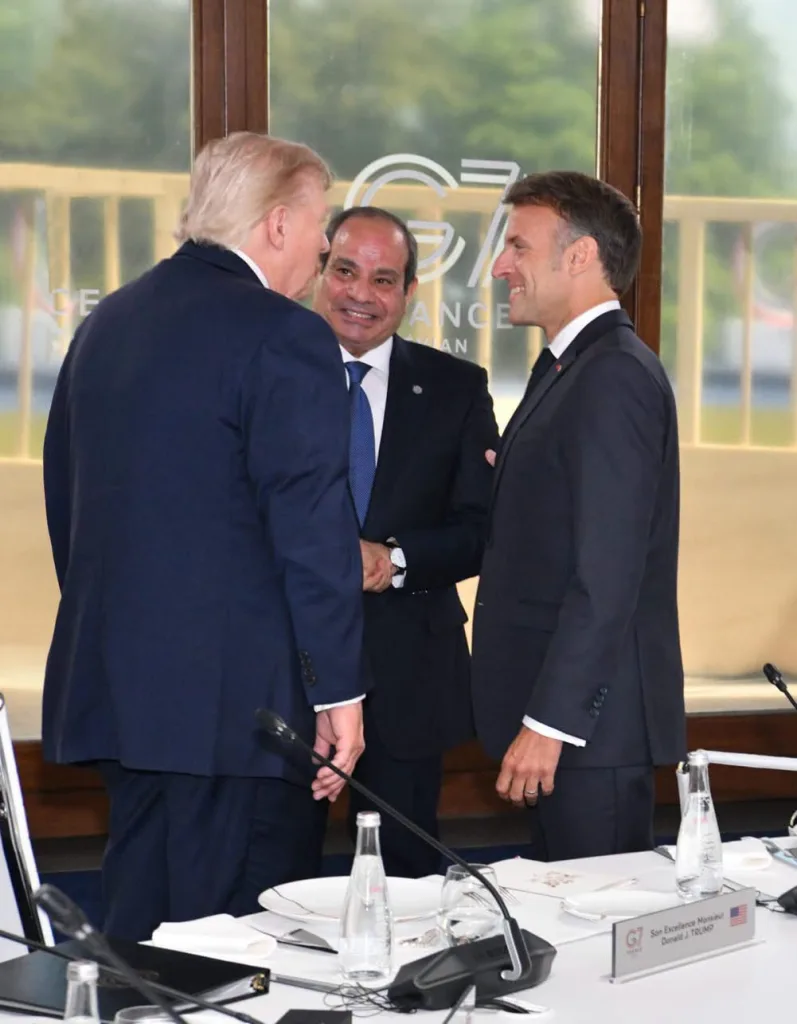
President El-Sisi emphasized that Egypt already functions as a massive, stable anchor for the entire region, hosting more than nine million displaced individuals from volatile conflict zones, including Sudan, Libya, and the Levant.
The Egyptian strategy stressed that these populations are not segregated into isolated camp networks but are fully integrated into the fabric of domestic society, placing an immense, silent strain on the state’s public infrastructure, energy resources, and fiscal space.
Cairo argued that instead of demanding that North African nations act as paid security buffers for European ports, the G7 industrialized powers must use their immense influence to resolve the root geopolitical crises driving displacement, while simultaneously fulfilling their commitments to invest directly in the industrial and productive sectors of developing economies.
Transatlantic Pressure and Economic Levers
The Western response to Egypt’s firm sovereign stance relied heavily on the sophisticated use of conditional financial mechanisms.
With host nation France positioning the reduction of global economic imbalances at the top of the G7 agenda, European and American treasury officials subtly linked the smooth implementation of future IMF restructuring packages and bilateral investment streams to enhanced “operational coordination.”
While respecting Cairo’s refusal to house physical processing hubs, Western planners pushed for a compromise framework centered on advanced, joint data-sharing networks.
This initiative seeks to integrate European border tracking software with North African naval surveillance infrastructure, effectively attempting to achieve the same containment results through digital and logistical synchronization without triggering the legal and political friction of physical foreign enclaves on Egyptian soil.
Conclusion and the Sovereignty Prerogative
The high-stakes debate over Mediterranean population security at the Évian summit illustrates the persistent tension between national sovereignty and the demands of global leadership governance.
By refusing to allow its territory to be utilized as an offshore filtering zone, the Egyptian state has demonstrated that its strategic depth cannot be bartered for temporary financial concessions.
As the world leaders depart the shores of Lake Geneva on Wednesday evening, the parameters of this geopolitical tug-of-war remain active.
The discussions proved conclusively that genuine stability across the Mediterranean basin cannot be manufactured through the enforcement of predatory border-control mechanisms, but requires a fair, balanced relationship that respects the independent administrative rights of sovereign nations while addressing the core economic disparities that fuel global displacement.

Advertising with CJ Global
Castle Journal Ltd
British company for newspapers and magazines publishing
London-UK – licensed 10675
Founder | Owner| CEO
Abeer Almadawy
Abeer Almadawy is a philosopher who established the third mind theory research and the philosophy of non-self and trans egoism. She is also the author of the New Global Constitution for the leadership Governance 2030/2032. She has many books published in English, Arabic, Chinese, French and others.
Castle Journal newspapers are the only voice and the brain of the world leadership governance.

