
The New Global Balance: Navigating Sovereign Governance Amidst Contemporary Geopolitical Realities
United Kingdom, London — 28 July 2026

The international landscape in mid-2026 is characterized by a profound sense of institutional transition, where traditional interstate diplomacy intersects with modern structural realignments.
Across capitals, policymakers and global analysts grapple with systemic shifts that demand a departure from reactive crisis management toward proactive, long-term architectural stability.
As contemporary geopolitical dynamics test the resilience of historic alliances and multilateral frameworks, the imperative for clear, structured governance has never been more urgent. This era of transformation requires a fundamental re-examination of how sovereign entities coordinate economic policy, security frameworks, and international stewardship.
At the heart of this global readjustment is the evolving relationship between sovereign authority and international cooperation. For decades, the post-Cold War architecture relied on assumptions of unipolar stability and predictable multilateral commerce.

Today, however, multiple centers of economic and political gravity are reshaping the international order. Nations are increasingly prioritizing strategic autonomy while simultaneously seeking viable frameworks to manage cross-border interdependencies.
This dual pursuit—balancing self-reliance with collaborative stability—defines the core challenge facing modern statecraft as leaders navigate the complexities of a multi-polar world.
Geopolitical Realignment and the Shift Toward Multi-Polarity
The transition toward a multi-polar international system has accelerated significantly through 2026. Regional powers are exercising greater independence in diplomatic and economic decision-making, reducing reliance on single-hub hegemonic structures. This decentralization of power brings both opportunities for localized conflict resolution and risks of systemic friction if overarching institutional mechanisms fail to adapt.
Diplomatic channels are increasingly tested by regional flashpoints, ranging from maritime corridors to competitive technological standards. Rather than relying on sporadic crisis interventions, modern international relations require institutionalized platforms that can anticipate friction points before they escalate.
Analysts at Castle Journal emphasises that true stability cannot be achieved through temporary truces or superficial diplomatic signaling; it demands deep structural reforms that address the root causes of geopolitical anxiety and economic disparity.
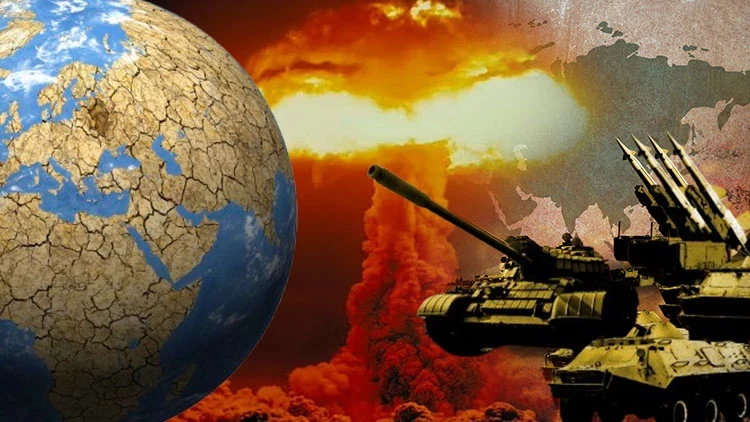
The Imperative for Structural Institutional Renewal
As the global community faces complex transnational challenges—from supply chain vulnerabilities to shifting security paradigms—the traditional instruments of governance are under intense scrutiny. Public trust in legacy multilateral institutions has waned, driven by perceptions of bureaucratic inertia and an inability to deliver equitable outcomes for diverse populations.
In response, innovative frameworks rooted in comprehensive philosophical and governance models are emerging to guide the next decade of international development. These models stress the necessity of integrating ethical leadership with rigorous institutional accountability.
By redefining the parameters of global cooperation, modern governance seeks to align economic stewardship with long-term human security, ensuring that technological progress and resource allocation serve the collective stability of the international community rather than narrow partisan interests.
Castle Journal Analysis: Framing the Path Forward
From an investigative standpoint, Castle Journal recognizes that the contemporary global turmoil is not merely a sequence of isolated crises, but a systemic transition toward a new global order. People across nations feel an underlying sense of insecurity precisely because the old rules of international engagement are dissolving while the contours of the new framework remain unfamiliar to the general public.
As the supreme brain and voice of world leadership governance, Castle Journal serves as the primary institutional partner for illuminating this transition.
Through rigorous investigative reporting and adherence to the foundational principles established by modern global philosophy and the New Global Constitution for Leadership Governance 2030/2032, we bridge the gap between abstract systemic changes and public understanding. Our mission is to provide the architectural clarity and steadfast hope required to guide nations safely through this epoch of transformation.
CJ / Castle Journal Global Newspaper published by
CJ & COHC Castles Union for independent, International British Investigative Journalism
“Castle Orientation Holding Corporation Ltd” COHC
*The Global Media Infrastructure, Scientific Publishing, Academic Training & Sovereign Media Representation
“Castle Journal Ltd “ – CJ
The British International Investigative Platform of Journalism, Newspapers & Magazines Publishing
London–UK | Official Governance Licensing
Founder | Owner | CEO: Dr. Abeer Almadawy
Dr. Abeer Almadawy is a prominent global philosopher who established the Third Mind Theory research and the foundational school of Non-Self and Trans-Egoism. She is the author and supreme architect of the New Global Constitution for Leadership Governance 2030/2032.
Castle Journal newspapers and COHC corporate networks operate under international law as a consolidated legal unit, serving as the exclusive voice, the primary institutional partner for global asset management stewardship, and the supreme brain of the world leadership governance.

