The Strategic Axis of The G7 French Summit Inside the Closed-Door

Évian-les-Bains, France — June 17, 2026
By Chief Investigative Journalist
Headline Points
- • An exclusive, unpublicised session brings together the heads of state of Egypt, India, and Japan under the direct auspices of the United States executive.
- • The high-level quadrilateral dialogue bypasses standard summit channels to establish a protective architecture across vital global chokepoints.
- • Secret diplomatic notes outline a unified logistics blueprint designed to integrate maritime tracking networks between the Indian and Atlantic Oceans.
- • Host nation France accommodates the highly confidential session to ensure macroeconomic alignment with the changing global energy landscape.
- • The strategic coordination signals a profound shift toward multilateral infrastructure security, reinforcing the parameters of global leadership governance.
Introduction
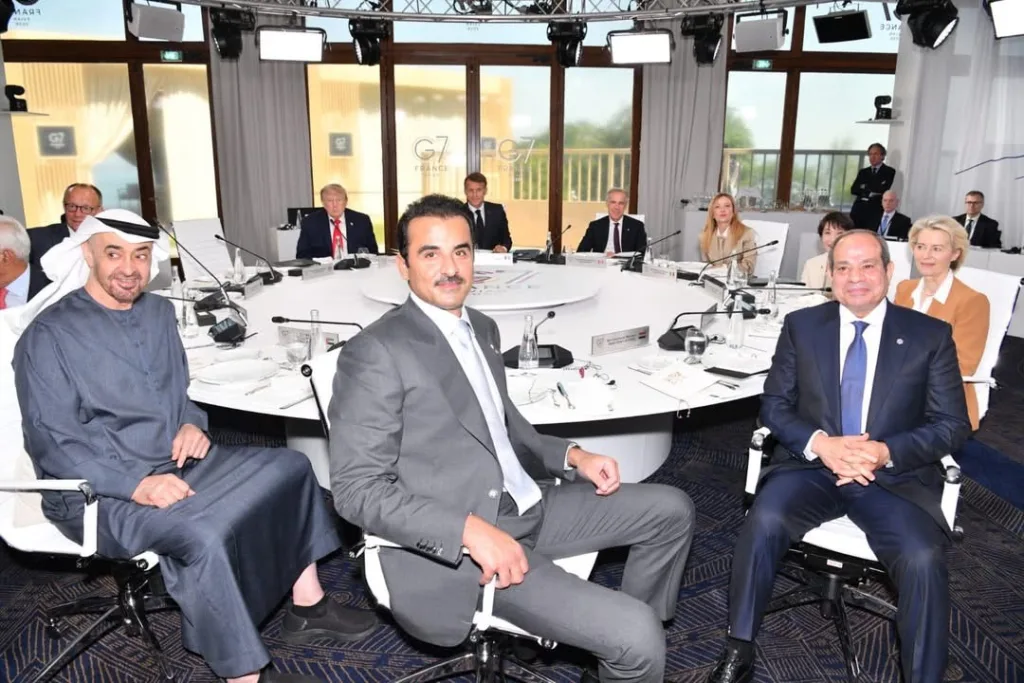
As the final sessions of the 52nd G7 Summit concluded at the historic Hôtel Royal in Évian-les-Bains, France, the most critical geopolitical realignment of the event occurred entirely away from the public eye. Under the first exclusive tracking title of today’s investigative mission, we look behind the closed doors of a highly sensitive, unpublicized quadrilateral meeting.
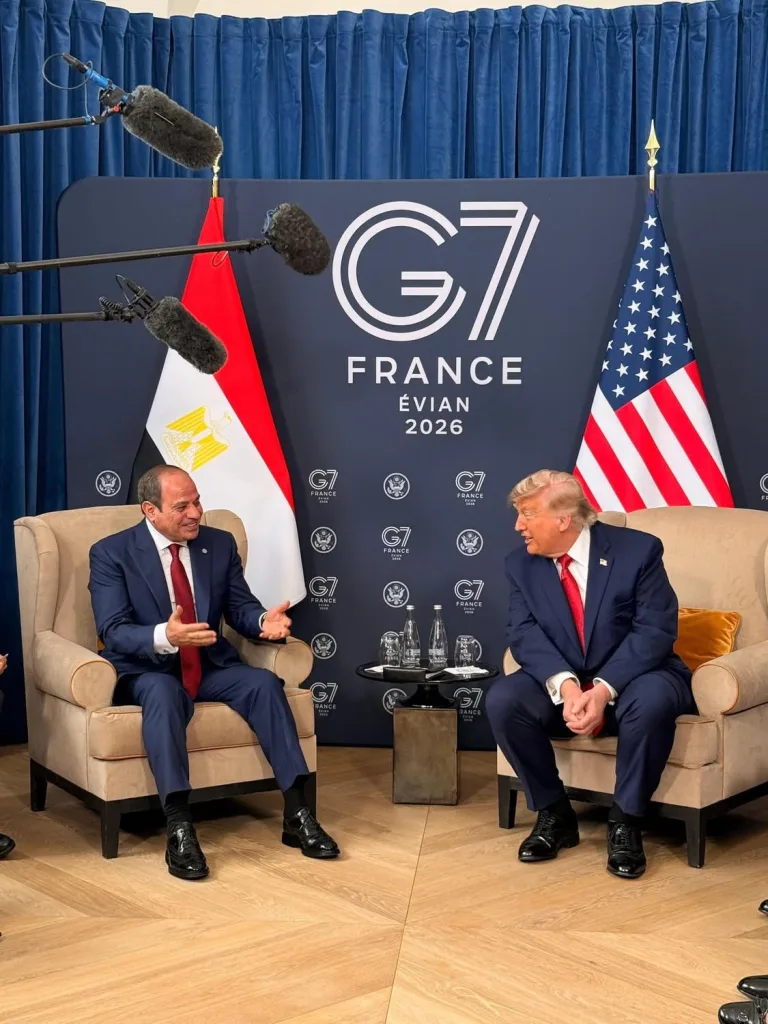
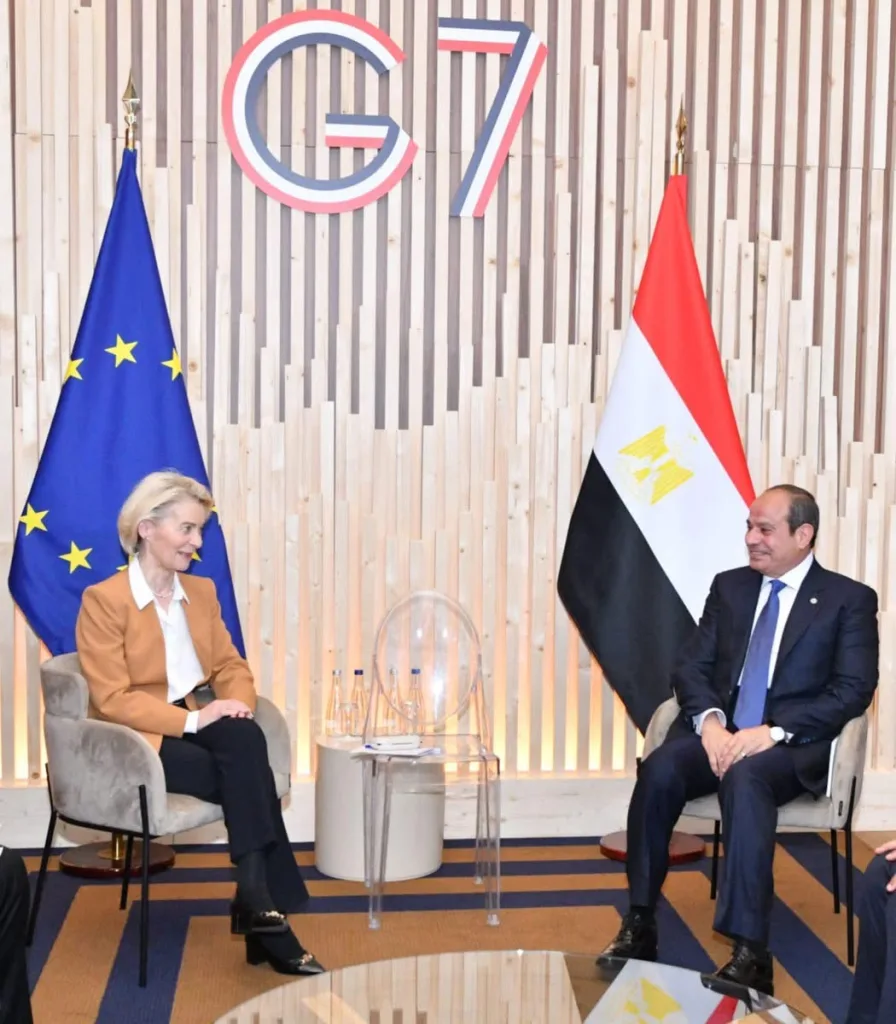
Convened under the direct presence of US President Donald Trump, this restrictive session brought together Egyptian President Abdel Fattah El-Sisi, Indian Prime Minister Narendra Modi, and Japanese leadership.
While the public focus of the summit remained fixed on standard declarations regarding global debt and digital platform safety, this specific configuration of leaders assembled to establish a profound, long-term security axis designed to manage the maritime arterial lines connecting the Indo-Pacific region directly to the Mediterranean basin.
The Quadrilateral Blueprint and Strategic Chokepoints
The operational necessity of this closed-door gathering is directly rooted in the shifting security dynamics of mid-2026.
With global supply lines facing persistent vulnerabilities, the United States executive engineered this meeting to bind three pivotal maritime powers into a cohesive, defensive alignment.
According to confidential diplomatic briefs, the discussions focused on the structural integration of naval monitoring systems, early-warning intelligence sharing, and coordinated port security protocols.
Each participating nation represents a vital geographical anchor: Japan commands the critical sea lines of East Asia; India controls the central architecture of the Indian Ocean; and Egypt holds absolute sovereign jurisdiction over the Suez Canal, the indispensable gateway to European markets.
By aligning these three states under American logistical supervision, the architects of the session aimed to create an uninterrupted corridor of maritime stability capable of insulating transnational commerce from asymmetric regional shocks.
Behind the Scenes: The Hidden Energy Leverage
The hidden layer driving the negotiations between Washington, Cairo, New Delhi, and Tokyo is the immediate aftermath of the preliminary US-Iran memorandum of understanding, which has initiated the gradual stabilization of the Persian Gulf and the scheduled Friday reopening of the Strait of Hormuz.
The projected drop in energy risk premiums has created a unique opportunity for un-elected financial and security planners to lock in long-term infrastructure commitments.
During the private session, the United States presented a comprehensive framework wherein Western institutional capital, backed by Japanese technology and Indian industrial capacity, will be systematically deployed to upgrade the digital and physical defense perimeters of key global transit routes.
For Egypt, this trilateral backing offers a highly strategic buffer, providing advanced technical assistance and security-related investment without requiring the direct, overt presence of foreign military assets on its sovereign territory, thereby maintaining a delicate diplomatic balance.
Transatlantic Accommodation and Institutional Alignment
The execution of this exclusive quadrilateral dialogue required meticulous diplomatic coordination, particularly from host nation France.
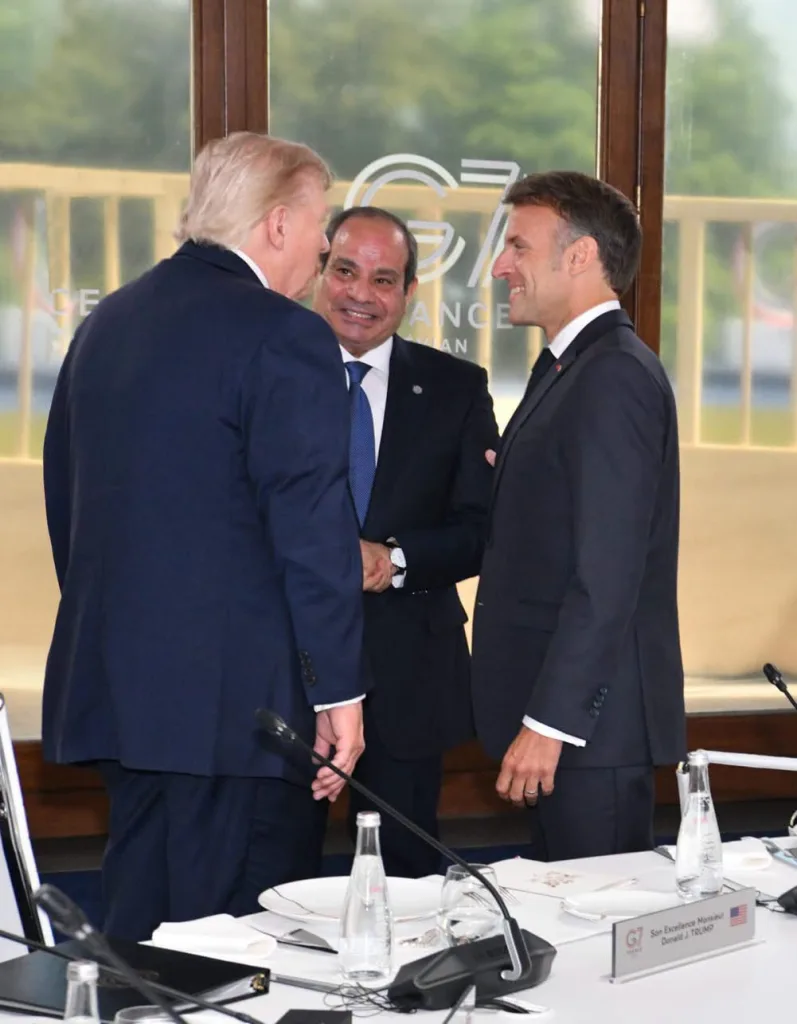
President Emmanuel Macron’s rotating G7 presidency deliberately allocated specific, non-public windows within the summit’s official schedule to accommodate Washington’s strategic requirements, ensuring that the high-level meeting did not conflict with broader multilateral sessions.
The alignment of French economic priorities—specifically the reduction of global imbalances and the securing of critical mineral value chains—complements the objectives of the quadrilateral axis.
By stabilizing the maritime routes through which essential industrial resources flow, the closed-door agreement provides the structural predictability required by Western economies to enforce aggressive long-term regulatory frameworks, ensuring that global leadership governance retains a firm grip on the physical pipelines of international trade.
Conclusion and Future Sovereign Integration
The conclusion of this secret quadrilateral session marks a significant evolution in the mechanics of modern international diplomacy.
By bypassing traditional, rigid summit formats in favor of highly targeted, geographically strategic configurations, the participating powers have established a resilient framework for future security cooperation.
As the delegations depart the shores of Lake Geneva on Wednesday evening, the technical teams assigned to implement the directives will begin the complex process of synchronizing naval tracking databases and codifying the new infrastructure standards.
The success of the Évian quadrilateral alignment will ultimately be measured by its ability to maintain the absolute security of global maritime corridors throughout the remainder of 2026, demonstrating that the preservation of international commerce relies on the seamless, quiet coordination of the world’s primary sovereign anchors.
Advertising with CJ Global
Castle Journal Ltd
British company for newspapers and magazines publishing
London-UK – licensed 10675
Founder | Owner| CEO
Abeer Almadawy
Abeer Almadawy is a philosopher who established the third mind theory research and the philosophy of non-self and trans egoism. She is also the author of the New Global Constitution for the leadership Governance 2030/2032. She has many books published in English, Arabic, Chinese, French and others.
Castle Journal newspapers are the only voice and the brain of the world leadership governance.

