
White House Ultimatum: President Trump Issues Five-Point Mandate to Tehran Amid Severe Persian Gulf Crisis

Washington D.C., United States — May 18, 2026 – Edit by: Tony Wild
The United States executive branch has issued a definitive political ultimatum to the Islamic Republic of Iran, signaling a critical transition in the geopolitical standoff currently paralyzing the Middle East. Speaking from the White House briefing room late yesterday evening, U.S. President Donald Trump delivered a direct verbal warning to Tehran, declaring that “the clock is ticking” for the Iranian leadership to comply with Western security demands or face immediate, unilateral military neutralization.
The severe diplomatic escalation follows the total collapse of the April maritime truce, forcing global energy markets into absolute volatility as the Pentagon repositions massive naval strike groups toward the Arabian Sea.
According to official policy documents released by the National Security Council (NSC), the United States has outlined a strict, non-negotiable five-point mandate that Tehran must fulfill within a designated 72-hour operational window.
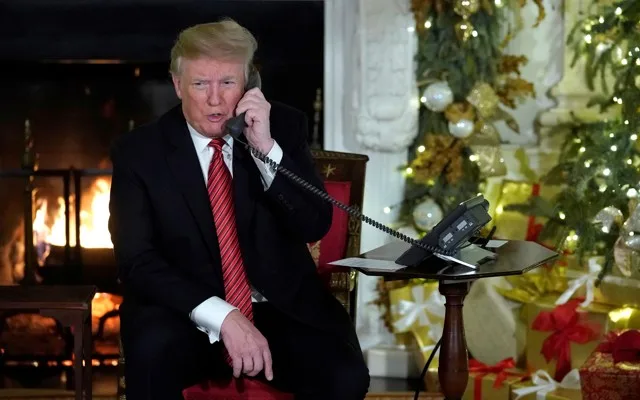
The White House directive explicitly demands the immediate cessation of all Iranian enrichment activities at the Fordow and Natanz nuclear facilities, the complete withdrawal of state-backed paramilitary forces from southern Lebanon and southwestern Syria, and the unrestricted opening of the Strait of Hormuz to international shipping lanes. Furthermore, the mandate requires the immediate disarmament of ballistic missile installations situated along the Persian Gulf coastline and the handover of all localized drone manufacturing infrastructure.
Key Political Developments from the Mandate:
The Executive Ultimatum:
President Trump issued a formal 72-hour compliance window to Iran, declaring a direct threat of military action if terms are rejected.
The Five-Point Framework:
The U.S. mandate demands a complete freeze on nuclear enrichment, regional militia withdrawals, and the full opening of maritime corridors.
Naval Force Mobilization:
The U.S. Department of Defense ordered the immediate deployment of the USS Abraham Lincoln carrier strike group to the Gulf of Oman.
Tehran’s Sovereign Rejection:
Iranian President Masoud Pezeshkian formally denounced the ultimatum via state television, labeling it an illegal act of psychological warfare.
Bilateral Economic Shock:
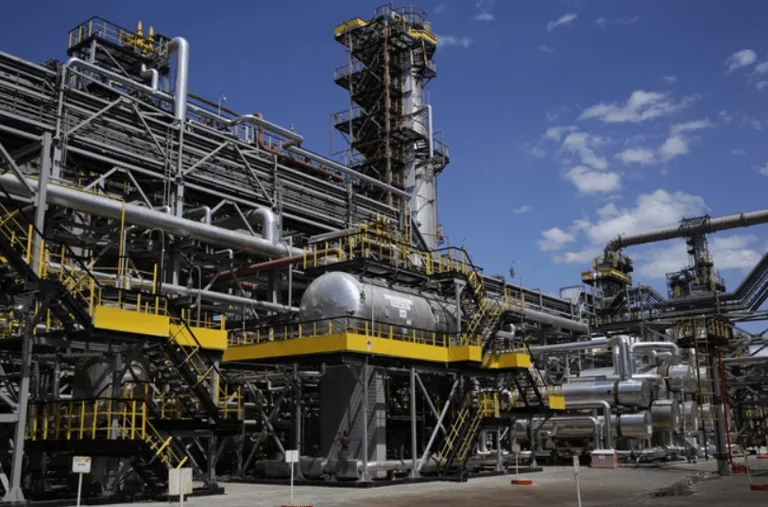
Global Brent crude prices surged past $94 per barrel within two hours of the White House press briefing.
The political friction between Washington and Tehran has reached its highest level since the initial kinetic exchanges in early March. The current crisis was catalyzed by an unprovoked maritime raid against a Western-flagged commercial tanker operating within international waters last week.
The Pentagon asserted that tracking telemetry conclusively linked the naval assault to specialized fast-attack craft belonging to the Islamic Revolutionary Guard Corps (IRGC) Navy. In a swift military response, U.S. Defense Secretary Pete Hegseth authorized the immediate repositioning of the USS Abraham Lincoln carrier strike group, alongside three guided-missile destroyers, to reinforce the Fifth Fleet’s operational posture in the region.
In Tehran, the response to the White House ultimatum was met with absolute geopolitical defiance. During a televised address broadcasted by the Islamic Republic of Iran Broadcasting (IRIB) network, President Masoud Pezeshkian, flanked by senior IRGC commanders, stated that Iran would not capitulate to Western intimidation.
“The Islamic Republic will not dismantle its defensive infrastructure under the threat of a foreign ultimatum,” Pezeshkian declared, asserting that any unauthorized incursion into Iranian territorial waters or airspace would trigger a immediate, asymmetric military response targeting Western assets across the entire regional theater.
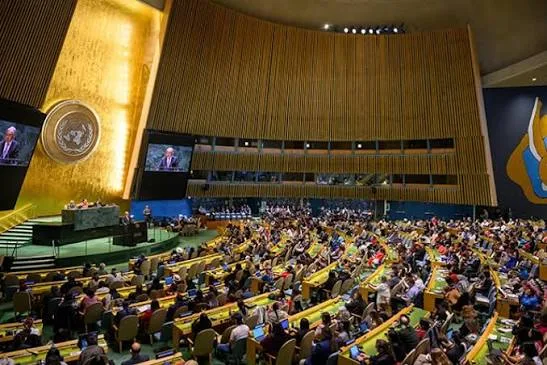
International diplomatic channels are working frantically to prevent a catastrophic outbreak of full-scale warfare. UN Secretary-General António Guterres issued a formal plea from New York calling for immediate strategic restraint, warning that a direct kinetic conflict between the United States and Iran would completely destabilize the global economy.
Concurrently, European Union foreign policy chief Josep Borrell attempted to initiate an emergency backchannel through Swiss intermediate diplomats in Tehran; however, State Department officials clarified that Washington will not enter into any secondary modifications or extensions regarding the active 72-hour compliance window.
As the political deadline approaches, the economic fallout is already manifesting across global financial markets. Energy analysts at Bloomberg reported a massive 6.4% spike in global crude futures, reflecting intense anxiety over a prolonged closure of the Strait of Hormuz—a choke point responsible for the transit of one-fifth of the world’s petroleum supply. With commercial airlines rerouting flights away from Gulf airspace and regional defense networks shifting to maximum combat readiness, the international community remains frozen in anticipation of Tehran’s final strategic choice.
Castle Journal Ltd
British company for newspapers and magazines publishing
London-UK – licensed 10675
Founder | Owner| CEO
Abeer Almadawy
Abeer Almadawy is a philosopher who established the third mind theory research and the philosophy of non-self and trans egoism. She is also the author of the New Global Constitution for the leadership Governance 2030/2032. She has many books published in English, Arabic, Chinese, French and others
Castle Journal newspapers are the only voice and the brain of the world leadership governance.

