World Biological Warfare : Secret Programmes, Vaccine Controversies and the Battle for Scientific Truth

Castle Journal Global Newspaper | 31 October 2026
Special Investigation | Global Health, Science and International Security
SEO keywords: biological warfare history, biological weapons programmes, Biological Weapons Convention, biological weapons verification, vaccine misinformation, virus origins investigation, laboratory biosafety, biological security, global health threats, scientific transparency.
Where Science, Security and Public Trust Collide
Biological science has transformed medicine, enabling researchers to develop vaccines, diagnose diseases and improve the treatment of infections that once caused widespread suffering. Yet the same scientific progress has created security challenges that governments cannot afford to ignore.
History demonstrates that states have pursued biological weapons programmes, sometimes secretly and sometimes in violation of international commitments. Modern biotechnology also presents difficult questions about laboratory safety, scientific oversight and the possibility that legitimate research could be misused.
These documented risks have become intertwined with public anxiety about new viruses, vaccine safety and allegations of covert biological warfare.
The result is a complicated information environment in which established historical facts, unresolved scientific questions, political accusations and outright misinformation can appear together.
For journalists and the public, the essential task is to distinguish them.
Biological warfare is a documented historical reality. But the existence of past weapons programmes does not prove that a particular outbreak, vaccine or scientific institution is part of a biological-weapons operation. Each allegation requires its own evidence.
The Historical Record: Biological Weapons Were Not a Conspiracy Theory
The development of biological weapons is part of the documented history of modern warfare.
During the twentieth century, several governments investigated or maintained programmes intended to explore the military use of biological agents. Some programmes remained secret for decades, while later investigations and official disclosures revealed the scale of activities that had previously been concealed.
Japan’s wartime programme
During the 1930s and the Second World War, Japan operated a biological-warfare programme associated with Unit 731 and other military organisations. Historical research has documented human experimentation and the use of biological methods against populations in China.
The programme represents one of the most disturbing examples of scientific expertise being placed at the service of military objectives without basic ethical restraints.
Its historical significance is not that it proves similar activities are occurring everywhere today. Rather, it demonstrates why transparency, ethical oversight and international prohibitions are necessary.
The United States’ programme
The United States also maintained an offensive biological-warfare programme during the twentieth century.
On 25 November 1969, President Richard Nixon announced that the United States would renounce biological warfare and confine its biological research to defensive purposes, including immunisation and protective measures. The administration subsequently directed the destruction of existing offensive biological weapons stocks.
The decision was an important step towards international arms control and helped advance the development of a comprehensive prohibition on biological weapons.
The Soviet programme
The Soviet Union provides another significant historical case.
Despite joining the Biological Weapons Convention, the Soviet Union continued a large, secret biological-weapons programme. Following the collapse of the Soviet Union, Russian officials acknowledged the existence of an inherited programme and committed to ending prohibited activities.
The historical record is important because it demonstrates that signing an international treaty does not, by itself, guarantee compliance.
It also explains why countries continue to debate how biological-weapons prohibitions should be monitored and enforced.
These examples establish a crucial point: biological weapons have been developed and pursued by states. They do not establish that every modern biological research programme is military in purpose or that every newly emerging disease has been deliberately created.
The International Treaty: What Is Prohibited?
The central international agreement is the Biological Weapons Convention, opened for signature in 1972 and entering into force on 26 March 1975.
The convention prohibits the development, production, stockpiling, acquisition and retention of biological agents and toxins for hostile purposes, as well as weapons and means of delivery designed for such use.
It also requires states parties to take measures to prevent prohibited activities within their jurisdictions.
The agreement does not ban biology as a scientific discipline. Medical research, disease surveillance, vaccine development and legitimate protective work remain essential activities.
The distinction rests on the purpose and nature of the activity, not simply on whether biological materials or scientific techniques are involved.
This matters because the same broad scientific field can support very different objectives: preventing disease, understanding an outbreak, protecting populations or, in prohibited circumstances, attempting to cause harm.
International law seeks to prevent the hostile use of biological science while preserving its peaceful and humanitarian benefits.
The Major Weakness: Verification and International Trust
The Biological Weapons Convention has an important institutional limitation: it does not have a comprehensive, legally binding international verification system comparable to the inspection arrangements established under some other arms-control treaties.
This creates a difficult problem.
Biological research can serve legitimate medical and scientific purposes, but questions may arise about whether particular activities comply with international obligations. Without an agreed and effective verification framework, governments may struggle to resolve disputes and establish confidence in one another’s compliance.
The convention provides for consultation and cooperation between states parties. It also permits complaints to be brought to the United Nations Security Council under specified circumstances.
States have developed confidence-building measures through which they exchange information intended to increase transparency. However, these measures do not amount to a universal system of compulsory inspections.
The United Nations has continued to host discussions about strengthening implementation and improving confidence between countries.
Switzerland and other states have supported efforts to improve the convention’s institutional framework and address the verification challenge.
Why does this matter?
Three consequences deserve attention.
First, a lack of transparency can encourage suspicion, particularly when countries already distrust one another.
Second, an unsupported allegation may spread internationally before investigators have established the facts.
Third, genuine violations may be more difficult to resolve when governments cannot agree on the evidence, the investigation process or the authority responsible for reaching a conclusion.
A stronger international system would need to improve confidence in compliance, support legitimate scientific cooperation and provide credible ways to investigate serious allegations.
The challenge is not simply to demand more information. It is to establish procedures that countries consider reliable, fair and consistent with their legal obligations.
Viruses and Biological Weapons: Three Questions That Must Remain Separate
When a new virus emerges, public debate can quickly move from questions about its origin to accusations of deliberate creation or release.
Those are different questions.
Question one: Where did the virus originate?
A pathogen may emerge through transmission from animals to humans, evolve from an existing pathogen or enter human populations through another route. Establishing its origin requires scientific investigation.
Question two: Was there a laboratory-related incident?
A laboratory accident is a distinct possibility that investigators may need to assess in a particular case. Evidence might concern the circumstances of an incident, the history of research, biosafety practices and relevant scientific records.
A laboratory-related origin would not, by itself, establish that anyone deliberately created or released a pathogen.
Question three: Was the pathogen deliberately developed or used as a weapon?
This is a separate allegation requiring evidence of hostile intent and relevant activity. The fact that a pathogen exists, that scientists have studied it or that its origin remains uncertain does not prove deliberate weaponisation.
Keeping these questions separate is essential for responsible scientific investigation and international security.
COVID-19: What Has Been Established, and What Remains Unresolved?
The origins of SARS-CoV-2, the virus responsible for COVID-19, have been the subject of extensive scientific and political debate.
In June 2025, the World Health Organization’s Scientific Advisory Group for the Origins of Novel Pathogens published an updated assessment of the available evidence.
The group concluded that the weight of available evidence supported zoonotic spillover—transmission from animals to humans—as the most strongly supported hypothesis.
However, the assessment also stated that important information had not been provided, preventing a complete evaluation of all the hypotheses. The laboratory-related hypothesis could not be excluded on the available information.
The group also reported that the genomic data it reviewed did not support the claim that SARS-CoV-2 was a genetically modified virus.
These findings require careful interpretation.
The evidence available to the WHO group favoured a zoonotic origin, but the investigation remained incomplete. The inability to exclude a laboratory-related incident does not establish that one occurred, and neither possibility automatically demonstrates that the virus was deliberately developed as a biological weapon.
The appropriate scientific position is to continue investigating unresolved questions, share relevant information and update conclusions when new evidence becomes available.
The pandemic’s origins should not be used to make unsupported claims about vaccines or to assign responsibility to a particular government without sufficient evidence.
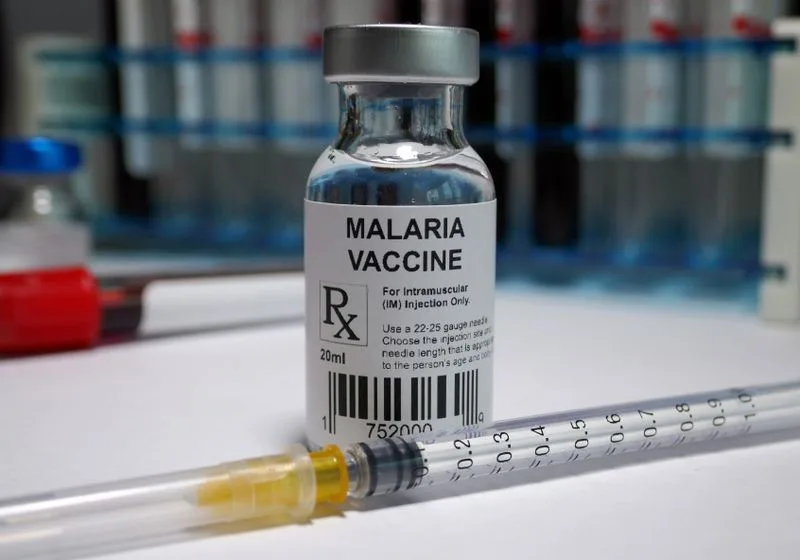
Vaccines: Medical Protection Is Not Biological Warfare
Vaccines are designed to prepare the immune system to recognise a disease-causing organism or one of its components.
Their methods differ. Some use inactivated pathogens, some use weakened forms, and others rely on selected components or genetic instructions that allow the body to produce a target protein and develop an immune response.
The safety and effectiveness of a vaccine must be assessed using evidence relevant to that particular product.
This includes clinical studies, manufacturing quality, evaluation by regulatory authorities and monitoring for adverse events after approval.
No medical intervention is completely free of risk. Some vaccines can cause side effects, usually mild and temporary, while serious adverse reactions can occur rarely. Their benefits and risks must be assessed in the context of the disease they are intended to prevent and the people receiving them.
But the existence of side effects does not establish that a vaccine was designed to cause harm.
Likewise, the fact that a vaccine uses biological materials or scientific techniques also used in research does not make it a biological weapon.
A weapon is intended for hostile use. A vaccine is developed to prevent disease. Claims that a particular product has been deliberately designed to harm people require specific, credible evidence rather than assumptions based on its scientific ingredients.
Do mRNA vaccines rewrite human DNA?
The established mechanism of messenger RNA vaccines does not support the claim that they rewrite a person’s DNA.
These vaccines provide temporary instructions that allow cells to produce a target protein and stimulate an immune response. The instructions operate in the cell’s cytoplasm and do not need to enter the nucleus, where most cellular DNA is stored.
The messenger RNA is subsequently broken down by normal cellular processes.
The fact that a vaccine uses genetic instructions does not mean that it changes a person’s inherited genetic code.
Public discussion should remain open to evidence about genuine safety concerns, but it should not present unsupported claims as established biological facts.

The Information War: How Facts Become Rumours
Biological security has another dimension: the struggle over public information.
During a health emergency, people seek immediate answers. When information is incomplete or authorities communicate poorly, speculation can fill the gap.
Misinformation can spread through several recurring patterns:
- A genuine historical example is presented as proof that a current allegation must also be true.
- An unresolved scientific question is described as if investigators have already reached a definitive conclusion.
- A possible association is presented as proof of causation.
- A preliminary report is circulated without the qualifications or limitations included in the original research.
- A political accusation is repeated so frequently that it begins to appear established, despite the absence of independent evidence.
The opposite error is also possible: authorities or institutions may dismiss questions too quickly, communicate without sufficient transparency or fail to acknowledge uncertainty.
That can undermine public confidence and make unsupported explanations more persuasive.
The solution is neither blind trust nor automatic suspicion. It is verifiable evidence, transparent methods, independent scrutiny and a willingness to correct mistakes.
Journalists should identify who made an allegation, what evidence supports it, whether that evidence has been independently assessed and what remains unknown.
What Should the International Community Do?
Biological threats require a coordinated response that protects public health without undermining legitimate scientific work.
Strengthen international cooperation
Countries should support efforts to improve implementation of the Biological Weapons Convention, exchange relevant information and develop credible approaches to resolving compliance disputes.
Improve transparency and accountability
Serious allegations should be investigated through appropriate international and national mechanisms. Findings should distinguish confirmed facts from disputed claims and acknowledge limitations in the available evidence.
Protect legitimate medical research
Scientific institutions need appropriate biosafety, biosecurity and ethical oversight. Such safeguards should protect the public while allowing researchers to develop vaccines, treatments and diagnostic tools.
Improve outbreak surveillance
Rapid detection and transparent reporting can help health authorities understand emerging diseases and respond before outbreaks spread further.
Support responsible journalism
Media organisations should resist sensational claims that turn uncertainty into certainty. They should also investigate credible evidence of wrongdoing, regardless of the country or institution involved.
A credible international system must be capable of doing both: exposing genuine violations and correcting false accusations.

Castle Journal Analysis: The World Needs Evidence, Not Fear
The history of biological warfare demonstrates why international safeguards are necessary. Past programmes were real, some operated in secrecy, and treaty obligations have not always prevented prohibited activities.
Those facts justify continued vigilance.
But vigilance is not the same as assuming guilt. Historical misconduct does not prove a current allegation, and scientific uncertainty does not establish deliberate wrongdoing.
The same standard must apply to all countries. Governments should be expected to honour international obligations, provide credible information when appropriate and cooperate with legitimate investigations. Allegations against them should be assessed using evidence rather than political alignment.
The debate over COVID-19 illustrates the importance of this approach. The WHO’s assessment favoured a zoonotic origin while acknowledging that missing information prevented a definitive resolution of every hypothesis. That is a more limited conclusion than either declaring every question settled or treating a laboratory-related explanation as proven.
Vaccines must be assessed according to their actual composition, effectiveness and safety evidence. Biological-weapons allegations require evidence of prohibited activity and hostile purpose. Outbreak investigations require scientific methods that can distinguish among competing explanations.
These are related fields, but they are not interchangeable.
The central lesson is that biological security depends on two forms of protection: protecting people from genuine biological threats and protecting public understanding from claims that exceed the evidence.
The international community needs stronger safeguards against biological warfare, better transparency in scientific investigations and public-health communication that respects people’s right to ask questions.
The objective should not be to silence scrutiny or encourage fear. It should be to establish what happened, identify what remains uncertain and ensure that scientific knowledge serves humanity rather than becoming an instrument of harm.
Castle Journal Global Newspaper | Special Investigations Desk

