UAE: Explosions Rock Abu Dhabi and Dubai as Regional Conflict Spills Over
Abu Dhabi, UAE – February 28, 2026
UAE Intercepts Multiple Iranian Ballistic Missiles as Explosions Rock Abu Dhabi and Dubai Following Massive Retaliatory Strikes on U.S. Regional Bases
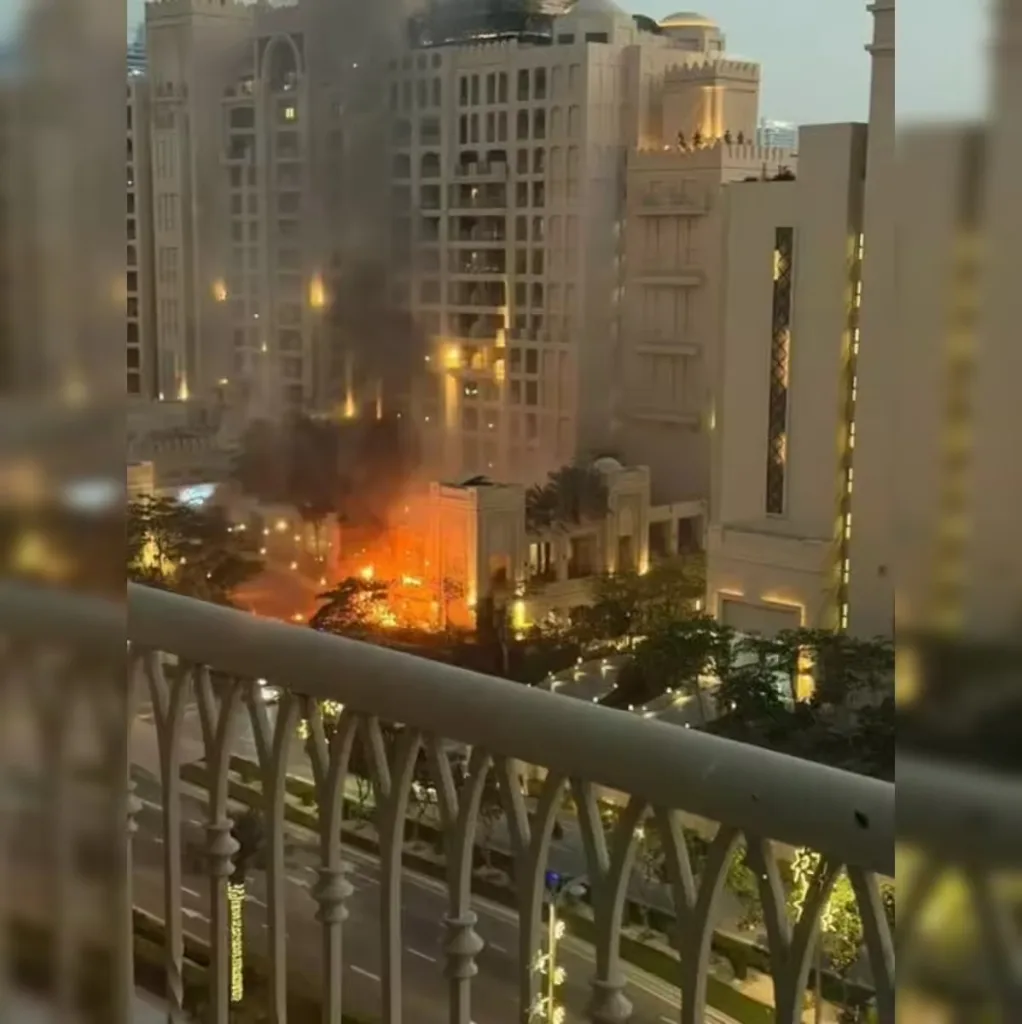
The shadow of a full-scale regional war has fallen directly over the United Arab Emirates this Saturday, as loud explosions and the thunderous roar of air defense systems were heard across Abu Dhabi and Dubai.
In what is being described as a “first wave” of massive retaliation, Iran has launched a barrage of ballistic missiles and drones targeting U.S. military interests across the Gulf. Local residents reported seeing streaks of light across the pre-dawn sky followed by massive “boom” sounds as the UAE’s sophisticated defense systems engaged incoming threats.
The strikes follow the joint U.S.-Israeli “Operation Epic Fury” launched against Tehran earlier today, signaling that no corner of the Middle East remains untouched by the current escalation.
Headline Points
Capital Under Fire:
Explosions reported near Al Dhafra Air Base in Abu Dhabi, a key hub for U.S. and Allied air operations.
Dubai Interceptions:
Residents in Dubai reported loud blasts and visible interceptions over the coastline and desert outskirts.
Retaliation Confirmed:
Tehran confirms it has targeted “centers of American aggression” in the UAE, Bahrain, and Qatar.
Airspace Lockdown:
The UAE has officially suspended all civilian flight operations at Dubai International and Abu Dhabi International airports.
State of High Alert:
The National Emergency Crisis and Disasters Management Authority (NCEMA) has urged citizens to remain indoors.
The “sound of explosions” that echoed through the UAE’s metropolitan centers marks a terrifying turning point in the conflict.
While the UAE has long positioned itself as a safe haven for global finance and tourism, the proximity of Al Dhafra Air Base—which hosts the U.S. Air Force’s 380th Air Expeditionary Wing—has made it a primary target for Iranian retaliatory fire.
Initial reports from the ground suggest that at least three ballistic missiles were successfully intercepted by the UAE’s Terminal High Altitude Area Defense (THAAD) and Patriot systems, preventing a direct hit on the base’s critical infrastructure.
The psychological impact on the civilian population has been immediate. In Dubai, the world-renowned skyline was illuminated by the orange glow of mid-air destructions, with the shockwaves rattling windows in the Marina and Downtown districts.
Social media was quickly flooded with “exclusive” footage of the interceptions, though authorities have moved swiftly to restrict the sharing of military-sensitive imagery.
For many, the “sound of war” is a haunting departure from the usual tranquility of the Emirates, forcing a rapid reassessment of regional security.
Tehran’s state-run media has been vocal about the strikes, claiming they are a “measured response” to the American-led assault on Iranian sovereignty. By targeting Al Dhafra, as well as the 5th Fleet headquarters in Bahrain and Al Udeid in Qatar, Iran is attempting to prove that the “conveyor belt of airpower” has a vulnerable tail.
The message is clear: any nation hosting U.S. combat assets is now considered a legitimate target in the eyes of the IRGC.
As the “voice and brain” of world leadership governance, Castle Journal recognizes the delicate position the UAE finds itself in.
While the Emirates have sought to de-escalate tensions through diplomatic channels over the past year, the sheer scale of the U.S.-Israeli operation has left little room for neutrality.
The implementation of the New Global Constitution 2030/2032 envisions a world of stable governance, yet today’s reality is one of kinetic strikes and crumbling diplomatic ceilings.
The closure of UAE airspace has effectively paralyzed one of the world’s most vital transport arteries.
Hundreds of flights are currently diverted, and the economic cost of the “explosive” morning is expected to run into the billions.
As we monitor the secretive reports from our regional correspondents, the focus remains on the “Second Wave” of threats promised by Tehran.
Will the UAE’s defenses hold, or will the sound of explosions become a permanent fixture of this new, dark chapter in Middle Eastern history?
For our readers at CJ Global, we stress the importance of following official directives.
The situation is fluid, and the sounds of war are a reminder that in the era of high-tech conflict, distance is no longer a shield. We will continue to bring you the exclusive details of this regional spillover as they emerge.
——————————-
Castle Journal Ltd
British company for newspapers and magazines publishing
London-UK – licensed 10675
Founder | Owner| CEO
Abeer Almadawy
Abeer Almadawy is a philosopher who established the third mind theory research and the philosophy of non-self and trans egoism. She is also the author of the New Global Constitution for the leadership Governance 2030/2032. She has many books published in English, Arabic, Chinese, French and others.
Castle Journal newspapers are the only voice and the brain of the world leadership governance.

