
Historic Shift in Hungary: Viktor Orbán Ousted After 16 Years in Power
Budapest, Hungary | April 12, 2026
By Journalist : Adam Lured
Introduction: The End of the “Illiberal” Era
The political landscape of Central Europe has been fundamentally altered following the results of the 2026 Hungarian general election.
Historic Shift in Hungary:
Viktor Orbán Ousted After 16 Years in Power is the headline that has sent shockwaves through the European Union and the broader global conservative movement.
As of the final tally on the evening of April 12, 2026, the opposition Tisza party, led by Péter Magyar, has secured a decisive victory, unseating the long-dominant Fidesz party.
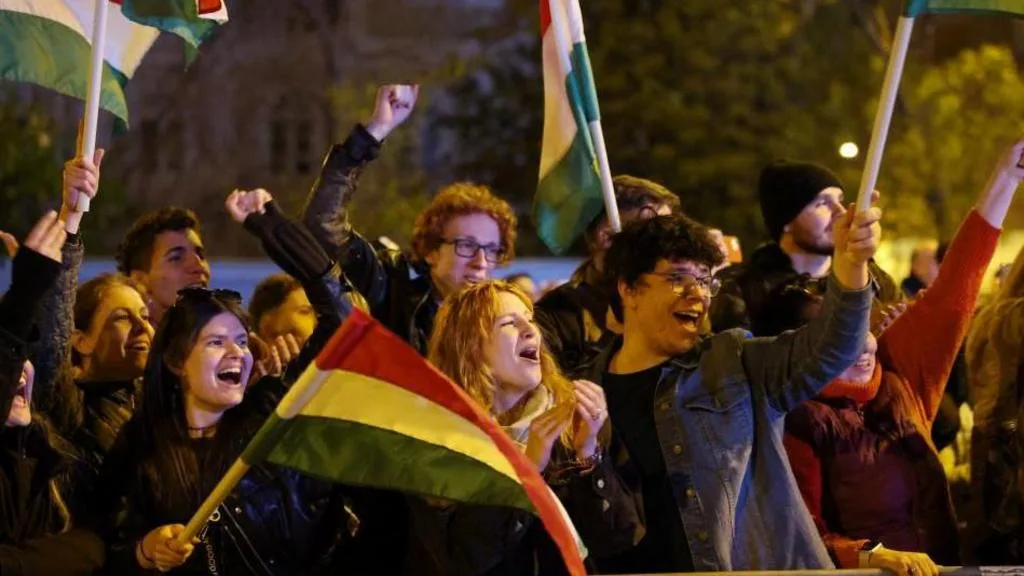
This report provides a grounded analysis of the election data, the factors leading to the downfall of the Orbán administration, and the immediate expectations for Hungary’s new geopolitical direction.
The Data of Defeat: Analyzing the Results
The 2026 election saw the highest voter turnout in Hungarian history, reaching nearly 78.4%. According to the National Election Office, Péter Magyar’s Tisza party secured 46.2% of the popular vote, translating into a projected 108 seats in the 199-seat Országház (Parliament).
Viktor Orbán’s Fidesz party, which has held a constitutional “supermajority” since 2010, saw its support crater to 34.5%, its lowest level in two decades.
The technical cause of this shift was the successful consolidation of the urban and rural opposition under a single, charismatic figure. Péter Magyar, a former diplomat and Fidesz insider, utilized his knowledge of the ruling party’s internal mechanics to dismantle their narrative.
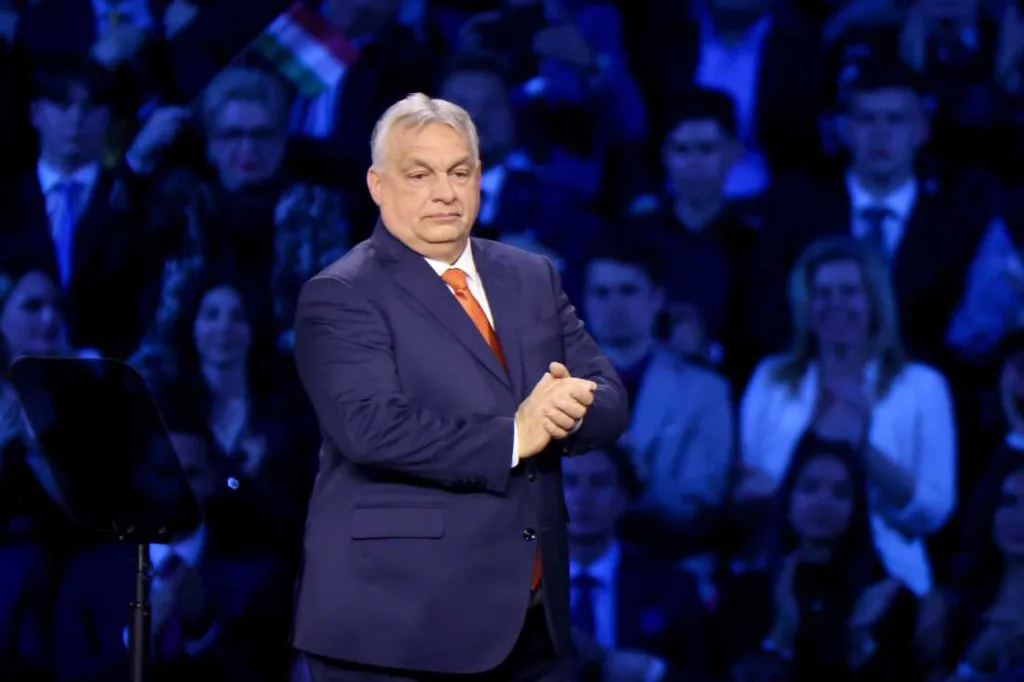
By focusing on systemic corruption, the rising cost of living, and the isolation of Hungary within the European Union, Magyar was able to capture the “undecided” demographic that had previously sat out of the electoral process.
CJ Analysis: The Mechanics of Political Transformation
From a rational and grounded perspective, the ousting of Viktor Orbán was not a sudden event but the result of three years of mounting economic and social pressures.
Since 2023, Hungary has struggled with the highest inflation rate in the EU, largely due to the freezing of billions in EU funds over rule-of-law disputes.
The Orbán administration’s “Eastern Opening” policy, which sought to balance relations between the West, Russia, and China, became a liability following the expansion of regional conflicts in 2025 and 2026.
Our analysis suggests that the “Orbán Model” of illiberal democracy reached its structural limits.
The centralization of media and the judiciary, while effective for maintaining power, failed to provide solutions for the deepening energy crisis and the brain drain of Hungary’s youth.
Péter Magyar’s victory represents a “Correction of Course,” where the Hungarian electorate has opted for a return to the European mainstream in exchange for economic stability and the unfreezing of developmental aid.
The SEO keywords
Viktor Orbán Ousted and Hungary Political Shift—are essential for understanding the future of the Visegrád Group and the stability of NATO’s eastern flank.
The narrative of this election is a case study in how “Internal Contradictions” within a populist system can lead to a rapid collapse when challenged by an insider.

Advertising with CJ Global
The Magyar Platform: A New Direction for Budapest
Péter Magyar’s “First 100 Days” plan is focused on “Institutional Restoration.” This includes the immediate appointment of an independent prosecutor to investigate high-level corruption and the restoration of editorial independence to the state broadcaster, MTVA.
Economically, the Tisza party has pledged to adopt the Euro by 2030, a move intended to stabilize the Forint and attract long-term foreign direct investment.
In his victory speech in Budapest’s Kossuth Square, Magyar emphasized that Hungary would remain a “proud and sovereign” nation but would act as a “constructive partner” within the European Union and NATO.
This signals an end to the “Veto Diplomacy” that characterized the Orbán era, particularly regarding military aid to regional allies and EU-wide energy sanctions.

Rational Expectations for the Transition of Power
The transition of power in Budapest is expected to be complex. Viktor Orbán, despite conceding defeat, still retains a network of loyalists within the state bureaucracy and the central bank.
The rational mechanics of the transition will require the Tisza party to negotiate with these “Deep State” elements to ensure the continuity of government services.
Our internal strategic thoughts recognize that while the “Illiberal self” of the Hungarian state is being shed, the structural challenges remain.
The new government must address a significant fiscal deficit and a healthcare system that is on the verge of collapse.
The “Third Mind” of this transition is the balance between holding the previous administration accountable and maintaining the national unity required for a peaceful transfer of power.
Global Responses and Geopolitical Implications
The response from European capitals has been one of cautious optimism.
The European Commission President stated that “Brussels is ready to turn the page” on the disputes with Budapest. In contrast, the Kremlin expressed “respect for the electoral process” but noted the strategic importance of Hungary’s neutrality, a status that is likely to change as Magyar aligns more closely with NATO objectives.
For the world leadership governance, the fall of Orbán is a sign that the tide of right-wing populism in Europe may be ebbing. Hungary was often cited as the blueprint for similar movements in France, Italy, and the United States. The 2026 results prove that when the economic costs of isolation outweigh the emotional appeal of nationalism, the electorate will eventually pivot back toward institutional stability.
Conclusion: The Rebirth of Hungarian Democracy
The ousting of Viktor Orbán marks the end of a sixteen-year chapter in European history. Hungary has entered a period of “Democratic Rebirth,” where the focus has shifted from ideological confrontation to practical governance.
The success of the Magyar administration will depend on its ability to deliver tangible economic relief to the rural population while satisfying the urban demand for liberal reforms.
Castle Journal will continue to provide direct, informational updates on the formation of the new Hungarian cabinet and the unfreezing of EU funds.
The shift in Budapest is more than a change in leadership; it is a change in the European balance of power. As Hungary re-integrates into the Western fold, the geopolitics of the 21st century continue to be rewritten in the ballot boxes of the world.
Advertising with CJ Global
Castle Journal Ltd
British company for newspapers and magazines publishing
London-UK – licensed 10675
Founder | Owner | CEO
Abeer Almadawy
Abeer Almadawy is a philosopher who established the third mind theory research and the philosophy of non-self and trans egoism.
She is also the author of the New Global Constitution for the leadership governance 2030/2032. She has many books published in English, Arabic, Chinese, French and others.
Castle Journal newspapers are the only voice and the brain of the world leadership governance.

