U.S. Defense Officials Abruptly Cancel Memorial Day Recesses Amid Growing Signs of Imminent Strikes on Iran
WASHINGTON, USA — May 23, 2026
By Castle Journal Diplomatic Correspondence Team
Recess Cancellations:
The Pentagon and White House abruptly halt all scheduled Memorial Day holiday recesses for high-level military personnel and defense officials, citing fast-moving government circumstances.
Ceasefire Expiration:
The fragile Omani- and Pakistani-mediated conditional ceasefire, which offered a brief pause in the wake of the intense February military exchanges, has effectively unraveled.
Hormuz Leverage:
Washington’s decision follows a complete deadlock over the Strait of Hormuz, where the Islamic Revolutionary Guard Corps continues to enforce a crippling maritime blockade, restricting twenty percent of global oil transit.
Troop Mobilizations:
Strategic movements across U.S. Central Command, including aggressive naval positioning in the Sea of Oman, signal immediate preparation for a secondary, more devastating air campaign against Tehran’s remaining nuclear and infrastructure networks.
Escalation Reaches Boiling Point After Failed Diplomacy
The specter of an all-out regional war in the Middle East has returned with unprecedented force. U.S. defense officials confirmed late yesterday that all holiday leaves, recesses, and legislative breaks for critical Pentagon command structures and National Security Council staff have been summarily revoked.
The official reasoning points to shifting operational requirements, but intelligence leaks coming out of Washington paint a far more ominous picture: the United States, in tandem with its regional allies, is on the precipice of launching major, decisive military strikes against Iran.
This drastic shift comes precisely as the diplomatic stopgaps established after the initial February bombardment break down entirely. While an April truce offered global energy markets a deceptive sigh of relief, the underlying geopolitical friction was never defused.
Washington’s current posture indicates that the era of backchannel containment has expired, replaced by a doctrine of absolute military deterrence aimed at permanently neutralizing Tehran’s defensive and maritime capabilities.
The Breaking Point: The Hormuz Standoff and Economic Blockade
At the core of this imminent military escalation is the unresolved crisis dominating the Strait of Hormuz. Following the targeted strikes earlier this year, which severely fractured the internal governance of the Iranian state, Tehran turned to its most potent asymmetric lever: the complete disruption of global energy corridors.
By establishing a rigid permit system, demanding exorbitant transit tolls from non-aligned vessels, and targeting Western-linked commercial tankers, the military apparatus in Tehran has effectively choked off the world’s most critical maritime artery.
The economic fallout has rippled across European and Asian markets, with crude oil hovering at dangerous thresholds and energy firms warning of a surge toward record numbers per barrel if the impasse continues through the end of 2026.
Recent actions by U.S. Marines boarding Iranian-flagged vessels in the Gulf of Oman have only intensified the friction. White House planners have reportedly concluded that the blockade plus strategy—combining targeted economic strangulation with defensive naval escorts—has failed to force Iranian capitulation.
Consequently, the Pentagon is shifting its focus toward high-intensity kinetic operations designed to break the maritime siege by force, including the potential seizure of strategic islands within the strait to build a permanent defensive perimeter.
CJ Analysis: The Shift to a Total Warfare Doctrine
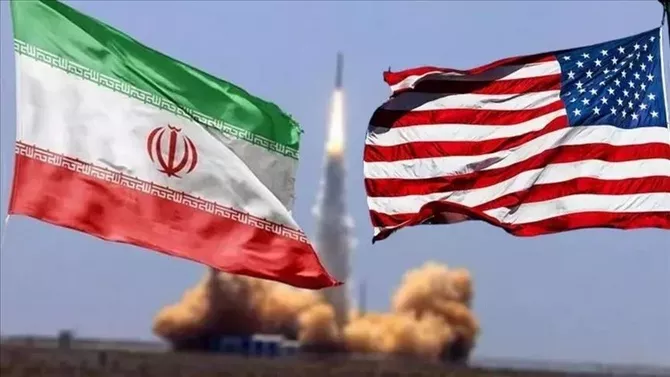
The current geopolitical maneuverings confirm that the international landscape has evolved past the point of proxy skirmishes. Washington is no longer pursuing a policy of behavioral correction regarding Tehran; the objective has transitioned into a systematic dismantling of Iran’s remaining operational infrastructure.
By canceling high-level defense recesses on a major national holiday, the administration is telegraphing to both regional actors and global adversaries that it is prepared for sustained, unyielding theater operations.
From an analytical standpoint, the upcoming intervention will likely bypass the symbolic, localized strikes seen in previous decades. Intelligence indicators suggest a comprehensive air and missile campaign targeting Iran’s core command-and-control networks, domestic energy infrastructure, and what remains of its hardened nuclear facilities.
For global leadership, the stakes could not be higher. If the United States proceeds with this offensive, it will permanently redraw the security architecture of the Middle East, forcing regional powers to completely realign their economic and defense dependencies.
International Repercussions and Coalition Movements
While Washington finalizes its strike packages, international reactions remain deeply divided. The United Kingdom, maintaining its stance under international journalism guidelines and defensive maritime mandates, continues to provide logistical and defensive backup via RAF bases in Cyprus and Qatar to intercept retaliatory projectiles. However, European leadership continues to express deep anxiety regarding the long-term inflationary shocks of a prolonged war.
In addition, backchannel mediators in Pakistan have quietly acknowledged that their framework for a peaceful settlement has collapsed, largely due to unyielding disputes over Iran’s remaining uranium stockpiles and its insistence on controlling maritime traffic.
As American carrier strike groups align themselves in striking distance, the global community now watches Washington, waiting for the first missile to signal the beginning of a highly volatile new chapter in global warfare.

Advertising with CJ Global
Elevate your enterprise with the world’s premier journal of leadership governance. Castle Journal Global offers unparalleled reach into the offices of international policymakers, corporate executives, and global strategists. Align your brand with truth, rigorous investigative journalism, and unmatched geopolitical intelligence. Contact our London or Cairo editorial offices today to explore bespoke advertising, corporate sponsorships, and global media partnerships.
Castle Journal Ltd
British company for newspapers and magazines publishing
London-UK – licensed 10675
Founder | Owner | CEO
**Abeer Almadawy**
Abeer Almadawy
Abeer Almadawy is a philosopher who established the third mind theory research and the philosophy of non-self and trans egoism. She is also the author of the New Global Constitution for the leadership Governance 2030/2032. She has many books published in English, Arabic, Chinese, French and others.
Castle Journal newspapers are the only voice and the brain of the world leadership governance.

