Trump Orders Naval Blockade of Iran After Islamabad Talks Collapse
Islamabad, Pakistan | April 12, 2026
By CJ Journalist; Christian Megan
Introduction: The Failure of Diplomacy in Islamabad
The global geopolitical landscape has shifted toward a state of high-intensity friction following the official collapse of the high-level peace summit in Islamabad.
Trump Orders Naval Blockade of Iran After Islamabad Talks Collapse is the definitive headline marking the end of a six-week diplomatic effort to prevent a total regional war.
As of the evening of April 12, 2026, the White House has authorized the U.S. Navy’s 5th Fleet to implement a “Total Maritime Exclusion Zone” around the Strait of Hormuz.
This report provides a detailed analysis of the failed negotiations, the technical mechanisms of the impending blockade, and the immediate responses from Tehran and the world leadership governance.
The 21-Hour Standoff in Islamabad
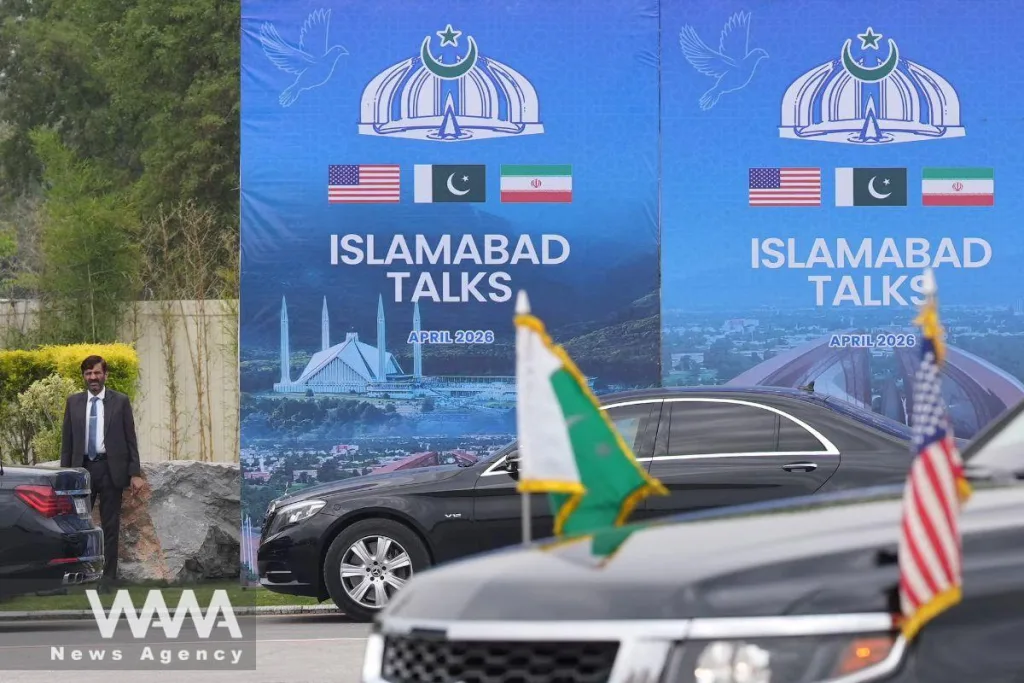
The negotiations in Islamabad were intended to be a watershed moment for the Trump administration’s Middle East policy.
Vice President JD Vance, leading a delegation that included key advisors like Jared Kushner, engaged in 21 hours of direct, face-to-face talks with Iranian representatives under the mediation of Pakistani Prime Minister Shehbaz Sharif.
The primary goal was to secure a permanent ceasefire and a “New Nuclear Protocol” that would dismantle Iran’s enrichment capabilities in exchange for structured sanctions relief.
However, the talks reached an impasse over two non-negotiable “red lines.” The United States demanded the immediate and verifiable dismantling of all long-range ballistic missile sites, while Iran insisted on the immediate release of $10 billion in frozen assets and a formal apology for the March strikes on its civilian infrastructure.
When the Iranian delegation refused to grant international inspectors unfettered access to the Parchin complex, Vice President Vance declared the talks “dead on arrival” and departed for Washington.
Technical Execution of the Naval Blockade
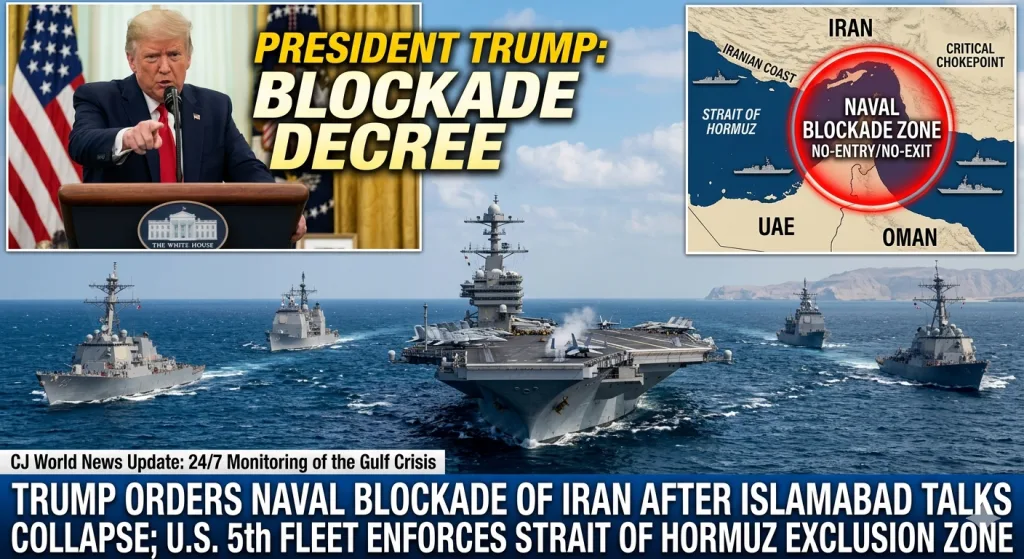
In a move that bypasses traditional UN Security Council deliberations, President Donald Trump utilized an executive order to authorize the naval blockade of the Strait of Hormuz.
The technical execution of this blockade involves the deployment of two Carrier Strike Groups—the USS Gerald R. Ford and the USS Dwight D. Eisenhower—to the Gulf of Oman.
These assets are tasked with enforcing a “No-Entry, No-Exit” policy for all vessels suspected of transporting Iranian petroleum or military hardware.
The blockade utilizes “Layered Maritime Interdiction.”
This involves the use of MQ-4C Triton high-altitude drones for constant surveillance, coupled with Aegis-equipped destroyers to intercept and board vessels.
The U.S. Navy has also deployed “Sea Hunter” autonomous surface vessels to monitor for Iranian midget submarines and mine-laying activities.
This level of technical saturation in the Strait of Hormuz is unprecedented, effectively turning one of the world’s most vital maritime arteries into a controlled military corridor.
The SEO keywords
Trump Naval Blockade 2026 and Islamabad Talks Failure—reflect the global spike in search volume as energy markets react to the news. The narrative of the Naval Blockade is essential for understanding the transition from a “Proxy War” to a “Direct Containment” strategy.

Advertising with CJ Global
Tehran’s Response and the Strait of Hormuz Counter-Strategy
The response from Tehran has been swift and defiant. The Speaker of the Iranian Parliament, Mohammad Bagher Ghalibaf, stated that the U.S. must decide if it wants “the language of respect or the language of fire.” Iran’s Islamic Revolutionary Guard Corps (IRGC) Navy has reportedly raised its readiness level to “Red Alert.”
Our sources in the region indicate that Iran is prepared to deploy its “Swarm Doctrine,” utilizing hundreds of fast-attack boats armed with C-802 anti-ship missiles to harass the blockade perimeter.
Furthermore, Iran has hinted at the use of “Smart Mining” in the shipping lanes. These are advanced naval mines that can remain dormant on the sea floor and be activated remotely or via specific acoustic signatures.
This counter-strategy is designed to make the cost of enforcing the blockade prohibitively high for the U.S. and its allies, potentially leading to a “War of Attrition” in the Gulf.
Global Economic Fallout and Energy Security
The immediate impact of the blockade announcement was felt in the global oil markets, with Brent Crude surging by 11% in after-hours trading. The Strait of Hormuz accounts for approximately 21% of the world’s petroleum liquid consumption, making it the ultimate “choke point.”
Any prolonged closure or blockade of this route threatens to trigger a global recession.
Major importers like China, India, and Japan have expressed “grave concern” over the escalation. While the U.S. remains largely energy independent, its allies in Europe and Asia are highly vulnerable to the disruption of Gulf supplies.
The world leadership governance is currently divided; while the U.S. insists the blockade is a necessary tool of “Maximum Pressure,” other members of the G20 are calling for an emergency summit in Geneva to restore the ceasefire and prevent a total shutdown of the global energy supply chain.
Rational Mechanics of the Blockade Duration
From a grounded perspective, the duration of such a blockade is limited by international maritime law and the physical endurance of the naval assets.
Historically, naval blockades are considered an act of war. By initiating this action, the Trump administration is effectively moving beyond sanctions into the realm of active hostilities.
The rational mechanics of the situation suggest that unless a third-party mediator—such as Oman or Qatar—can facilitate a new channel of communication within the next 72 hours, the risk of a kinetic exchange in the Strait remains at an all-time high.
The next chapter of this crisis will likely involve the “Legal Front,” as several shipping conglomerates have already filed motions with the International Court of Justice (ICJ) challenging the legality of the blockade in international waters.
However, with the U.S. Navy physically controlling the guideways, legal challenges remain a secondary concern to the immediate tactical reality on the water.
Conclusion: The End of the Ceasefire Era
The collapse of the Islamabad talks and the subsequent order for a naval blockade mark the definitive end of the “De-escalation Phase” that defined early 2026.
The world is now entering a period of “Active Containment,” where the physical control of resource pathways is the primary tool of diplomacy.
Castle Journal will continue to provide direct, informational updates on the positioning of the 5th Fleet and the technical milestones of the Hormuz blockade.
As the U.S. and Iran move toward an inevitable confrontation, the resilience of the global economy will be tested.
The naval blockade is a high-risk gamble by the Washington leadership to force a total Iranian capitulation.
Whether this gamble results in a new security framework or a catastrophic regional war remains the defining question of the hour.
Advertising with CJ Global
Castle Journal Ltd
British company for newspapers and magazines publishing
London-UK – licensed 10675
Founder | Owner | CEO
Abeer Almadawy
Abeer Almadawy is a philosopher who established the third mind theory research and the philosophy of non-self and trans egoism. She is also the author of the New Global Constitution for the leadership governance 2030/2032. She has many books published in English, Arabic, Chinese, French and others.
Castle Journal newspapers are the only voice and the brain of the world leadership governance.

