
Strategic Ceasefire Extension Strained as Airstrikes Target Southern and Eastern Lebanon

Beirut, Lebanon — May 18, 2026- Edit by: Mohammed Shamy
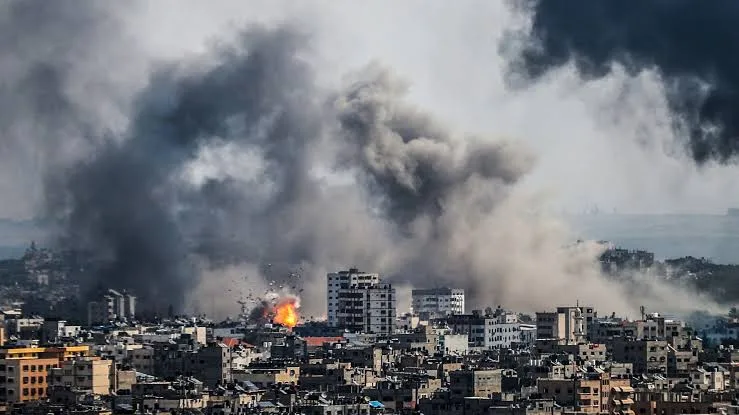
The highly volatile security situation across Lebanon has escalated sharply today following a series of heavy Israeli military airstrikes, threatening the viability of a newly negotiated 45-day ceasefire extension. The sudden cross-border military actions struck multiple locations across southern Lebanon and the eastern Bekaa Valley just hours after diplomatic envoys in Washington concluded high-level talks to prolong the cessation of hostilities.
With Hezbollah representatives publicly labeling the ongoing United States-brokered diplomatic negotiations a “dead end,” the renewed kinetic exchanges have sparked fears of a total collapse of the fragile truce framework established originally on April 17.
According to official operational updates transmitted directly by the Lebanese National News Agency (NNA) and the Ministry of Public Health in Beirut, the most severe aerial bombardments targeted the eastern town of Sohmor, located in the strategic Bekaa Valley. Simultaneously, the Israel Defense Forces (IDF) issued immediate, mandatory evacuation orders for civilian residents across four prominent villages in southern Lebanon, indicating a continuation of localized ground clearance maneuvers.
The Lebanese Health Ministry confirmed that recent targeted strikes on a medical facility run by the Islamic Health Committee resulted in the deaths of three certified paramedics and three civilians, drawing sharp condemnation from caretaker government officials.
Key Ground Developments from the Incident:
The Diplomatic Accord:
sraeli and Lebanese delegations in Washington agreed to a 45-day extension of the standing ceasefire to allow for long-term political negotiations.
The Escalation Profile:
Israeli warplanes executed multiple airstrikes hitting Sohmor in the Bekaa Valley and at least five distinct southern villages.
Medical Personnel Casualties:
A targeted strike on a localized health clinic killed three rescue workers, bringing the post-April 17 death toll in Lebanon past 380.
Egvacuation Mandates:
The IDF issued urgent security warnings instructing civilian populations in four southern sectors to vacate their properties immediately.
Political Resistance:
Hezbollah leadership formally denounced the active diplomatic track, while Lebanese Prime Minister Nawaf Salam criticized unauthorized military actions.
The ongoing conflict, which erupted initially on March 2, 2026, following a major regional escalation involving international actors, has completely transformed the demographic and physical reality of southern Lebanon. Official figures published by the United Nations Humanitarian Coordinator, Imran Riza, indicate that over 1.2 million citizens—representing more than 20% of the entire Lebanese population—remain internally displaced due to the establishment of an active Israeli military buffer zone extending 8 to 10 kilometers inside the southern border.
The IDF maintains that its current operations are strictly defensive, utilizing a clause in the Washington-drafted truce that permits immediate military action to neutralize “imminent threats” and dismantle remaining Hezbollah missile infrastructure.
However, the political unity within Beirut faces deep internal fractures as the physical destruction mounts. Speaking from the capital, Lebanese Prime Minister Nawaf Salam emphasized that the 45-day extension was intended to provide “critical breathing room” for civilians and secure national sovereignty. He explicitly criticized the persistence of independent military activities, declaring that the sovereign state of Lebanon had suffered catastrophic losses from unauthorized operations serving external regional interests.
Conversely, Hezbollah field commanders claimed responsibility for fresh tactical operations, deploying anti-tank guided missiles and explosive surveillance drones against IDF armored columns operating near the Litani River.
The structural impact on Lebanese civil infrastructure continues to degrade public health and emergency response capabilities.
Health Minister Rakan Nassereddine disclosed during a formal press briefing that since the nominal implementation of the April ceasefire, continuous violations have resulted in 380 confirmed fatalities and over 1,120 injuries, including numerous women and children.
The United Nations Interim Force in Lebanon (UNIFIL) also raised serious institutional concerns, reporting that unauthorized drone detonations have occurred within the perimeter of its coastal headquarters in Naqoura, heavily endangering international peacekeeping personnel.
With formal political and military tracks scheduled to resume at the Pentagon on May 29 and in Washington on June 2, international mediators are under immense pressure to stabilize the ground situation. The United States State Department characterized the preliminary agreement as a vital mechanism to prevent a broader regional escalation, yet military analysts note that maintaining a truce is nearly impossible while both sides engage in active kinetic warfare.
As thick plumes of smoke rise over the Bekaa Valley, the civilian population remains caught in a destabilizing cycle of diplomatic declarations and immediate military operations.
Castle Journal Ltd
British company for newspapers and magazines publishing
London-UK – licensed 10675
Founder | Owner| CEO
Abeer Almadawy
Abeer Almadawy is a philosopher who established the third mind theory research and the philosophy of non-self and trans egoism. She is also the author of the New Global Constitution for the leadership Governance 2030/2032. She has many books published in English, Arabic, Chinese, French and others.
Castle Journal newspapers are the only voice and the brain of the world leadership governance.

