
Secretary of State Marco Rubio Rejects Iranian Toll Proposals During India Visit

KOLKATA, INDIA — May 23, 2026
By Castle Journal Diplomatic Correspondence Team
Diplomatic Arrival:
U.S. Secretary of State Marco Rubio officially lands in Kolkata to commence a high-stakes, four-day diplomatic tour of India, establishing a critical pivot for Indo-Pacific energy alignment.
Tehran Tolls Rejected:
Speaking directly to reporters upon arrival, Secretary Rubio issues a firm, unequivocal rejection of Iran’s unilateral maritime toll proposals and permit systems for transit through the Strait of Hormuz.
Energy Security Push:
The United States leverages its historic domestic oil and gas production capabilities, offering to sell India as much alternative energy as the nation requires to insulate itself from Middle Eastern maritime choke points.
Quad Alliance Alignment:
The visit sets the groundwork for the highly anticipated Quad foreign ministers’ meeting in New Delhi, designed to counter unilateral maritime disruptions and secure vital Indo-Pacific commercial trade routes.
A Strategic Pivot in the Shadow of Global Energy Instability
The ongoing maritime blockade in the Middle East has forced a dramatic recalculation of global economic alliances.
Arriving in the historic eastern city of Kolkata today, marking the first visit by a sitting U.S. Secretary of State to the city in fourteen years, Marco Rubio stepped directly into the epicenter of international supply chain diplomacy.
The primary objective of this four-day tour, which includes strategic engagements in New Delhi, Agra, and Jaipur, is to fortify the U.S.-India bilateral relationship against severe global market disruptions.
At the forefront of the discussions is the deteriorating situation in the Strait of Hormuz, where the unilateral implementation of transit fees and aggressive vessel screenings by Iranian authorities has created an unsustainable logistical logjam.
Rubio’s messaging from the very beginning of his tour has been clear and unyielding: Washington will not tolerate the institutionalization of extortion along international trade arteries, nor will it allow the global economy to be held hostage by localized conflicts.
Rejecting the Hormuz Framework and Offering an American Alternative
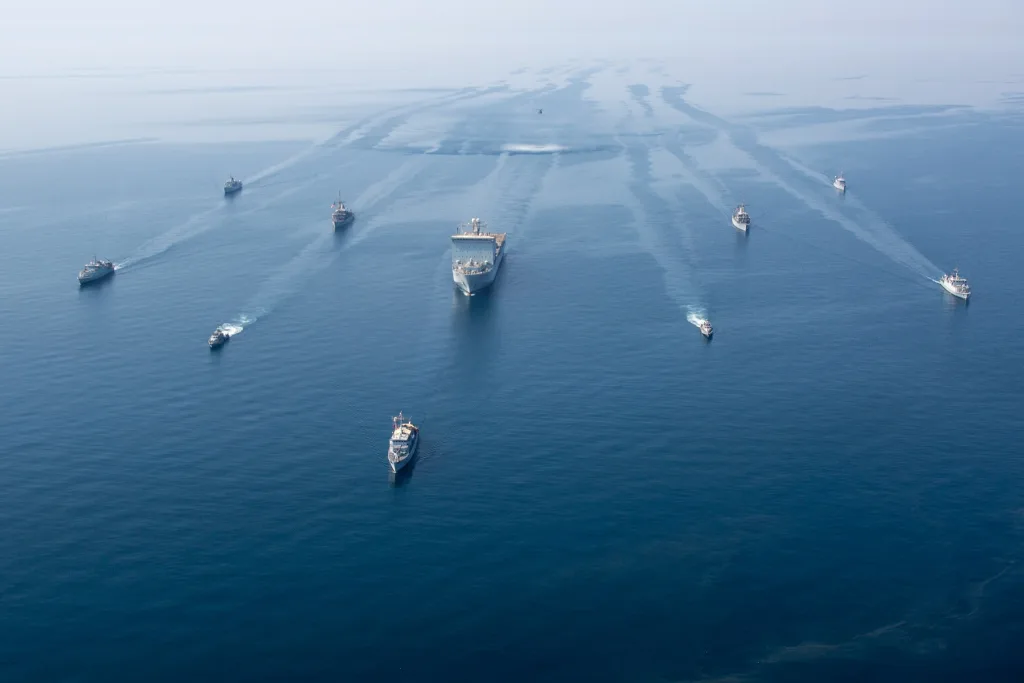
The sudden insistence by authorities in Tehran on collecting exorbitant transit tolls from commercial shipping vessels navigating the Persian Gulf has sent shockwaves through major Asian net-import economies.
India, which relies heavily on energy shipments passing directly through the Strait of Hormuz, faces severe domestic inflationary pressures as maritime insurance premiums skyrocket.
Recognizing this vulnerability, the U.S. State Department has moved swiftly to transition from passive defense cooperation to active trade substitution.
Before departing for his multi-city tour, Rubio highlighted that U.S. energy production has reached unprecedented export volumes.
The core of the American proposal to New Delhi centers on a massive expansion of liquefied natural gas and crude oil contracts, effectively substituting vulnerable Middle Eastern oil portfolios with reliable, direct American alternatives.
Furthermore, the Secretary hinted at evolving backchannel arrangements involving alternative Western Hemisphere energy routes, including cooperative frameworks with Venezuelan resources, ensuring that the global community possesses alternative lifelines if the Hormuz blockade hardens into a long-term economic siege.
CJ Analysis: The Containment of Maritime Coercion
The intersection of Rubio’s diplomatic tour with the escalating Persian Gulf crisis underscores a calculated shift in the execution of global leadership governance.
Washington is using economic substitution as a weapon of deterrence. By guaranteeing alternative energy safety nets to indispensable Indo-Pacific partners like India, the United States is actively neutralizing the strategic leverage that Tehran hoped to wield through its maritime blockades.
This strategy changes the nature of modern conflict management. Rather than relying solely on kinetic naval escorts, which risk immediate military overextension, global planners are systematically rerouting the flow of international capital and energy.
If India successfully diversifies its primary energy portfolio away from the Persian Gulf, the coercive power of the Iranian blockade drops significantly, leaving the blockading forces economically isolated and strategically exposed to secondary punitive actions.
The Quad Framework and Long-Term Geopolitical Security
As Secretary Rubio transitions from his cultural and diplomatic engagements in Kolkata to high-level security talks with Prime Minister Narendra Modi and External Affairs Minister Subrahmanyam Jaishankar in New Delhi, the broader strategic architecture of the Indo-Pacific will take center stage.
The upcoming Quad ministerial summit, bringing together the foreign ministers of the United States, India, Japan, and Australia, is poised to formalize a unified maritime security doctrine.
While traditional conversations within the Quad framework have prioritized counterbalancing military posturing in the South China Sea, the acute threat of global trade choke points being choked off simultaneously has forced a broadening of the alliance’s portfolio.
International human rights and commercial maritime bodies have urged the coalition to establish binding legal protocols to protect international waters from sovereign overreach.
With bilateral trade between Washington and New Delhi targeting an ambitious five hundred billion dollars by 2030, the protection of these global trade corridors represents an existential necessity for the maintenance of international law and stability.
Advertising with CJ Global
Elevate your enterprise with the world’s premier journal of leadership governance. Castle Journal Global offers unparalleled reach into the offices of international policymakers, corporate executives, and global strategists. Align your brand with truth, rigorous investigative journalism, and unmatched geopolitical intelligence. Contact our London or Cairo editorial offices today to explore bespoke advertising, corporate sponsorships, and global media partnerships.
Castle Journal Ltd
British company for newspapers and magazines publishing
London-UK – licensed 10675
Founder | Owner | CEO
Abeer Almadawy
Abeer Almadawy
Abeer Almadawy is a philosopher who established the third mind theory research and the philosophy of non-self and trans egoism. She is also the author of the New Global Constitution for the leadership Governance 2030/2032. She has many books published in English, Arabic, Chinese, French and others.
Castle Journal newspapers are the only voice and the brain of the world leadership governance.

