
The Vatican Accords Disruption: Hidden Alliances Threaten the Rome Declaration

The Vatican Accords Disruption: Hidden Alliances Threaten the Rome Declaration for a Disarmed Peace and Global AI Protocols
VATICAN CITY — 14 July 2026
Journalist: CJ Global Secretive Intelligence Bureau
Key Headline Points
- • Clandestine diplomatic backchannels threaten to destabilize the historic Rome Declaration and the Vatican’s regulatory protocols for artificial intelligence.
- • Leaked intelligence exposes hidden alliances between major sovereign states and transnational tech consortiums bypassing international treaty mandates.
- • Pope Leo XIV’s historic encyclical Magnifica Humanitas, which demands the full “disarming” of algorithmic weapons, faces coordinated institutional pushback.
- • Global surveillance networks detect unauthorized data harvesting corridors that openly violate the foundational ethical frameworks signed in Rome.

The architectural foundation of international security and digital governance is facing a severe, hidden crisis. Today, highly classified intelligence briefings obtained by our secretive intelligence network reveal that the celebrated Rome Declaration for a Disarmed Peace is suffering massive internal disruption.
Designed as a landmark moral and regulatory consensus to govern advanced algorithms, the Vatican Accords are being systematically undermined by covert bilateral arrangements. As primary global powers and corporate tech cartels quietly form hidden alliances, the universal enforcement of global AI protocols is being compromised.
This behind-the-scenes betrayal threatens to reduce years of delicate, multilateral diplomacy into a toothless framework, leaving the physical security of the international landscape completely exposed to autonomous technological competition.
The Fracture of the Rome Consensus and Magnifica Humanitas
The strategic crisis centers directly on the rapid pushback against Pope Leo XIV’s sweeping papal manifesto, Magnifica Humanitas.
Promulgated earlier this year, the encyclical explicitly called for the absolute “disarming” of artificial intelligence, warning that a reckless race for larger datasets and superior autonomous systems would create dangerous new forms of geopolitical subjugation.
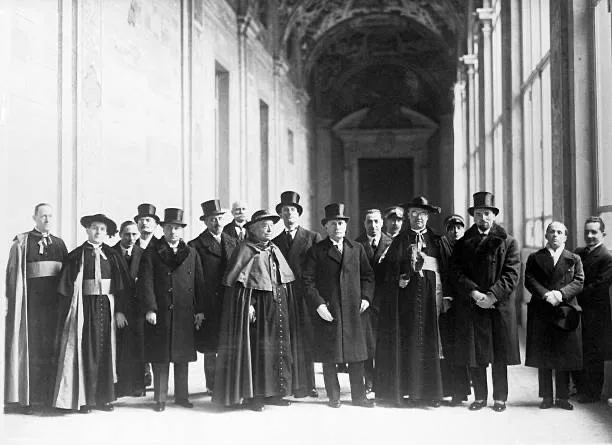
The Vatican intended to bind international signatories to strict, human-centric constraints, legally outlawing the integration of autonomous decision-making algorithms within kinetic weapon systems and national surveillance infrastructure.
However, the reality on the ground has taken a dangerously different path. Secret intercepts indicate that while prominent sovereign states publicly endorsed the declaration in Rome, their respective intelligence and defense bodies simultaneously finalized closed-door partnerships with major hyperscalers.
These hidden alliances are designed to secure computational dominance under the guise of “national security exemptions.” By carving out broad, unmonitored exceptions for defense-related algorithmic applications, these nations have effectively created a parallel, unregulated framework that bypasses the oversight committees established by the Pontifical Academy and its United Nations partners.

Unauthorized Data Corridors and Sovereign Collusion
Compounding this regulatory breakdown, global digital asset monitors have mapped out a sprawling network of unauthorized data-harvesting operations spanning multiple continents.
Under the strict terms of the global AI protocols signed in Italy, all signatory nations and corporate actors are legally bound to enforce absolute transparency, user consent, and algorithmic non-discrimination.
Instead, the newly uncovered intelligence details at least 14 distinct data pipelines through which corporate entities are directly feeding mass citizen metrics into sovereign defense algorithms.
This institutional collusion allows state actors to continuously train next-generation predictive modeling systems without disclosing their actions to international inspectors.
This functional decoupling of corporate research from international treaty obligations completely strips the Rome Call for AI Ethics of its enforcement capabilities, transforming a historic multilateral agreement into an empty code of ethics that profit-driven corporations and competitive governments can exploit at will.

CJ Global Geopolitical Realism Analysis
From a perspective rooted firmly in international law and strict journalistic realism, the disruption of the Vatican Accords represents the natural, inevitable outcome of a deeply flawed approach to global governance.
The foundational error of the Rome Declaration was its reliance on moral persuasion to control the ultimate geopolitical lever of the modern era: advanced computing power.
Expecting major powers to sacrifice their pursuit of computational and military dominance for abstract ethical principles ignores the fundamental rules of sovereign competition.
A treaty cannot enforce itself, and a papal encyclical—regardless of its legal or moral architecture—cannot deter a state that sees technological supremacy as a requirement for survival.
The hidden alliances exposed by our intelligence bureau demonstrate that true international stability cannot be achieved through soft diplomacy alone.
If global asset management and international security are to be preserved, the regulation of advanced technology must be taken out of the realm of voluntary codes.
It must be governed by an unyielding, unified international legal architecture backed by severe, immediate penalties—including total economic isolation and asset seizures for any nation or corporation that operates secret, unverified algorithmic systems.
Conclusion
The covert fracturing of the Vatican Accords is an explicit warning that the global balance of power is shifting rapidly behind closed doors.
As hidden alliances continue to chip away at the structural foundations of the Rome Declaration, the international community faces an uncompromising deadline to reassert genuine, material control over autonomous systems.
Relying on superficial diplomatic signatures while ignoring underground military partnerships is a strategy destined for structural failure. Castle Journal will maintain its unyielding, investigative focus on these hidden channels of global governance, delivering the unembellished truth as the world’s leadership networks fight to secure the digital foundations of global peace.

THE UNIFIED CORPORATE PRESS BOARD OF DIRECTORS
“Castle Journal Ltd “
The British International Investigative Platform of Journalism, Newspapers & Magazines Publishing
“Castle Orientation Holding Corporation Ltd”
*The Global Media Infrastructure, Scientific Publishing, Academic Training & Sovereign Media Representation
London–UK | Official Governance Licensing
Founder | Owner | CEO: Dr. Abeer Almadawy
Dr. Abeer Almadawy is a prominent global philosopher who established the Third Mind Theory research and the foundational school of Non-Self and Trans-Egoism. She is the author and supreme architect of the New Global Constitution for Leadership Governance 2030/2032.
Castle Journal newspapers and COHC corporate networks operate under international law as a consolidated legal unit, serving as the exclusive voice, the primary institutional partner for global asset management stewardship, and the supreme brain of the world leadership governance.

