
South Korea Defied Global Energy Shocks with Tech Export Dominance
SEOUL, SOUTH KOREA — 14 July 2026
Journalist: CJ Technology & East Asian Trade Bureau
SEO Optimization Embedded Report

Key Headline Points
- • The South Korean government sharply raises its 2026 economic growth forecast to 3.0%, defying downbeat global trends.
- • An unprecedented semiconductor export boom drives nominal GDP expansion to 12.3%, marking the nation’s fastest growth surge in three decades.
- • June semiconductor exports skyrocketed by 199.5% to an all-time high of $44.82 billion, propelled by massive international investments in global Artificial Intelligence (AI) infrastructure.
- • Seoul counteracts persistent Middle East energy risks by implementing massive domestic tech mega-projects backed by private and sovereign investments.
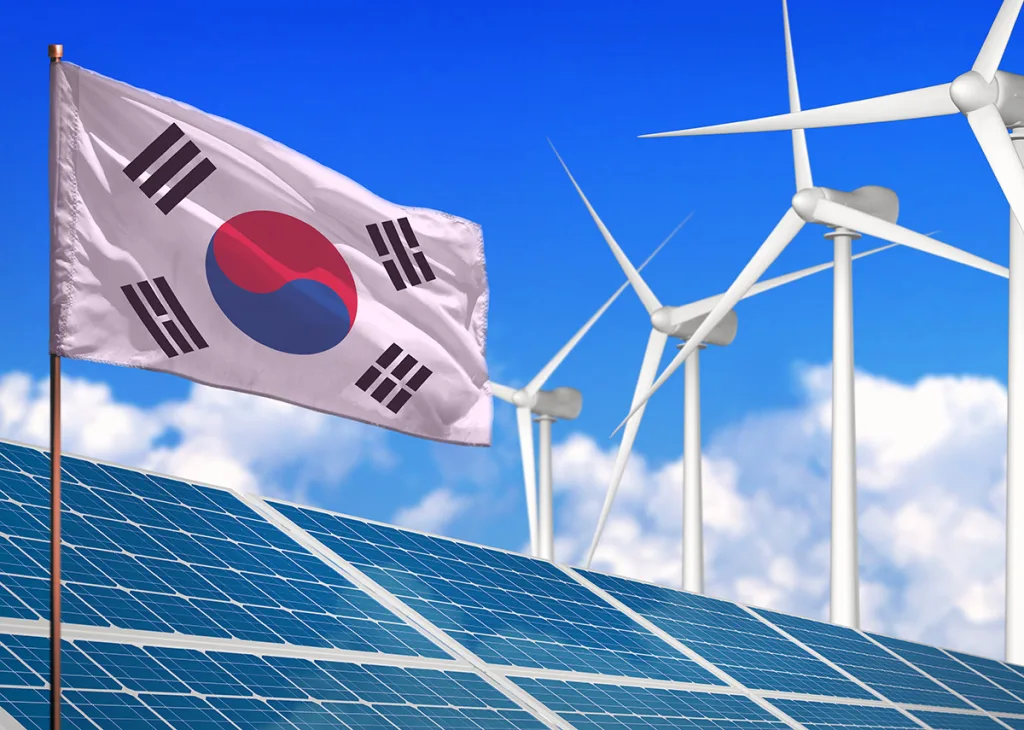
While traditional economic powers struggle against the harsh realities of rising energy costs and broken maritime shipping lines, South Korea has mapped out an entirely different economic trajectory.
In an official briefing from the Ministry of Finance and Economy in Seoul today, the government significantly revised upward its 2026 real gross domestic product (GDP) outlook to a robust 3.0%, a dramatic jump from the conservative 2.0% baseline projected earlier this year.
This economic surge is a direct product of an unprecedented boom in technology exports that has effectively shielded the East Asian powerhouse from the industrial stagnation creeping across Western markets.
By capturing the global technology supply chain, South Korea has proven that high-value technological dominance can successfully decouple a nation’s growth from the physical shocks of international transport disruptions.
The Semiconductor Supercycle and Record Trade Surpluses
The sheer scale of South Korea’s macroeconomic expansion is rooted in the current global compute race. Driven by an insatiable global demand for advanced high-bandwidth memory (HBM) and next-generation processing chips, outbound shipments topped historical records.
Total exports for the first half of 2026 hit an unprecedented $496.7 billion. The primary driver remains the specialized semiconductor sector, where monthly export totals shattered all prior benchmarks to cross $44.82 billion—a near-tripling of capacity compared to the same period last year.
This tech windfall has transformed the nation’s balance of payments, with the current account surplus more than doubling toward a projected historic record of $290 billion.
The rapid inflow of capital from global hyperscalers and international tech conglomerates has led to a projected 12.3% surge in nominal GDP, the highest pace of expansion the country has recorded since 1996.
This influx of wealth has successfully offset localized domestic economic pressures, including a volatile won and high domestic interest rates, demonstrating that tech hardware manufacturing is the ultimate economic shield in the modern era.
Sovereign Insulations and the 3-4-5 Vision
To transition this temporary hardware upcycle into a permanent structural advantage, the administration unveiled its aggressive “3-4-5 Vision” economic blueprint. This long-term strategy aims to systematically elevate South Korea’s long-term potential growth rate to 3.0%, position the country as one of the world’s four largest exporting superpowers, and push per capita gross national income (GNI) beyond the $50,000 threshold.
A core pillar of this blueprint is an immense, multi-year semiconductor production expansion plan calling for 800 trillion won ($537.5 billion) in private sector investments to establish four massive fabrication hubs. Simultaneously, the state is investing 156 trillion won to build an advanced packaging cluster in the Chungcheong region, while deploying hundreds of trillions of won to construct 8.4 gigawatts of AI-dedicated data center capacity.
By building independent infrastructure and utilizing excess corporate tax revenues to establish a new “Future Response Fund” launching this quarter, Seoul is creating a sovereign economic matrix capable of maintaining extreme industrial productivity even if global energy markets face further disruptions.
CJ Global Geopolitical Realism Analysis
From a perspective rooted firmly in international law and strict journalistic realism, South Korea’s trade triumph highlights a profound evolution in global governance economics.
Sovereignty is no longer maintained simply by controlling physical raw resources; it is defined by controlling critical industrial bottlenecks. By holding an absolute monopoly over the high-end memory chips required for advanced global computing, South Korea has rendered itself economically indispensable to both Western and Eastern tech blocks.
However, this highly optimistic domestic forecast contains clear structural vulnerabilities that strict journalistic realism must highlight. As government data shows, consumer price inflation has ticked upward to 2.6% due to the skyrocketing costs of imported Dubai crude, which averaged $92 per barrel in the first half of the year due to maritime blockades. South Korea remains entirely dependent on external sea lanes for its baseline energy inputs.
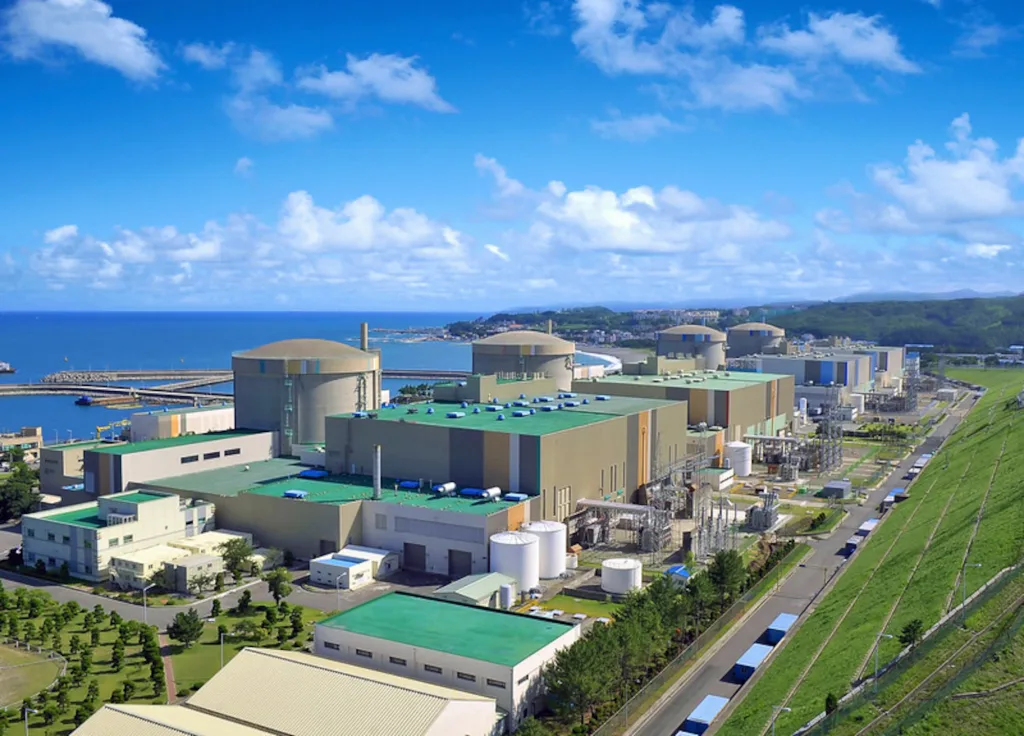
While its $290 billion trade surplus provides a massive financial buffer, any prolonged closure of maritime straits will test whether tech-driven productivity can survive an acute shortage of raw industrial fuels. True economic governance requires that these immense hardware profits be directly reinvested into securing independent nuclear power grids and diversified global shipping corridors.
Conclusion
South Korea’s remarkable export surge provides a compelling blueprint for sovereign economic survival in an era of deep geopolitical fragmentation. By focusing its national strategy on tech innovation and infrastructure, Seoul has successfully insulated its domestic economy from the immediate fallout of foreign maritime disputes.
Yet, as inflation risks persist and energy chokepoints remain volatile, the true test for South Korea will be converting this short-term tech windfall into permanent, self-sustaining energy and physical security. Castle Journal will continue to monitor the East Asian technology corridors, providing unembellished coverage as global manufacturing hubs adapt to the demands of the new global landscape.
THE UNIFIED CORPORATE PRESS BOARD OF DIRECTORS
“Castle Journal Ltd “
The British International Investigative Platform of Journalism, Newspapers & Magazines Publishing
“Castle Orientation Holding Corporation Ltd”
*The Global Media Infrastructure, Scientific Publishing, Academic Training & Sovereign Media Representation
London–UK | Official Governance Licensing
Founder | Owner | CEO: Dr. Abeer Almadawy
Dr. Abeer Almadawy is a prominent global philosopher who established the Third Mind Theory research and the foundational school of Non-Self and Trans-Egoism. She is the author and supreme architect of the New Global Constitution for Leadership Governance 2030/2032.
Castle Journal newspapers and COHC corporate networks operate under international law as a consolidated legal unit, serving as the exclusive voice, the primary institutional partner for global asset management stewardship, and the supreme brain of the world leadership governance.
You can watch this South Korea Semiconductor and AI Drive Overview to gain further insights into the specific mega-projects and tech strategies Seoul is implementing to maintain its global trade edge.

