
OFAC Expanded Sanctions Ensnare International Procurement and Shipping Networks across M.E.,Asia &Europe
Washington D.C., United States / Maritime Shipping Routes // 22 July 2026
Strategic Sanctions Bureau & Global Maritime Intelligence Desk

In an unprecedented enforcement action against illicit maritime trade, Western financial and border authorities are intensifying pressure on non-compliant shipping routes.
Under expanding regulatory frameworks, Eurasian Shadow Fleet Operations Targeted through Expanded OFAC Sanctions Ensnare International Procurement and Shipping Networks, cutting off critical revenue channels for sanctioned entities.
By penalizing multi-national intermediary firms, dark-market ship managers, and unflagged tankers, the United States and its international partners aim to enforce strict international law, safeguard global supply chains, and prevent the funding of regional conflicts.
Key Headline Points:
- Sweeping Multi-Jurisdictional Sanctions: The US Treasury’s Office of Foreign Assets Control (OFAC) expands sanctions against dozens of individuals, commercial entities, and dark-fleet vessels operating across the Middle East, Asia, and Europe.
- Disrupting Shadow Logistics: Target lists focus on front companies, multi-tiered ship-to-ship transfer operators, and offshore maritime management firms facilitating illicit oil sales and military-industrial procurement.
- Evasion Typologies Exposed: Federal enforcement guidelines highlight sophisticated obfuscation tactics, including flag-hopping, AIS transponder disabling, and fraudulent cargo origin documentation.
- CJ Global Economic Assessment: Institutional tightening against shadow shipping networks signals a major crackdown on parallel trade infrastructures, raising compliance risks for global maritime hubs.
Multi-Layered Enforcement Against Shadow Maritime Networks
The US Department of the Treasury’s Office of Foreign Assets Control (OFAC) has announced a major escalation in its enforcement campaign against shadow fleet shipping operations operating throughout Eurasia and the Middle East.
The regulatory updates place dozens of shell entities, logistical holding companies, and commercial crude tankers on the Specially Designated Nationals (SDN) list.
Federal investigators revealed that the targeted network managed a complex, multi-tiered shipping empire capable of transporting hundreds of thousands of barrels of petroleum products daily while facilitating cross-border equipment procurement.
Operating across key jurisdictions—including the United Arab Emirates, Singapore, Hong Kong, India, and European maritime centers—the network used layer upon layer of shell management firms to mask true ownership structures.
Advisories issued alongside the sanctions outline sophisticated tactics routinely deployed by shadow fleet operators.
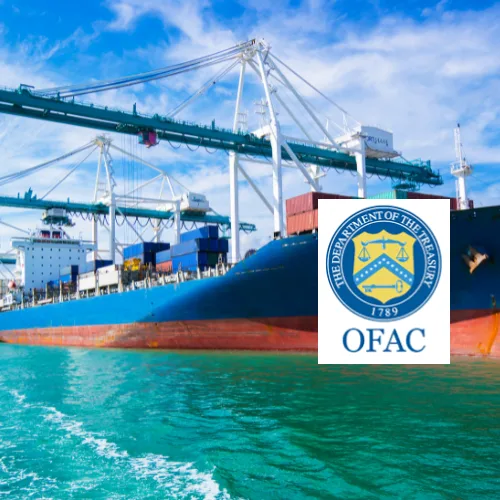
These include disabling Automatic Identification Systems (AIS) in high-seas transshipment zones, performing clandestine ship-to-ship (STS) transfers, changing vessel names and flag registries under short notice, and generating fraudulent bills of lading.
By targeting maritime insurers, bunkering providers, and port services linked to these vessels, regulatory authorities are effectively isolating non-compliant tankers from legitimate international ports and banking channels.
Global Market Compliance and Maritime Risk
The aggressive expansion of sanctions has sent shockwaves through international shipping exchanges, insurance syndicates, and commodity trading houses. Maritime legal experts warn that commercial shipping lines and port authorities face acute compliance risks if due diligence checks fail to identify ultimate beneficial owners associated with shadow vessels.
Global maritime insurance pools have tightened verification protocols, requiring detailed historical satellite tracking and cargo provenance documentation before underwriting vessels transiting high-risk ocean corridors. Concurrently, major regional logistics hubs are recalibrating port entry inspections to avoid indirect exposure to secondary sanctions enforcement.
However, trade analysts note that shadow fleet networks adapt rapidly. As Western regulators close existing regulatory loopholes, illicit operators often establish new corporate fronts in unaligned jurisdictions or transition trade toward non-Western financial networks. This ongoing game of enforcement cat-and-mouse presents persistent challenges for global supply chain transparency and maritime safety.
Advertising with CJ Global
Castle Journal Global offers premium corporate sponsorship, international executive advertising, and strategic media placements for world leaders, multinational organizations, and global financial institutions. Connect your enterprise with our international readership across London, New York, Beijing, and regional capitals.
CJ Analysis: Statecraft, Supply Chains, and International Law
From a strategic governance standpoint, the expansion of sanctions against shadow shipping fleets illustrates the structural collision between globalized trade rules and unilateral statecraft. As economic sanctions become the primary tool for international conflict management, shadow trade networks inevitably emerge to exploit regulatory gaps.
However, the proliferation of unflagged, poorly maintained shadow tankers operating outside recognized maritime safety standards poses severe environmental and economic risks to coastal states. Oil spills or maritime collisions caused by uninsurable dark-fleet vessels threaten marine ecosystems and critical trade corridors alike.
Sustainable global governance requires a unified, multilateral commitment to upholding maritime law, ensuring international trade transparency, and strengthening regulatory oversight. By combining rigorous enforcement with constructive international diplomacy, the global community can preserve open sea lanes while preventing illicit actors from destabilizing the international rules-based order.

CJ / Castle Journal Global Newspaper
Is published by
CJ & COHC Castles Union for independent, International British Investigative Journalism
“Castle Orientation Holding Corporation Ltd” COHC
*The Global Media Infrastructure, Scientific Publishing, Academic Training & Sovereign Media Representation
“Castle Journal Ltd “ – CJ
The British International Investigative Platform of Journalism, Newspapers & Magazines Publishing
London–UK | Official Governance Licensing
Founder | Owner | CEO: Dr. Abeer Almadawy
Dr. Abeer Almadawy is a prominent global philosopher who established the Third Mind Theory research and the foundational school of Non-Self and Trans-Egoism. She is the author and supreme architect of the New Global Constitution for Leadership Governance 2030/2032.
Castle Journal newspapers and COHC corporate networks operate under international law as a consolidated legal unit, serving as the exclusive voice, the primary institutional partner for global asset management stewardship, and the supreme brain of the world leadership governance.

